How Hot Does Composite Decking Get? Cooler Options Compared (2026)

How Hot Does Composite Decking Get?

How Hot Does Composite Decking Get? Heat, Bare Feet & Cooler Decking Options

Composite decking can become very hot in direct summer sun, but there is no single temperature that applies to every composite board.

Surface temperature changes with the exact decking product, board color, solar exposure, ambient temperature, time of day, wind, shade, and surrounding conditions. Newer decking collections may also use pigments, cap formulations, or other heat-mitigating technologies designed to reduce heat buildup.

That means the most useful question is no longer simply:

“Does composite decking get hotter than wood?”

A better question is:

“How will this exact board perform on my deck, in my color, under my sun exposure?”

Quick answer: All decking can become hot in strong sun. Darker colors generally absorb more solar energy, but color is no longer the only major variable. Some current composite and PVC products are specifically engineered to reduce heat buildup, so compare the exact collection and color rather than assuming every board in a material category performs the same way.

How Hot Can Composite Decking Get?

Composite decking can reach surface temperatures high enough to become uncomfortable or potentially hazardous during intense sun exposure.

However, The Backyard Standard does not recommend using a generic statement such as “composite decking reaches 130–150°F” as a prediction for a particular deck.

Surface temperature depends on too many variables:

  • Exact decking collection
  • Board color
  • Heat-mitigating surface technology
  • Outdoor air temperature
  • Direct solar intensity
  • Time spent in direct sun
  • Cloud cover
  • Wind
  • Shade
  • Surrounding surfaces and structures

BYS rule: If heat matters to your project, do not choose decking from a generic material-temperature chart. Compare actual samples of the products and colors you are considering under conditions similar to your deck.

What Actually Makes Composite Decking Hot?

Decking heats when it absorbs solar energy faster than it can release that energy to the surrounding environment.

Several variables determine how hot the walking surface becomes.

Factor Why It Matters Homeowner Control
Color Darker surfaces generally absorb more solar energy than lighter surfaces High
Exact board technology Surface formulation, pigments, cap design, and material construction can affect heat buildup High
Direct sun More intense and prolonged solar exposure generally means more heat gain Moderate through shade design
Air temperature A hotter surrounding environment reduces the deck’s ability to remain cool None
Shade Blocking direct solar radiation can dramatically change surface conditions High
Wind Moving air can increase convective cooling Limited
Time of day Solar intensity and accumulated heating change throughout the day None

Does Deck Color Affect Composite Decking Temperature?

Yes. Color remains one of the most important and consistently acknowledged factors in decking heat.

Lighter surfaces generally reflect more incoming solar energy, while darker surfaces generally absorb more.

Trex and TimberTech both explicitly advise homeowners concerned about heat to consider lighter colors, even when discussing their heat-mitigating decking products.

Color Family General Heat Tendency Planning Implication
Light gray / light tan Generally lower solar absorption Strong starting point for intense full-sun locations
Weathered gray / driftwood Often moderate Useful balance of appearance and heat consideration
Medium brown Often higher than light colors Compare samples if the deck receives strong afternoon sun
Dark brown / charcoal Generally higher solar absorption Heat deserves extra attention on exposed decks

Do not assign a universal temperature to a color family. A lighter conventional board can behave differently from a darker board using heat-mitigating technology, and different manufacturers use different surface formulations.

For help narrowing the appearance first, see our Best Composite Decking Colors guide.

Heat-Mitigating Decking Technology Now Matters

This is one of the biggest changes in the composite decking market.

It is no longer accurate to assume that two boards of approximately the same color will necessarily reach the same surface temperature simply because both are composite.

Major manufacturers now offer products specifically engineered to reduce heat buildup.

Current Product Example

Trex SunComfortable Technology

Trex now uses its SunComfortable™ heat-mitigating technology in current decking products including Transcend Lineage and selected other offerings.

Trex says SunComfortable technology can reduce heat buildup by up to 35°F compared with the original boards used in its laboratory comparison.

That number needs context.

Trex explains that the comparison was based on laboratory testing simulating direct full summer sun over an extended period, and that the compared colors were not identical. Actual results can change with color, conditions, and use.

What the claim means: Trex has evidence that its current heat-mitigating technology can materially reduce heat buildup compared with the older board used in its test. It does not mean every SunComfortable board will always be exactly 35°F cooler than every conventional composite board.

Current Product Example

TimberTech Advanced PVC Cool Touch Technology

TimberTech’s current Advanced PVC lineup includes select colors using Cool Touch® Technology.

TimberTech says select Advanced PVC colors can remain up to 30°F cooler than many traditional composite products.

The manufacturer also says its Advanced PVC material is engineered to reflect more sunlight, retain less heat, and cool more quickly than traditional composite materials.

Important: TimberTech also states that all decking gets hot in the sun and that darker decking will feel hotter. Heat-mitigating technology reduces heat buildup; it does not make a deck immune to hot-surface conditions.

Current Product Example

Deckorators Voyage Mineral-Based Composite

Deckorators Voyage uses the company’s Surestone® mineral-based composite technology.

Deckorators describes Voyage as “barefoot friendly” and says its micro-embossed surface is designed to reduce heat buildup and remain more comfortable under the sun.

Unlike the Trex and TimberTech examples above, the current Voyage product page does not provide the same type of simple “up to X degrees cooler” figure in the product information used for this guide.

Do not turn manufacturer claims into a fake ranking. Trex, TimberTech, and Deckorators use different products, comparisons, and testing language. Their published claims are useful for identifying heat-conscious options, but they do not create a standardized head-to-head temperature test.

Cooler Composite Decking Options to Investigate

Product Family Material Current Heat Positioning BYS Take
Trex Transcend Lineage / SunComfortable products Wood-plastic composite Heat-mitigating technology; Trex reports up to 35°F reduction in its specified comparison Strong option to sample for full-sun composite projects
TimberTech Advanced PVC with Cool Touch PVC Select colors reported up to 30°F cooler than many traditional composites One of the most directly heat-focused current product families
Deckorators Voyage Mineral-based composite Surface designed to reduce heat buildup and improve comfort Worth including in a heat-conscious material comparison
Other light-colored composite products Varies No universal performance level Sample the exact board rather than assuming color alone guarantees comfort

When Is Decking Too Hot for Bare Feet?

There is no scientifically useful single temperature at which decking suddenly changes from “comfortable” to “unsafe.”

Contact temperature and exposure time work together.

Burn research has shown that progressively hotter surfaces require progressively less contact time to injure skin. Published thermal-injury literature reports that contact around 140°F can cause severe burns within seconds under certain exposure conditions.

That is different from simply saying a surface “feels hot.”

Condition What It Means
Warm but tolerable Comfort varies significantly between people and with contact duration
Too hot to comfortably remain barefoot Move off the surface rather than relying on a numerical comfort threshold
Very hot surface Extended bare-skin contact can become a burn concern
Children or people unable to move away quickly Use additional caution because contact duration can increase

BYS safety rule: If a deck feels too hot to comfortably stand on barefoot, treat that as useful real-world information. Do not remain on the surface to see how long you can tolerate it.

What About Children and Pets?

Hot outdoor surfaces deserve additional caution around young children and pets.

The U.S. Consumer Product Safety Commission warns that sunlight-heated outdoor surfaces made from materials including plastics and rubber can become hot enough to burn children—even when the outdoor air temperature itself does not seem extreme.

Trex likewise cautions against extended contact between exposed skin and hot decking, particularly for young children and people with special needs.

Practical precautions include:

  • Provide shade
  • Check the walking surface before barefoot play
  • Provide a shaded route to doors and seating
  • Use footwear during extreme heat
  • Do not assume a deck is safe because the air temperature seems moderate

Does Composite Decking Get Hotter Than Wood?

Sometimes, but that comparison is too broad to use as a purchasing rule.

Traditional wood, conventional wood-plastic composite, heat-mitigating composite, mineral-based composite, and modern PVC can all behave differently.

Even within one category, a light board and a dark board can produce noticeably different surface conditions.

Material Can It Get Hot? What Matters Most
Wood Yes Color, finish, solar exposure, species, conditions
Conventional composite Yes Color, cap/surface formulation, exposure
Heat-mitigating composite Yes Exact technology, color, exposure
Advanced PVC Yes Exact collection, color, heat-mitigating formulation
Mineral-based composite Yes Product construction, surface design, color, exposure

For the broader ownership comparison, see Composite Decking vs Wood .

Does PVC Decking Stay Cooler Than Composite?

Do not assume PVC is always cooler.

The exact product matters more than the category label alone.

TimberTech’s current Advanced PVC is a useful example because select colors incorporate Cool Touch technology and are specifically positioned for reduced heat retention.

That does not establish that every PVC board is cooler than every wood-plastic composite board.

A heat-mitigating composite product may outperform a conventional PVC product, while a heat-focused PVC product may outperform many conventional composites.

Compare products, not acronyms. “PVC” and “composite” describe material families—not a guaranteed surface temperature.

For a complete material comparison, use our PVC vs Composite Decking Guide .

Does Mineral-Based Composite Stay Cooler?

Mineral-based composite has a different construction from conventional wood-plastic composite, but BYS would not assign the entire material category a universal temperature advantage.

Deckorators Voyage is the clearest current example to evaluate because its Surestone mineral-based composite surface is specifically designed to reduce heat buildup.

That is a product-level performance claim, not evidence that every mineral-based board is automatically cooler than every competing composite or PVC board.

Which Decks Have the Greatest Heat Risk?

Heat should receive extra attention during product selection when the deck will experience substantial direct sunlight during hot weather.

Examples include:

  • Unshaded decks in hot climates
  • Pool decks exposed to afternoon sun
  • Decks with dark board colors
  • Large open decks without shade structures
  • Decks used frequently by barefoot children
  • Decks used by pets during midday heat
  • Outdoor spaces where barefoot comfort is a major priority

A deck that is shaded by the house every afternoon has a different heat problem than the same board installed in uninterrupted full sun. Site exposure should be part of the material decision.

Does Deck Orientation Affect Surface Heat?

Orientation affects when and how much direct solar exposure the deck receives.

In the Northern Hemisphere, south- and west-facing outdoor spaces can receive substantial afternoon solar exposure depending on house geometry, trees, rooflines, season, and latitude.

But orientation alone does not determine deck temperature.

A west-facing deck shaded by mature trees may receive less direct sun than an otherwise more favorable orientation with no shade at all.

Evaluate actual sun exposure, not compass direction alone.

Shade Is One of the Most Effective Ways to Reduce Deck Heat

If solar radiation is what is heating the deck, blocking that radiation is one of the most direct ways to reduce the problem.

Shade options include:

  • Pergolas
  • Retractable awnings
  • Large umbrellas
  • Shade sails
  • Covered porch roofs
  • Strategically positioned trees

Shade can also make a larger difference than changing between two otherwise similar decking boards.

What Is the Best Composite Decking for a Pool in Full Sun?

Pool decks deserve extra heat consideration because people are especially likely to be barefoot.

For a sunny pool deck, BYS would prioritize:

  1. A lighter color
  2. A product with documented heat-mitigating technology
  3. Actual samples tested in sun
  4. Shade over major barefoot-use areas
  5. Appropriate wet-surface traction

Current product families worth investigating include Trex products using SunComfortable technology, TimberTech Advanced PVC with Cool Touch technology, and Deckorators Voyage.

Heat is only one pool-deck criterion. Also compare wet traction, moisture exposure, warranty terms, fastening requirements, and product suitability for the installation.

Can Outdoor Rugs Make a Hot Composite Deck More Comfortable?

Rugs can create more comfortable walking or seating zones, but they should not be treated as a universal fix.

Before installing a rug:

  • Check the decking manufacturer’s care guidance
  • Avoid incompatible backing materials
  • Do not trap persistent moisture or debris
  • Periodically clean beneath the rug

Some synthetic backings can discolor certain decking products, so compatibility matters.

See our Composite Decking Maintenance Guide for long-term care considerations.

The Best Way to Compare Decking Heat Before You Buy

Manufacturer testing is useful, but your own project conditions are what ultimately matter.

If heat is a high-priority concern, obtain physical samples of your finalists.

Simple BYS Sample Test

  1. Get samples of the exact collections and colors you are considering.
  2. Place them next to one another in the location where the deck will be built.
  3. Expose all samples to the same sunlight conditions.
  4. Compare them during the hottest part of the exposure period.
  5. Repeat on more than one day if heat is a major decision factor.

You can compare relative surface temperatures with an infrared thermometer, but use the readings carefully.

Measurement caution: Infrared thermometers can be affected by surface emissivity, angle, distance, reflection, instrument settings, and measurement technique. They are most useful here for a consistent side-by-side comparison, not as a laboratory certification of the board’s thermal performance.

How to Read “Cooler Decking” Claims

Marketing claims such as “up to 30°F cooler” or “up to 35°F cooler” can be meaningful, but always ask:

  • Cooler than what?
  • Which colors were compared?
  • Was testing performed outdoors or in a laboratory?
  • How long was the exposure?
  • Were the products tested under identical conditions?
  • Does the claim apply to the entire collection or only certain colors?

“Up to” is not the same as “typically.” A manufacturer’s maximum observed or specified reduction should not be presented as the temperature difference every homeowner will experience.

Which Decking Should You Choose if Heat Is a Priority?

Your Situation What BYS Would Prioritize
Moderate climate + partial shade Do not overpay solely for heat performance unless samples reveal a meaningful difference
Full-sun backyard deck Light or medium color plus comparison of current heat-mitigating products
Hot southern or desert climate Make surface heat a primary product-selection criterion
Pool deck Light color, heat-conscious product, shade, wet traction, sample testing
Young children use deck barefoot Prioritize shade and verify actual surface conditions before use
You love a very dark color Compare that exact color against heat-mitigating alternatives before committing
Deck is shaded most of afternoon Heat may deserve less weight than cost, warranty, appearance, durability, or traction

Common Composite Decking Heat Mistakes

Assuming Every Composite Board Gets Equally Hot

Current decking technologies differ enough that category-wide assumptions can lead to poor decisions.

Choosing From Online Photos Only

Request physical samples, especially when choosing a dark board for a sunny location.

Comparing Manufacturer “Up To” Claims Directly

Different brands may use different comparison products, colors, laboratory methods, and test conditions.

Assuming a Light Color Can Never Get Hot

Any decking exposed to strong sunlight and hot weather can become hot.

Assuming a Heat-Mitigating Board Will Stay Cool

Heat-mitigating means reducing heat buildup relative to a comparison—not creating a permanently cool surface.

Ignoring Shade

A well-designed shaded area can materially change how usable the deck feels during peak sun.

Using Bare Feet as a Long-Duration Heat Test

If the surface is uncomfortably hot, get off it rather than testing your tolerance.

Frequently Asked Questions

Does composite decking get hot?

Yes. Composite decking can become hot in direct sunlight, just like wood, PVC, concrete, pavers, and other outdoor surfaces. The exact temperature depends on the board, color, weather, sunlight, and other site conditions.

How hot does composite decking get in the sun?

There is no dependable universal temperature range for all composite decking. Surface temperatures vary considerably with the exact product and environmental conditions. For a real project, compare samples rather than using a generic temperature table.

What composite decking stays coolest?

There is no single universal winner established by one standardized industry test. Current heat-conscious options include Trex decking with SunComfortable technology, select TimberTech Advanced PVC colors with Cool Touch technology, and Deckorators Voyage.

What color decking stays coolest?

Lighter colors generally absorb less solar energy than darker colors within otherwise comparable products. However, exact board technology also matters.

Is Trex too hot for bare feet?

Trex can become hot in direct sunlight. Current SunComfortable products are engineered to reduce heat buildup relative to Trex’s comparison products, but Trex still cautions that decking gets hot when high temperatures and direct sun converge.

Is TimberTech cooler than Trex?

BYS would not declare a universal winner from the manufacturers’ published temperature claims because their tests and comparison products are not standardized against each other. Compare the exact TimberTech and Trex collections and colors you are considering.

Does PVC decking stay cooler than composite?

Not automatically. Some current PVC products are specifically engineered for reduced heat retention, while some current composite products also use heat-mitigating technology. Compare exact products rather than assuming PVC always wins.

Does Deckorators Voyage stay cooler?

Deckorators says Voyage’s micro-embossed Surestone surface is designed to reduce heat buildup and stay more comfortable under the sun. BYS would still compare a physical sample with the other products being considered.

Can hot decking burn feet?

Any sufficiently hot outdoor surface can cause thermal injury. Burn risk depends on both surface temperature and contact time. Use particular caution with children, pets, and anyone who may not immediately move away from a hot surface.

Does shade make composite decking cooler?

Shade reduces direct solar exposure and is one of the most practical ways to reduce surface heating and improve usable comfort.

Is dark composite decking a bad idea?

Not necessarily. Dark boards can look excellent, but heat deserves more attention when the deck receives intense direct sunlight. Test the exact color before purchasing if barefoot comfort matters.

Related Composite Decking Guides

Compare appearance options in our Best Composite Decking Colors guide.

Compare major manufacturers using the Composite Decking Comparison Chart .

For the broader material decision, read PVC vs Composite Decking .

Compare synthetic decking with lumber in Composite Decking vs Wood .

For manufacturer selection, see Best Composite Decking Brands .

And for ongoing surface care, use the Composite Decking Maintenance Guide .

Sources & Technical References

Last reviewed: August 2026

Testing note: Manufacturer heat claims may use different test procedures, colors, comparison products, exposure conditions, and performance definitions. Unless the products were tested side by side using the same protocol, their published temperature-reduction claims should not be treated as a standardized ranking.

The Backyard Standard Final Answer

Composite decking can absolutely become too hot for comfortable barefoot use in strong summer sun.

But there is no meaningful universal temperature for “composite decking,” and the old advice to choose solely by material category is increasingly outdated.

The three variables BYS would prioritize are:

  1. Exact decking product and heat technology
  2. Color
  3. Actual solar exposure at the deck

If heat is a major concern, compare physical samples of your finalists in the sun before ordering an entire deck.

Best practical strategy: Start with a lighter color, compare current heat-mitigating products, test the exact samples under your site’s sunlight, and add shade where people will spend the most time barefoot.

That approach is much more reliable than assuming all composite is hot, all PVC is cool, or one manufacturer’s marketing number automatically makes it the coolest product on the market.

Best Composite Decking Colors (2026): 25 Popular Color Options by Tier and Price

Best Composite Decking Colors

Best Composite Decking Colors: Gray, Brown, Weathered Wood & Dark Deck Color Ideas

Choosing a composite decking color is one of the biggest design decisions in a deck project. The color affects how the deck looks against the house, how hot the surface feels in direct sun, how easily dirt and pollen show, and how the deck ages visually over time.

Modern composite decking manufacturers now offer dozens of colors that imitate natural wood, driftwood, cedar, tropical hardwood, and dark espresso-stained boards. The challenge is not finding a color. It is choosing the right color for your house, climate, maintenance expectations, and budget.

This guide compares the most popular composite decking color families, explains which colors work best with different house exteriors, and shows where major manufacturer colors fit by style, product tier, and price range.

The safest composite deck colors for most homes are weathered wood, medium brown, and gray-brown blends. They coordinate with many exterior styles, hide dirt better than very light boards, and usually look more natural over time than flat solid colors.

Quick Verdict: What Composite Decking Color Should You Choose?

Best Overall

Weathered Wood

Weathered wood and driftwood tones are the safest all-around choice because they blend gray and brown undertones, pair with many house colors, and hide dirt and fading well.

Best Modern Look

Gray Decking

Gray composite decking works well with white siding, black trim, coastal homes, modern exteriors, and stone patios.

Best Traditional Look

Medium Brown

Brown composite decking is the best fit for homeowners who want the familiar appearance of stained wood without the maintenance of real lumber.

Best Bold Contrast

Dark Brown or Espresso

Dark decking creates strong contrast, but it can get hotter in full sun and may show dust, scratches, or water spots more than mid-tone boards.

Composite Decking Color Families

Color Family Typical Style Best For Main Trade-Off
Gray Modern, coastal, clean White siding, black trim, stone, modern homes Can feel cool or flat if the board lacks variation
Weathered wood Driftwood, reclaimed, natural Most house colors, wooded lots, transitional homes May not create as much contrast as dark colors
Medium brown Traditional stained wood Brick homes, tan siding, wooded landscapes Can look basic if the board is too uniform
Cedar / warm hardwood Golden, amber, reddish wood Outdoor kitchens, brick, stone, traditional homes Warm undertones can clash with cool gray siding
Dark / espresso Bold, high contrast, modern Light siding, black railings, contemporary homes Usually hotter in sun and may show dust

Best Deck Colors for Different House Colors

The easiest way to narrow your deck color is to compare it against your home’s siding, trim, roof, masonry, and landscape. The deck should usually complement the house rather than match it exactly.

House Exterior Deck Colors That Usually Work Best Why It Works
White siding Gray, weathered wood, charcoal, medium brown Creates clean contrast without overwhelming the home
Beige or tan siding Medium brown, cedar, warm hardwood, weathered brown Warm deck tones complement earth-tone siding
Gray siding Weathered wood, gray-brown, medium brown, charcoal Mixed undertones prevent the deck from blending too closely
Dark siding Light gray, driftwood, weathered wood, medium brown Lighter boards create contrast and keep the space from feeling heavy
Brick homes Medium brown, cedar, warm hardwood, walnut tones Warm browns complement red, orange, and brown brick variation
Stone exteriors Weathered wood, gray-brown, medium brown, driftwood Multi-tone boards echo natural stone variation
Modern black-and-white homes Light gray, charcoal, weathered wood, espresso Supports high-contrast design while keeping the palette controlled

If you are unsure, start with weathered wood or gray-brown samples. These colors usually coordinate with more siding, trim, stone, roof, and landscape combinations than strongly red, orange, or black deck colors.

Should Deck Boards Match the House or Contrast It?

In most cases, a deck should complement the house rather than match it exactly. If the deck color is too close to the siding color, the deck can disappear visually or make the exterior look flat.

Simple contrast rules:

  • Light house: use gray, medium brown, charcoal, or weathered wood for contrast.
  • Dark house: use light gray, driftwood, or medium brown to avoid a heavy look.
  • Brick house: use warm brown, walnut, cedar, or hardwood tones.
  • Gray house: use gray-brown, weathered wood, or medium brown to add warmth.
  • Tan house: use brown, cedar, or warm hardwood tones.

The best deck colors usually repeat something already on the property: trim color, roof tone, patio stone, brick undertone, fence color, or landscape material.

Composite Decking Color Comparison Chart

The table below summarizes popular composite decking colors, manufacturer collections, product tiers, and typical material pricing.

Click any color below to jump to detailed photos, product tiers, and pricing information.

PreviewColorBrandCollectionColor FamilyTierTypical Material Cost
Trex Foggy Wharf composite decking color sampleFoggy WharfTrexEnhance NaturalsGrayEntry-Level$5–$7
Trex Island Mist composite decking color sampleIsland MistTrexTranscendGrayPremium$9–$12
TimberTech Coastline composite decking color sampleCoastlineTimberTechAZEK VintageGrayPremium$10–$14
TimberTech Slate Gray composite decking color sampleSlate GrayTimberTechAZEK HarvestGrayPremium$10–$14
Fiberon Earl Grey composite decking color sampleEarl GreyFiberonSanctuaryGrayMid-Range$7–$10
Trex Rocky Harbor composite decking color sampleRocky HarborTrexEnhance NaturalsWeathered WoodEntry-Level$5–$7
Trex Tide Pool composite decking color sampleTide PoolTrexEnhance BasicsWeathered WoodEntry-Level$5–$7
Trex Toasted Sand composite decking color sampleToasted SandTrexEnhance NaturalsWeathered WoodEntry-Level$5–$7
TimberTech Weathered Teak composite decking color sampleWeathered TeakTimberTechAZEK VintageWeathered WoodPremium$10–$14
TimberTech Ashwood composite decking color sampleAshwoodTimberTechAZEK VintageWeathered WoodPremium$10–$14
Trex Saddle composite decking color sampleSaddleTrexEnhance BasicsBrownEntry-Level$5–$7
TimberTech English Walnut Composite Decking Color SampleEnglish WalnutTimberTechAZEK VintageBrownPremium$10–$14
TimberTech Pecan Composite Decking Color SamplePecanTimberTechLegacyBrownPremium$9–$12
TimberTech Dark Cocoa Composite Decking Color SampleDark CocoaTimberTechPrime+BrownEntry-Level$5–$7
Fiberon Bungalow Composite Decking Color SampleBungalowFiberonGood Life EscapesBrownEntry-Level$5–$7
Trex Havana Gold Composite Decking Color SampleHavana GoldTrexTranscendWarm HardwoodPremium$9–$12
Trex Spiced Rum Composite Decking Color SampleSpiced RumTrexTranscendWarm HardwoodPremium$9–$12
Trex Tiki Torch Composite Decking Color SampleTiki TorchTrexTranscendWarm HardwoodPremium$9-$12
Trex Lava Rock Composite Decking Color SampleLava RockTrexTranscendWarm HardwoodPremium$9-$12
TimberTech Antique Leather Composite Decking Color SampleAntique LeatherTimberTechReserveWarm HardwoodMid-Premium$8–$11
Fiberon Espresso Composite Decking Color SampleEspressoFiberonParamount PVCDark / EspressoPremium$10-$14
Deckorators Ironwood Composite Decking Color SampleIronwoodDeckoratorsVistaDark / EspressoMid-Range$7-$10
TimberTech Kona Composite Decking Color SampleKonaTimberTechAZEK HarvestDark / EspressoPremium$10–$14
TimberTech Mocha Composite Decking Color SampleMochaTimberTechLegacyDark / EspressoPremium$9–$12
Deckorators Khaya Composite Decking Color SampleKhayaDeckoratorsVoyageDark / EspressoPremium$10–$14

Why Some Composite Deck Colors Cost More Than Others

Deck color and product tier are closely connected. The most realistic colors are often found in higher-end product lines because premium boards usually include deeper embossing, stronger cap layers, more complex color blending, and longer fade-and-stain warranty coverage.

Product Tier Typical Material Price Common Color Features
Entry-level composite $5–$7 per sq. ft. Simpler colors, basic wood grain, fewer premium tones
Mid-range composite $7–$10 per sq. ft. Better grain, more color variation, stronger visual depth
Premium composite $9–$12+ per sq. ft. Multi-tone colors, deeper embossing, richer wood realism
PVC / specialty decking $10–$14+ per sq. ft. Premium color lines, moisture resistance, advanced board construction

For cost context, see: Composite Deck Cost Per Square Foot and Composite Decking Cost.

Gray Composite Decking

Gray composite decking has become one of the most popular color families in modern outdoor design. These tones are often chosen for contemporary homes, coastal architecture, and properties with white or light-colored siding.

Gray boards tend to create a clean, modern appearance while also hiding dirt and pollen better than very light colors.

Because many gray boards include subtle brown undertones and multi-tone grain patterns, they often resemble naturally weathered wood rather than painted surfaces.

Homeowners frequently choose gray decking when they want a modern aesthetic that still blends naturally with stone patios, landscaping, and outdoor furniture.


Foggy Wharf – Trex

Collection: Enhance Naturals
Material: Composite
Tier: Entry-Level Composite
Typical Material Cost: $5–$7 per sq ft

Foggy Wharf is a light driftwood gray designed to resemble naturally weathered coastal lumber. Subtle brown undertones within the gray surface create a soft multi-tonal appearance that looks more like aged wood than a solid painted color.

The color works particularly well with modern homes, white siding, and coastal architectural styles where lighter deck tones help brighten outdoor spaces.

Because Foggy Wharf is part of Trex’s Enhance Naturals entry-level composite line, it provides a modern gray deck appearance at a more affordable price point. Homeowners often choose this color when they want a weathered gray look without moving into premium decking tiers.

Trex Foggy Wharf composite decking color

Island Mist – Trex

Collection: Transcend
Material: Capped Composite
Tier: Premium Composite
Typical Material Cost: $9–$12 per sq ft

Island Mist is a cool-toned gray decking color designed to resemble lightly weathered hardwood. Subtle brown streaking in the boards creates realistic wood-grain variation rather than a flat gray surface.

The neutral gray tone pairs well with contemporary homes, white siding, and black railing systems, making it one of the most versatile gray decking options.

As part of Trex’s premium Transcend collection, Island Mist features deeper grain embossing and stronger color variation than entry-level composite decking. Homeowners often choose this color when they want a high-end gray deck with natural wood character.

Trex Island Mist composite decking color

Coastline – TimberTech

Collection: AZEK Vintage Collection
Material: Advanced PVC
Tier: Premium
Typical Material Cost: $10–$14 per sq ft

Coastline is a soft light-gray decking color inspired by sun-bleached coastal hardwood. The boards feature subtle tonal variation and refined grain patterns that replicate naturally aged wood.

This color works particularly well with coastal homes, contemporary architecture, and light exterior finishes such as white siding or pale stone.

Coastline is part of TimberTech’s AZEK Vintage collection, a premium PVC decking line designed for realistic wood textures and long-term durability. Homeowners typically choose Coastline when they want a premium gray deck color that complements modern or coastal design styles.

Timbertech Coastline composite decking color

Slate Gray – TimberTech

Collection: AZEK Harvest
Material: Advanced PVC
Tier: Premium
Typical Cost: $10–$14 / per sq ft

Slate Gray is a clean, neutral gray decking color with a consistent tone and subtle grain texture. Compared with highly variegated boards, it offers a sleek and modern appearance.

The color pairs well with black aluminum railing systems, minimalist deck designs, and contemporary homes.

Part of TimberTech’s AZEK Harvest collection, Slate Gray is manufactured from advanced PVC for strong moisture resistance and durability. It is often selected by homeowners building modern outdoor spaces where a simple, neutral deck color supports the architectural design.

Timbertech Slate Gray composite decking color

Earl Grey – Fiberon

Collection: Sanctuary
Material: Capped Composite
Tier: Mid-Range Composite
Typical Material Cost: $7–$10 per sq ft

Earl Grey is a balanced medium-gray decking color with subtle brown undertones designed to mimic naturally weathered wood. The gentle color variation gives the boards a more natural appearance than solid gray decking.

The versatile tone works well with both traditional and contemporary homes, blending easily with neutral siding, stone patios, and wooded landscapes.

Earl Grey is part of Fiberon’s Sanctuary collection, a mid-range composite decking line offering improved texture and durability compared with entry-level boards. Homeowners typically choose this color when they want a versatile gray deck that balances natural appearance with moderate cost.

Fiberon Earl Grey composite decking color

Weathered Wood and Driftwood Colors

Weathered wood decking colors combine gray and brown tones to mimic naturally aged lumber exposed to sun and rain.

These colors have become increasingly popular because they replicate the look of reclaimed wood and coastal driftwood without the maintenance requirements of natural wood decking.

Weathered tones tend to hide dirt, pollen, and minor fading better than solid-color boards, which makes them a practical choice for decks surrounded by trees or landscaping.

Homeowners often select weathered wood colors when they want a natural, relaxed outdoor aesthetic that blends with the surrounding landscape.


Rocky Harbor – Trex

Collection: Enhance Naturals
Material: Capped Composite
Tier: Entry-Level Composite
Typical Material Cost: $5–$7 per sq ft

Rocky Harbor is a weathered gray-brown decking color designed to resemble naturally aged driftwood. The boards combine soft gray tones with warm brown undertones, creating a balanced appearance that mimics reclaimed lumber exposed to sun and rain.

This color works particularly well with rustic homes, wooded landscapes, and outdoor spaces designed to blend naturally with surrounding trees and stone features.

Part of Trex’s Enhance Naturals collection, Rocky Harbor provides a textured wood-inspired surface at an entry-level composite price point. Homeowners often choose this color when they want a natural driftwood look without the maintenance requirements of real reclaimed wood decking.

Trex Rocky Harbor composite decking color

Tide Pool – Trex

Collection: Enhance Basics
Material: Capped Composite
Tier: Entry-Level Composite
Typical Material Cost: $5–$7 per sq ft

Tide Pool is a soft weathered gray decking color inspired by coastal driftwood exposed to sun and salt air. Subtle brown undertones within the gray surface create a natural wood appearance rather than a flat painted finish.

The lighter tone pairs well with coastal homes, beach-style architecture, and outdoor spaces with light siding or natural stone patios.

Tide Pool is part of Trex’s Enhance Basics collection, an entry-level composite decking line designed to provide realistic wood texture at a more accessible price. Homeowners typically choose Tide Pool when they want a light driftwood deck color that complements coastal or modern outdoor designs.

best composite decking colors

Toasted Sand — Trex

Collection: Enhance Naturals
Material: Capped Composite
Tier: Entry-Level Composite
Typical Material Cost: $5–$7 per sq ft

Toasted Sand is a warm weathered wood color designed to resemble sun-faded lumber. The boards blend soft brown and gray tones that create a natural appearance similar to aged deck boards exposed to years of sunlight.

This color works particularly well in outdoor spaces surrounded by trees, natural landscapes, or rustic architectural styles.

As part of Trex’s Enhance Naturals collection, Toasted Sand offers subtle wood-grain texture and weathered character at an entry-level composite price point. Homeowners often choose this color when they want a natural wood appearance that blends easily with outdoor surroundings.

Trex Toasted Sand composite decking color

Weathered Teak – TimberTech

Collection: AZEK Vintage
Material: Advanced PVC
Tier: Premium
Typical Material Cost: $10–$14 per sq ft

Weathered Teak is a gray-brown decking color designed to replicate aged tropical hardwood. The boards feature pronounced wood-grain patterns with subtle color variation that resembles reclaimed teak or weathered hardwood planks.

This color works particularly well with traditional homes, natural landscapes, and outdoor spaces designed around stone patios or wood accents.

Part of TimberTech’s AZEK Vintage collection, Weathered Teak is manufactured from advanced PVC and designed for premium outdoor living spaces. Homeowners often select this color when they want a high-end driftwood aesthetic with the durability of PVC decking.


Ashwood – TimberTech

Collection: AZEK Vintage
Material: Advanced PVC
Tier: Premium
Typical Material Cost: $10–$14 per sq ft

Ashwood is a weathered gray-brown decking color inspired by reclaimed hardwood boards. The surface combines lighter gray tones with darker wood-grain variation to create a natural aged appearance.

The neutral driftwood tone works well with modern homes, natural stone patios, and outdoor spaces that combine contemporary and rustic design elements.

Ashwood is also part of TimberTech’s AZEK Vintage collection, a premium PVC decking line known for realistic wood textures and long-term durability. Homeowners often choose Ashwood when they want a premium driftwood-style deck color with subtle natural variation.


Brown Composite Decking

Brown decking colors closely resemble the appearance of traditional stained wood decks. These tones are especially common on homes with brick exteriors, wooded landscapes, or classic architectural styles.

Compared with gray decking, brown boards create a warmer and more traditional outdoor appearance.

Medium brown colors also tend to hide dust, pollen, and minor debris better than very light boards.

Homeowners often choose brown decking when they want a classic wood deck aesthetic that blends naturally with trees, stone, and brick features.


English Walnut – TimberTech

Collection: AZEK Vintage Collection
Material: Advanced PVC
Tier: Premium
Typical Material Cost: $10–$14 per sq ft


English Walnut is a deep neutral-brown decking color designed to resemble richly stained hardwood. The boards feature subtle wood-grain texture and soft tonal variation that create a natural wood appearance without strong red or gray undertones.

This color works particularly well with traditional homes, brick exteriors, and outdoor spaces that use natural stone or darker trim.

Part of TimberTech’s AZEK Vintage collection, English Walnut is manufactured from advanced PVC and designed for premium outdoor living spaces. Homeowners often choose this color when they want a classic dark wood deck appearance with the durability of premium PVC decking.

TimberTech English Walnut composite decking color

Saddle – Trex

Collection: Enhance Basics
Material: Capped Composite
Tier: Entry-Level Composite
Typical Material Cost: $5–$7 per sq ft

Saddle is a classic medium-brown decking color designed to resemble traditional stained wood decks. The warm tone and subtle grain texture create a familiar appearance that closely resembles pressure-treated lumber finished with a natural wood stain.

This color works well with brick homes, wooded landscapes, and rustic outdoor designs where a traditional wood deck aesthetic fits the surrounding architecture.

Saddle is part of Trex’s Enhance Basics collection, an entry-level composite decking line designed for affordability and simple wood-inspired texture. Homeowners often choose this color when they want a traditional brown deck appearance at a lower composite decking price point.


Trex Saddle composite decking color

Pecan – TimberTech

Collection: Legacy Collection
Material: Capped Composite
Tier: Premium Composite
Typical Material Cost: $9–$12 per sq ft

Pecan is a warm medium-brown decking color designed to resemble naturally stained hardwood. The boards include subtle multi-tonal grain patterns that give the surface a more realistic wood appearance compared with solid-color composite decking.

The balanced brown tone works well with brick homes, natural landscapes, and outdoor spaces designed to blend with surrounding trees and wood features.

Pecan is part of TimberTech’s Legacy collection, a premium composite decking line known for deeper grain embossing and natural color variation. Homeowners often choose this color when they want a premium brown composite deck that resembles traditional hardwood decking.

Timbertech Pecan composite decking color

Dark Cocoa – TimberTech

Collection: Prime+ Collection
Material: Capped Composite
Tier: Entry-Level Composite
Typical Material Cost: $5–$7 per sq ft

Dark Cocoa is a rich chocolate-brown decking color designed to resemble deeply stained hardwood boards. The darker tone creates a classic wood appearance while helping hide dirt, pollen, and minor surface debris better than lighter colors.

This color works particularly well with traditional homes, rustic architecture, and outdoor living spaces surrounded by trees.

Dark Cocoa is part of TimberTech’s Prime+ collection, an entry-level composite decking line designed to provide realistic wood tones at a more accessible price point. Homeowners often choose this color when they want a dark traditional wood appearance without moving into premium decking lines.

Timbertech Mocha composite decking color

Bungalow – Fiberon

Collection: Good Life Escapes
Material: Capped Composite
Tier: Entry-Level Composite
Typical Material Cost: $5–$7 per sq ft

Bungalow is a warm cedar-inspired brown decking color designed to resemble naturally weathered wood. The subtle grain texture and balanced brown tone create a natural appearance that blends easily with outdoor landscapes.

This color works particularly well with cabins, wooded properties, and outdoor spaces designed to complement surrounding trees and natural materials.

Bungalow is part of Fiberon’s Good Life Escapes collection, an entry-level composite decking line designed to provide wood-inspired aesthetics at an affordable price. Homeowners often choose this color when they want a natural brown deck that blends seamlessly with wooded outdoor environments.


Cedar and Warm Hardwood Decking

Warm hardwood tones replicate the appearance of exotic wood species such as teak, mahogany, and cedar.

These colors often include amber, reddish, or golden undertones that create a rich wood appearance similar to tropical hardwood decking.

Warm wood colors are commonly selected for traditional homes, outdoor kitchens, and patio designs that incorporate natural stone, brick, or wood accents.

Homeowners typically choose these tones when they want the visual warmth of hardwood decking without the maintenance requirements of real wood.


Havana Gold – Trex

Collection: Transcend
Material: Capped Composite
Tier: Premium Composite
Typical Material Cost: $9–$12 per sq ft

Havana Gold is a golden-brown decking color designed to resemble tropical hardwood species such as teak. The boards feature subtle color variation and natural wood-grain texture that create a warm, sunlit appearance rather than a uniform brown surface.

This color works particularly well with traditional homes, brick exteriors, and outdoor spaces designed around natural stone patios or wood accents.

Part of Trex’s premium Transcend collection, Havana Gold offers deeper grain embossing and stronger color variation than entry-level composite boards. Homeowners often choose this color when they want a tropical hardwood look without the maintenance requirements of real wood decking.

Trex Havana Gold composite decking color

Spiced Rum – Trex

Collection: Transcend
Material: Capped Composite
Tier: Premium Composite
Typical Material Cost: $9–$12 per sq ft

Spiced Rum is a rich reddish-brown decking color inspired by exotic hardwood species such as mahogany. The boards feature darker grain streaks that create noticeable color variation and a realistic wood appearance.

The warm tone pairs well with brick homes, stone patios, and traditional outdoor living spaces where deeper wood colors complement the surrounding architecture.

Spiced Rum is part of Trex’s Transcend collection, a premium composite decking line known for pronounced grain texture and multi-tonal color variation. Homeowners often choose this color when they want a warm hardwood deck aesthetic with strong natural wood character.

Trex Spiced Rum composite decking color

Tiki Torch – Trex

Collection: Transcend
Material: Capped Composite
Tier: Premium Composite
Typical Material Cost: $9–$12 per sq ft

Tiki Torch is a warm amber-brown decking color designed to resemble tropical hardwood decking. The boards include subtle tonal variation and natural grain patterns that help the surface resemble stained wood rather than solid-colored composite.

This color works particularly well with traditional homes, outdoor kitchens, and patios designed with brick or natural stone features.

Part of Trex’s premium Transcend collection, Tiki Torch provides deeper grain embossing and enhanced durability compared with entry-level composite decking lines. Homeowners often choose this color when they want a warm hardwood deck color that balances richness with subtle natural variation.


Trex Tiki Torch composite decking color

Lava Rock – Trex

Collection: Transcend
Material: Capped Composite
Tier: Premium Composite
Typical Material Cost: $9–$12 per sq ft

Lava Rock is a deep reddish-brown decking color designed to resemble richly stained tropical hardwood. The darker tone and pronounced grain pattern create a bold wood appearance that stands out more than lighter warm-brown decking colors.

This color pairs well with darker siding, stone patios, and outdoor living spaces designed around bold architectural features.

Lava Rock is also part of Trex’s Transcend collection, which offers deeper grain embossing and stronger color variation than entry-level composite decking products. Homeowners often choose this color when they want a dramatic hardwood-style deck color with strong visual contrast.


Antique Leather – TimberTech

Collection: Reserve Collection
Material: Capped Composite
Tier: Mid-Premium Composite
Typical Material Cost: $8–$11 per sq ft

Antique Leather is a warm brown decking color designed to resemble aged hardwood boards with natural grain variation. The color blends subtle brown and amber tones that create a realistic wood appearance rather than a flat stained surface.

The warm tone works particularly well with traditional homes, wood siding, and outdoor spaces designed with natural materials such as stone or timber.

Part of TimberTech’s Reserve collection, Antique Leather is a mid-premium composite decking option that offers deeper grain embossing and improved durability compared with entry-level products. Homeowners often choose this color when they want a natural hardwood aesthetic with moderate color variation and mid-range pricing.

TimberTech Antique Leather composite decking color

Dark and Espresso Decking Colors

Dark composite decking colors create bold contrast and dramatic outdoor spaces. These tones range from deep chocolate brown to nearly black espresso colors.

Dark boards are frequently used on modern homes, contemporary decks, and outdoor spaces that incorporate black railings, dark trim, or minimalist architectural styles.

Because darker colors absorb more sunlight, they can become warmer in direct sun than lighter boards. However, they often hide dirt, pollen, and debris better than lighter deck colors.

Homeowners often choose dark decking when they want a high-contrast deck design that highlights railing systems and architectural features.


Espresso – Fiberon

Collection: Paramount PVC
Material: Advanced PVC
Tier: Premium
Typical Material Cost: $10–$14 per sq ft

Espresso is a deep espresso-brown decking color designed to replicate dark stained hardwood. The rich tone creates strong visual contrast with lighter siding and railing systems, giving decks a bold, modern appearance.

This color works particularly well with contemporary homes, black railing systems, and outdoor spaces designed with clean architectural lines.

Espresso is part of Fiberon’s Paramount PVC collection, a premium decking line manufactured from advanced PVC for strong moisture resistance and durability. Homeowners often choose this color when they want a dark hardwood-style deck that creates dramatic contrast with the surrounding home exterior.


Fiberon Espresso Composite Decking Color

Ironwood – Deckorators

Collection: Vista Collection
Material: Capped Composite
Tier: Mid-Range Composite
Typical Material Cost: $7–$10 per sq ft

Ironwood is a deep charcoal-brown decking color designed to resemble dense tropical hardwood such as ipe. The darker tone and subtle grain variation create a bold wood appearance while maintaining a natural look.

This color works well with modern homes, darker siding, and outdoor living spaces that use black railings or contemporary architectural elements.

Ironwood is part of the Deckorators Vista collection, a mid-range capped composite decking line designed to provide realistic wood grain texture at a moderate price point. Homeowners often choose this color when they want a dark wood deck appearance without moving into premium decking materials.


Deckorators Ironwood Composite Decking Color

Kona – TimberTech

Collection: AZEK Harvest
Material: Advanced PVC
Tier: Premium
Typical Material Cost: $10–$14 per sq ft

Kona is one of the darkest decking colors available in the TimberTech lineup. The espresso-colored boards are designed to mimic exotic hardwood decking and create a dramatic modern aesthetic.

The deep tone pairs particularly well with black aluminum railing systems, contemporary homes, and outdoor kitchens where darker materials create strong visual contrast.

Kona is part of TimberTech’s AZEK Harvest collection, a premium PVC decking line known for durability and moisture resistance. Homeowners often choose Kona when they want a bold espresso deck color that mimics exotic hardwood while maintaining the durability of PVC decking.


Mocha – TimberTech

Collection: Legacy Collection
Material: Capped Composite
Tier: Premium Composite
Typical Material Cost: $9–$12 per sq ft

Mocha is a deep chocolate-brown decking color designed to resemble dark hardwood decking. The multi-tonal grain pattern creates subtle variation that makes the boards look more like natural wood rather than a uniform stain color.

This color works particularly well with traditional homes, stone patios, and outdoor spaces designed around darker architectural materials.

Mocha is part of TimberTech’s Legacy collection, a premium composite decking line known for realistic wood textures and pronounced grain patterns. Homeowners often choose this color when they want a dark hardwood deck appearance with natural grain variation.

Timbertech Mocha composite decking color

Khaya – Deckorators

Collection: Voyage
Material: Mineral-Based Composite
Tier: Premium
Typical Material Cost: $10–$14 per sq ft

Khaya is a deep reddish-brown decking color inspired by exotic hardwood species such as mahogany. The boards feature noticeable grain variation and rich color depth that create a premium hardwood appearance.

The darker tone works well with traditional homes, outdoor kitchens, and patios designed with natural stone or wood accents.

Khaya is part of Deckorators’ Voyage collection, a premium mineral-based composite decking line designed for strength and long-term durability. Homeowners often choose this color when they want a high-end hardwood appearance combined with advanced mineral-based composite technology.

Deckorators Khaya Composite Decking Color

How Deck Color Affects Heat

Deck color has a major effect on surface temperature. Dark boards absorb more solar energy, while lighter boards generally stay more comfortable in direct sun.

This matters most for pool decks, full-sun decks, homes in hot climates, and decks used barefoot by children or pets.

Deck Color Relative Heat Best Use
Light gray Coolest Hot climates, pool decks, full sun
Weathered gray Cool to moderate Balanced heat performance and dirt hiding
Medium brown Moderate Traditional homes, mixed shade, wooded yards
Dark brown Warm Partial shade, contrast-focused designs
Espresso / charcoal Warmest Modern contrast where heat is less of a concern

For a deeper temperature guide, see: How Hot Does Composite Decking Get?.

Best Composite Decking Colors for Full Sun

For full-sun decks, prioritize lighter colors and multi-tonal boards. Light gray, driftwood, weathered gray, and lighter tan-brown boards usually perform better for barefoot comfort than dark brown or espresso decking.

Color Type Performance in Direct Sun Recommendation
Light gray Best Strong choice for hot climates
Weathered gray Good Best balance of heat, appearance, and dirt hiding
Medium brown Moderate Works well in mixed sun and shade
Dark brown Warmer Better in partial shade
Espresso / charcoal Warmest Use cautiously in full sun

Which Composite Decking Colors Hide Dirt Best?

Decks near trees, lawns, gardens, or pollen-heavy areas need colors that hide everyday debris. Multi-tonal boards usually hide dirt better than flat solid colors.

Colors that hide dirt well:

  • weathered wood tones
  • gray-brown blends
  • medium brown boards
  • multi-tone gray decking

Colors that may show dirt more:

  • very light gray boards
  • very dark espresso boards
  • flat solid-color boards

Very dark boards may hide mud but show pollen, dust, water spots, and light-colored debris. Very light boards may hide dust but show mud and leaf stains.

Which Composite Decking Colors Hide Scratches Best?

Scratches are usually less noticeable on boards with natural color variation, texture, and medium tones. Solid dark boards and very light boards can make certain marks more visible.

Best scratch-hiding color types:

  • weathered wood
  • gray-brown blends
  • medium brown
  • multi-tonal premium colors

Homeowners with dogs, children, patio furniture, or heavy deck traffic should strongly consider multi-tonal boards rather than flat solid colors.

Related: Composite Decking Problems.

Which Composite Decking Colors Fade the Least?

Modern capped composite boards are designed to resist fading better than older uncapped products, but no outdoor material remains visually unchanged forever.

Multi-tone boards often hide gradual color change better than flat solid colors because the board already has natural variation.

Best fade-hiding choices:

  • weathered wood tones
  • gray-brown boards
  • medium brown multi-tonal boards
  • premium capped composite or PVC boards

For board construction and durability, see: Capped vs Uncapped Composite Decking and Composite Decking Lifespan.

Most Popular Composite Decking Colors

Popular composite deck colors change by region and design trend, but several color families consistently appear across major manufacturers.

Popular Color Brand Color Family Why Homeowners Choose It
Foggy Wharf Trex Gray / driftwood Accessible gray option with coastal character
Island Mist Trex Premium gray Modern gray with premium wood-like variation
Weathered Teak TimberTech Weathered wood Premium driftwood look with warm undertones
Pecan TimberTech Brown Natural brown with premium wood character
Havana Gold Trex Warm hardwood Tropical hardwood look without wood maintenance
Kona TimberTech Dark / espresso Bold contrast for modern outdoor spaces

Do Deck Colors Affect Home Resale Value?

Neutral deck colors usually have the broadest resale appeal. Gray, weathered wood, gray-brown, and medium brown boards tend to feel safer to future buyers than highly red, orange, or extremely dark deck colors.

A deck color that complements the home exterior can make the entire backyard feel more intentional. A color that clashes with siding, brick, roof color, or patio stone can make even an expensive deck feel disconnected from the house.

Most resale-friendly deck color families:

  • weathered wood
  • medium brown
  • gray-brown
  • soft gray
  • warm walnut tones

How to Choose the Right Composite Decking Color

1. Start with your house exterior

Compare deck samples against siding, trim, brick, roof, patio stone, and nearby fencing. The deck should feel connected to the whole property.

2. Consider sun exposure

Use lighter colors for full-sun decks, pool decks, and hot climates. Dark boards can look beautiful, but they usually feel warmer.

3. Think about dirt, pollen, and pets

Multi-tonal weathered wood, medium brown, and gray-brown boards usually hide everyday wear better than very light or very dark boards.

4. Compare product tiers

The color you love may only be available in a premium collection. Always compare color, board construction, warranty, and price together.

5. Order real samples

Online photos and showroom lighting can be misleading. View physical samples outdoors in morning light, afternoon sun, shade, and next to your actual siding.

Never choose a composite decking color from a screen alone. The same board can look different in sun, shade, rain, and evening light.

Frequently Asked Questions

What is the most popular composite decking color?

Gray, weathered wood, and medium brown are among the most popular composite decking color families because they work with many home styles and hide everyday dirt better than extreme light or dark colors.

Do darker composite decks get hotter?

Yes. Dark brown, charcoal, and espresso boards generally absorb more sunlight and feel hotter than light gray, driftwood, or medium brown boards.

Which composite deck colors hide dirt best?

Weathered wood tones, gray-brown blends, medium brown boards, and multi-tonal colors usually hide dirt, pollen, and minor wear better than very light or very dark boards.

Do composite decking colors fade?

Modern capped composite boards are designed to resist fading, but some color change can still occur over time. Multi-tonal boards often hide gradual fading better than flat solid colors.

Should deck color match the house?

Usually, no. Deck color should complement the house rather than match it exactly. Slight contrast helps the deck feel intentional and visually distinct.

What deck color works best with a white house?

Gray, weathered wood, charcoal, and medium brown all work well with white siding. Gray creates a modern look, while medium brown creates a warmer traditional appearance.

What deck color works best with brick?

Medium brown, walnut, cedar, and warm hardwood tones usually pair well with brick because they complement the natural red, orange, brown, and tan variation in masonry.

Are composite decking colors limited?

No. Major manufacturers now offer many colors across gray, brown, weathered wood, cedar, hardwood, and espresso families. Color availability varies by brand, collection, and retailer.

Final Verdict

The best composite decking color depends on your home exterior, climate, maintenance expectations, and budget. For most homeowners, weathered wood, gray-brown, and medium brown tones are the safest choices because they coordinate with many homes, hide dirt well, and age visually better than extreme light or dark colors.

Gray decking is best for modern, coastal, and white-sided homes. Brown decking is best for traditional homes, brick exteriors, and wooded landscapes. Warm hardwood tones create a premium natural look, while dark espresso boards provide dramatic contrast but can get hotter in direct sun.

Choose your color only after seeing real samples outdoors next to your home. The best-looking board online may not be the best-looking board in your actual backyard.

Image Credits

Product color examples shown in this guide are sourced from official manufacturer materials for product comparison and educational analysis.

Images and product color representations are courtesy of the following manufacturers where applicable:

  • Trex
  • TimberTech by The AZEK Company
  • Fiberon
  • Deckorators by UFP Industries

All product names, color names, and associated trademarks remain the property of their respective owners. Product colors, collections, and availability can change, so homeowners should confirm current options directly with the manufacturer before purchasing.

Sources & Technical References

Related Decking Guides

Start Here

Composite Decking Guide

Learn how composite decking works, what it costs, how long it lasts, and how to choose the right board.

Brand Rankings

Best Composite Decking Brands

Compare Trex, TimberTech, Fiberon, Deckorators, MoistureShield, and other leading brands.

Value Guide

Best Composite Decking for the Money

Find the best balance of price, durability, appearance, warranty, and long-term value.

Heat Guide

How Hot Does Composite Decking Get?

Learn how color, sun exposure, airflow, and material affect composite deck surface temperature.

Problem Guide

Composite Decking Problems

Understand heat, scratches, fading, mold, expansion, slipperiness, and other common concerns.

Cost Guide

Composite Decking Cost

Understand board pricing, labor, railings, stairs, framing repairs, and installed project cost.

Cost Guide

Composite Deck Cost Per Square Foot

Translate board pricing and installed deck costs into realistic square-foot estimates.

Durability

Composite Decking Lifespan

Learn what determines how long composite decking lasts and how product tier affects aging.

Board Construction

Capped vs Uncapped Composite Decking

Understand how cap layers affect fading, staining, moisture resistance, and long-term appearance.

Brand Comparison

Trex vs TimberTech

Compare two major composite decking brands across cost, color, durability, and product tiers.

Brand Comparison

TimberTech vs Fiberon

Compare TimberTech and Fiberon decking by product line, color options, durability, and value.

Brand Comparison

Fiberon vs Trex

Compare Fiberon and Trex decking across price, product tiers, color options, and long-term performance.

16×20 Composite Deck Cost (2026): $12,800–$25,600+

16x20 Composite Deck Cost
Deck Cost Guide

16×20 Composite Deck Cost (2026): Complete Budget Breakdown

A 16×20 deck has 320 square feet of surface area. Using a broad planning range of about $40–$80 per square foot for a complete professionally built composite deck puts the starting budget at roughly $12,800–$25,600.

At 320 square feet, a 16×20 deck is large enough to function as a true outdoor living space, with room for combinations of dining, grilling, seating, and circulation. That additional space also makes product tier, railing length, framing layout, stairs, and labor much more consequential to the total project budget.

This guide breaks down what a 16×20 composite deck can cost, what you are actually paying for, and which project decisions explain why one 320-square-foot deck might land near $13,000 while another exceeds $25,000.

Planning range: approximately $12,800–$25,600 for 320 square feet at $40–$80 per square foot. Premium railing, substantial stairs, elevation, demolition, difficult site conditions, premium finishes, or other complexity can push the project above that range.

Quick Answer: How Much Does a 16×20 Composite Deck Cost?

For early budgeting, plan on roughly $12,800–$25,600 for a complete professionally built 16×20 composite deck using a broad $40–$80-per-square-foot planning range.

Planning Rate 320 Sq. Ft. Calculation 16×20 Budget
$40 / sq. ft. 320 x $40 $12,800
$50 / sq. ft. 320 x $50 $16,000
$60 / sq. ft. 320 x $60 $19,200
$70 / sq. ft. 320 x $70 $22,400
$80 / sq. ft. 320 x $80 $25,600

These figures describe a complete deck project, not simply the retail price of composite deck boards.

Depending on the design, the complete project can include composite decking, pressure-treated framing, footings, posts, beams, joists, structural connectors, decking fasteners, labor, permit-related work, guards, stairs, and finish details.

Do not compare decking-board pricing with a complete installed-deck price. Surface material and complete-project cost are different scopes.

What the $12,800–$25,600 Range Actually Means

Cost per square foot is useful for establishing the approximate scale of a 16×20 project, but it should not be treated as a contractor quote.

A low 320-square-foot platform with a simple railing condition can have the same footprint as a second-story 320-square-foot deck with premium railing, a long stair run, difficult excavation, and premium decking.

The surface area is identical. The project scope is not.

Square Footage Mostly Describes the Deck Surface

The 16×20 dimensions tell us that the deck contains 320 square feet of nominal surface area.

They do not tell us:

  • how high the deck is above grade
  • whether guards are required
  • how many linear feet of railing the layout needs
  • whether stairs are required
  • how large the stair system will be
  • whether the deck is attached or freestanding
  • what joist and beam layout supports the deck
  • how many posts or footings the structural design requires
  • whether an existing deck must be demolished
  • whether the site has difficult access or excavation conditions
  • which composite product and railing system are selected

BYS budgeting rule: use 320 square feet to establish the starting scale of the project, then price the features that do not scale cleanly with deck surface area.

Three 16×20 Composite Deck Budget Scenarios

Instead of placing every 16×20 deck into one price bucket, compare three different scopes built on the same 320-square-foot footprint.

Scenario Budget Position Typical Scope
Simple Low Deck Lower end of the range Simple rectangle, straightforward site, value or mid-tier composite, limited guard and stair scope
Typical Raised Deck Middle to upper part of the range Composite decking, conventional framing, significant guard perimeter, stairs, ordinary residential site conditions
Premium / Complex Deck $25,600+ is possible Premium decking, premium railing, substantial stairs, elevation, demolition, difficult access, complex layout, or major finish upgrades

These are scope categories rather than rigid price buckets. Local labor, material pricing, structural requirements, and site conditions can move an individual project higher or lower.

Scenario A: Simple Low 16×20 Composite Deck

The least expensive version of a 16×20 composite deck is generally a simple rectangular project with limited elevation and relatively few expensive add-ons.

Typical Scope

  • 320-square-foot rectangular footprint
  • value or mid-tier composite decking
  • conventional pressure-treated framing
  • straightforward beam and footing layout
  • good site access
  • limited guard system where the design and local requirements allow
  • minimal stair construction
  • no demolition
  • simple decking pattern
  • no major lighting or finish package

This is the type of project most likely to approach the lower end of the broad $40–$80-per-square-foot planning range.

Even then, 320 square feet represents a meaningful amount of decking and framing. Structural layout, footing requirements, local permit rules, drainage, and material selections still need to be established for the actual project.

Key cost advantage: keeping a large deck low, rectangular, easy to access, and relatively simple can preserve the usable 320-square-foot footprint without stacking expensive features onto it.

Scenario B: Typical Raised 16×20 Composite Deck

A raised 16×20 deck can move quickly toward the upper half of the planning range because the project now combines a large surface with additional perimeter and access costs.

Depending on the configuration, the deck may require guards around multiple sides, a stair system to grade, stair guards or handrails, taller posts, additional structural connections, and more labor.

Typical Scope

  • 320-square-foot composite surface
  • mid-tier composite decking
  • pressure-treated framing
  • appropriately designed footings and posts
  • attached or freestanding structural system
  • guard system around applicable open sides
  • one stair run to grade
  • manufacturer-approved decking fasteners
  • permit and required inspections where applicable

Unlike a small deck, a 16×20 layout may have enough railing perimeter and decking area for several material upgrades to compound at the same time.

This is where the difference between a basic and premium composite collection—or between wood and premium railing—can become especially visible in the project total.

Scenario C: Premium or Complex 16×20 Composite Deck

A 16×20 deck can exceed the $25,600 mathematical top of the broad planning band when premium features or difficult construction conditions are layered onto the 320-square-foot footprint.

Common Budget Drivers

  • premium composite or PVC decking
  • premium aluminum, cable, composite, or glass railing
  • large amounts of guarded perimeter
  • long or wide stair runs
  • second-story construction
  • greater elevation
  • difficult excavation
  • poor site access
  • old-deck demolition and disposal
  • picture-frame borders or complex board layouts
  • integrated lighting
  • skirting or premium finish carpentry
  • structural conditions requiring engineering
  • special loads or features outside ordinary deck scope

$80 per square foot is not a ceiling. It is the upper end of the broad BYS planning band for a conventional complete composite deck. Premium and complex 16×20 projects can exceed it.

Does a Larger Deck Cost Less Per Square Foot?

Sometimes—but not automatically.

A 16×20 deck can spread certain project-level costs across more surface area than a smaller deck. Contractor mobilization, permit administration, design work, and some setup costs do not necessarily double when deck area doubles.

At the same time, a large deck uses much more decking and framing, may have substantially more guarded perimeter, and creates more opportunity for expensive product upgrades to scale across the project.

Cost Type How It Scales Example
Surface-area cost Rises substantially with square footage Decking boards
Framing cost Rises with size and structural demands Joists, beams, blocking
Perimeter cost Depends on exposed edge length Guards and fascia
Feature cost Depends on the feature rather than deck area Stair run, gate, lighting package
Project cost May be spread over more square footage Mobilization, permit administration

Large-deck rule: more square footage can improve the economics of some fixed costs, but premium materials and perimeter features can still make the total project substantially more expensive.

What Does a 16×20 Deck Actually Give You?

A 16×20 deck measures 16 feet by 20 feet, producing:

  • 320 square feet of nominal deck area
  • 72 linear feet around the full rectangular perimeter
  • 128 more square feet than a 12×16 deck
  • 176 more square feet than a 12×12 deck

The 72-foot full perimeter is especially important when evaluating railing and fascia.

An attached deck would not ordinarily have guard railing along the house wall, and a stair opening reduces the guarded perimeter further. The actual railing quantity therefore needs to come from the deck layout rather than automatically assuming all 72 feet receive railing.

What Can Fit on a 16×20 Deck?

A 320-square-foot deck can support multiple functional zones far more comfortably than a compact deck.

Depending on furniture dimensions and circulation requirements, the space can potentially accommodate:

  • a six- to eight-person dining area
  • a dedicated grill or cooking zone
  • a separate conversation or lounge area
  • side tables or storage
  • planters or decorative elements
  • clear circulation between major zones

The additional space is valuable only if the layout is planned deliberately. Large furniture, oversized cooking equipment, doors, stairs, and circulation can still consume usable area quickly.

Plan the outdoor room before finalizing the structure. A 16×20 deck is large enough for multiple zones, so furniture, cooking equipment, doors, stairs, and circulation should be laid out before the footprint is treated as final.

What Are You Actually Paying for?

A 16×20 composite deck is much more than 320 square feet of surface boards.

A complete project can contain several separate cost systems, and the larger footprint makes errors in any one category more consequential.

Cost System What It Can Include Main Cost Driver
Decking surface Composite boards, borders, fascia Product tier, layout, waste
Framing Joists, beams, ledger, rim boards, blocking Span, spacing, layout, lumber requirements
Foundation Footings, concrete, posts, post bases Loads, soil, frost depth, support layout
Connections Hangers, structural screws, bolts, anchors, connectors Connection design and hardware specification
Deck fasteners Clips, screws, plugs, edge-fastening systems Decking product and installation method
Guards / railing Posts, rails, balusters, cable, glass, hardware Linear feet and railing system
Stairs Stringers, treads, landings, handrails, stair guards Deck height and stair configuration
Labor Excavation, layout, framing, decking, railing, stairs, finish work Complexity, access, local labor market
Project administration Permits, drawings, engineering where required Local requirements and project complexity

The deck surface is not the deck budget. On a 320-square-foot project, even modest differences in decking, railing, framing, or labor can produce meaningful changes in the total.

How Much Composite Decking Does a 16×20 Deck Need?

Start with the nominal deck area:

16 ft. x 20 ft. = 320 sq. ft.

Then account for the actual board layout and waste.

A simple 10% planning allowance would increase the surface-material target to approximately:

320 x 1.10 = 352 sq. ft.

That does not mean every 16×20 deck should automatically purchase exactly 352 square feet of decking. Purchased stock comes in actual board dimensions and lengths, so the final order should be developed from the layout and cut plan.

Board Quantity Changes With

  • actual board width
  • board length
  • board direction
  • required board spacing
  • picture-frame borders
  • breaker boards
  • stair treads
  • fascia treatment
  • cut plan
  • waste allowance

Do not rely on a generic “45–52 boards” rule. A 16×20 deck can require materially different quantities depending on board dimensions, orientation, border treatment, stock lengths, and the actual cut plan.

Use the How Many Deck Boards Do I Need? guide and Deck Material Calculator to model the actual layout.

Composite Board Cost vs. Complete 16×20 Deck Cost

Cost differences become especially noticeable on a 320-square-foot deck, so it is important to distinguish surface-material pricing from complete-project pricing.

Price You See What It May Represent What May Still Be Missing
Board price Individual composite board Everything else
Decking $/sq. ft. Surface boards only Framing, foundations, railing, stairs, labor
Material-package price Decking plus some accessories or structural materials Scope varies; labor may be excluded
Installed deck $/sq. ft. Broader complete-project estimate Still verify railing, stairs, demolition, permits, and exclusions

For the broader pricing methodology, see Composite Deck Cost Per Square Foot.

Scope beats headline price. Before comparing two cost figures, determine whether both represent the same project components.

How Framing Changes the Cost of a 16×20 Composite Deck

The 16×20 dimensions do not determine one universal joist count, beam layout, post count, or footing count.

Those quantities come from the structural design.

Framing Cost Depends On

  • joist direction
  • joist spacing
  • joist span
  • beam location and span
  • attached vs. freestanding construction
  • cantilevers
  • post layout
  • tributary loads
  • footing design
  • deck height
  • blocking and border-board requirements

A larger footprint also creates more possible structural layouts. A 16×20 deck could be framed in more than one direction, use different beam positions, or incorporate cantilevers depending on the design and applicable span limits.

Composite decking has manufacturer-specific support requirements as well. Many conventional installations allow joists up to 16 inches on center, while diagonal layouts, stairs, or particular products may require closer support. The current installation instructions for the selected decking product control.

Do not budget “18–22 joists” or “8–12 footings” simply because the deck is 16×20. Establish the framing layout first, then calculate quantities from the actual structural design.

Start with the Deck Framing Layout, then review Deck Joist Spacing, Deck Beam Span Chart, and Deck Footing Calculator.

The 7 Decisions That Change a 16×20 Deck Budget Most

Once the 320-square-foot footprint is fixed, these decisions usually explain more of the final price variation than the dimensions themselves.

Decision Lower-Cost Direction Higher-Cost Direction
Decking Value composite Premium composite or PVC
Height Low platform Elevated / second story
Railing Limited guard where permitted Large premium guard system
Stairs Minimal steps Long, wide, or multi-run stairs
Decking layout Simple perpendicular field Picture frame, diagonal, breaker boards
Site Open, level, accessible Slope, poor access, difficult excavation
Existing conditions New construction on clear site Demolition, repairs, unusual house connection

On a 320-square-foot deck, product upgrades can scale quickly. Even a modest increase in cost per square foot or per linear foot becomes meaningful when applied across a large surface or guard perimeter.

Costs a Square-Foot Estimate Does Not Capture Well

The 16×20 footprint establishes the basic scale of the project, but several major budget variables are not driven primarily by the deck’s 320 square feet.

Railing is priced largely by linear feet. Stair cost is strongly affected by deck height and stair configuration. Demolition depends on what already exists. Permit and engineering requirements depend on the project and jurisdiction. Labor can change with access, elevation, complexity, and local market conditions.

These are the variables that explain why two 16×20 composite decks can have the same footprint while landing at very different total project prices.

How Much Does Railing Add to a 16×20 Composite Deck?

Railing can become one of the largest individual costs on a 16×20 deck because guard systems are driven primarily by linear feet of protected edge, not by the deck’s 320 square feet of surface area.

A 16×20 rectangle has a full perimeter of:

16 + 20 + 16 + 20 = 72 linear feet

But that does not mean a 16×20 deck automatically needs 72 feet of railing.

For example, if one 20-foot side is attached to the house, the remaining three sides total:

16 + 20 + 16 = 52 linear feet

If that layout also has a roughly 4-foot stair opening, the illustrative level-guard quantity would fall to approximately 48 linear feet before accounting for the stair railing itself.

Do not automatically budget 72 feet of railing. Determine which edges actually require guards, subtract appropriate openings, and then account separately for stair guards, handrails, gates, and transitions.

Example: 48 Linear Feet of Level Railing

Using 48 linear feet only as an illustrative example shows how strongly railing selection can affect the total cost of a large composite deck.

Railing Type BYS Planning Range 48-LF Example
Pressure-Treated Wood $30–$60 / LF $1,440–$2,880
Composite $60–$110 / LF $2,880–$5,280
Aluminum $60–$130 / LF $2,880–$6,240
Cable $120–$300 / LF $5,760–$14,400
Glass $150–$300+ / LF $7,200–$14,400+

These are planning bands for straightforward professionally installed level residential railing. Stair railing, gates, demolition, structural repair, custom fabrication, lighting, unusual geometry, and premium details can add cost.

On a large deck, the railing decision deserves to be made early. Moving from a basic guard system to cable or glass across a long perimeter can change the project budget by thousands of dollars.

Use the Deck Railing Cost Per Foot guide and Deck Railing Calculator to estimate the actual guarded perimeter.

How Deck Height and Stairs Change the Budget

Deck height can change the economics of a 16×20 project dramatically.

A low platform and a second-story deck can both contain exactly 320 square feet, but the elevated project may require a substantial stair system, guards, handrails, taller posts, different structural details, and considerably more labor.

Why Stair Cost Does Not Scale With Deck Area

Stair construction is driven primarily by the vertical distance between the deck and its destination—not by the size of the deck surface.

Stair scope can include:

  • stringers
  • treads
  • risers where used
  • top attachment
  • bottom support
  • landing construction
  • stair guards
  • handrails
  • additional posts and connections
  • composite stair boards and associated fasteners

Greater total rise generally means more risers and a longer horizontal stair run. On an elevated deck, the stair system can become a substantial structure attached to the main deck rather than a minor accessory.

Budgeting rule: once a meaningful stair system is required, treat it as a separate project component rather than expecting its cost to be captured accurately by the deck’s 320 square feet.

Use the Deck Stairs Guide and Deck Stair Calculator to establish the actual geometry before pricing the stair package.

How Composite Decking Tier Changes a 16×20 Budget

Product tier becomes especially important on a 16×20 deck because material-price differences are being applied across a relatively large 320-square-foot surface.

“Composite decking” describes a material category, not one price. Major manufacturers offer multiple collections ranging from value-oriented composite to premium composite and PVC.

Product Position Typical Characteristics Budget Effect
Value Composite Simpler color and grain selections, lower entry price Best starting point for controlling surface-material cost
Mid-Range Composite Broader aesthetics and feature set Common balance of appearance and budget
Premium Composite More complex color variation, grain, and premium positioning Can materially increase a 320-square-foot surface budget
PVC / Specialty Decking Wood-free or specialty construction with product-specific performance characteristics Often a premium material decision

Compare actual product collections rather than assuming an entire manufacturer is universally inexpensive or expensive.

The Best Composite Decking Brands guide compares major manufacturers by product family, while Decking Materials helps determine whether composite, PVC, wood, or another material class makes sense for the project.

Large-deck effect: a relatively small difference in surface-material cost becomes much more meaningful when multiplied across 320 square feet plus borders, stairs, fascia, and waste.

How Picture Frames and Decking Patterns Affect Cost

A straightforward field of boards installed in one direction is generally simpler to plan and install than a decorative surface layout.

Picture-frame borders, breaker boards, diagonal decking, and multiple board colors can improve the appearance and help organize a large deck visually, but they can also change material quantities, framing, blocking, fasteners, cuts, waste, and labor.

Common Surface Upgrades

  • picture-frame borders
  • breaker boards
  • diagonal decking
  • multiple board colors
  • contrasting stair treads
  • decorative fascia

Breaker boards can be particularly useful on a large deck because they may help divide the surface visually and can affect how available board lengths are incorporated into the layout.

These decisions need to be made before the framing is complete. Picture-frame and breaker boards commonly require additional support, while diagonal decking may require closer joist spacing under the selected manufacturer’s installation requirements.

A decorative decking pattern is not just an appearance decision. It can change the framing and material plan underneath the surface.

Review Deck Board Spacing and Deck Joist Spacing before finalizing the surface layout.

Replacing an Existing Deck? Add Demolition and Structural Discovery

Replacing an old 16×20 deck is not automatically the same project as building a new 16×20 deck on a clear site.

A 320-square-foot existing deck represents a meaningful amount of material to dismantle, handle, haul, and dispose of. Removal can also expose structural or moisture problems that were not visible when the project was initially estimated.

Possible Existing-Condition Costs

  • deck demolition
  • debris hauling and disposal
  • damaged ledger or house framing
  • inadequate flashing
  • rotted joists or beams
  • obsolete or inadequate connections
  • footings that cannot be reused
  • grading or drainage problems
  • unpermitted existing work

If the plan is to keep the existing framing and replace only the surface, the frame should be evaluated before purchasing new composite decking.

Resurfacing rule: the existing frame earns the right to be reused. New composite boards should not be used to conceal unresolved structural, moisture, connection, or permit problems.

Permit, Plan and Engineering Costs

Permit-related costs are local and should not be represented by one universal national fee.

Depending on the project and jurisdiction, the approval process can involve:

  • building permit fees
  • plan-review fees
  • zoning review
  • drawing preparation
  • survey information
  • engineering where required
  • electrical or other trade permits

A 16×20 deck contains 320 square feet, so it exceeds the 200-square-foot area condition in the 2024 IRC model-code permit exemption for certain decks.

That does not by itself tell you exactly what permit process applies. Local code adoption, amendments, zoning requirements, project configuration, and the authority having jurisdiction control the actual project.

Budget for the local approval process rather than a generic national permit allowance. Determine the requirements before construction and before assuming a contractor quote includes permit administration.

Use the Deck Permit Checklist and Deck Permit Cost to prepare for the local process.

DIY vs. Professional 16×20 Composite Deck Cost

DIY construction can reduce paid labor, but a 16×20 deck is a substantial structural project. The DIY budget still needs to include the complete scope rather than only the decking and framing lumber.

DIY Costs Can Include

  • decking
  • framing lumber
  • concrete and footing materials
  • connectors and structural fasteners
  • hidden decking fasteners or screws
  • railing
  • stair materials
  • tool purchases or rentals
  • delivery
  • permit and plan costs
  • engineering where required
  • waste and replacement material
  • demolition and disposal where applicable

What Professional Labor Can Include

Depending on the contractor and project scope, professional pricing can include estimating, procurement, delivery coordination, excavation, structural layout, framing, decking installation, railing and stairs, permit administration, inspection coordination, cleanup, project management, and workmanship responsibility.

That does not mean every professional quote is automatically reasonable. It means the comparison needs to be based on equivalent scope.

Better DIY comparison: calculate the complete DIY material, equipment, permit, delivery, disposal, and contingency budget first. Then compare that number with a contractor proposal that clearly defines what is included.

12×12 vs. 12×16 vs. 16×20 Composite Deck Cost

Comparing the three BYS size guides shows how much usable area changes as the footprint grows.

Deck Size Area $40 / Sq. Ft. $60 / Sq. Ft. $80 / Sq. Ft.
12×12 144 sq. ft. $5,760 $8,640 $11,520
12×16 192 sq. ft. $7,680 $11,520 $15,360
16×20 320 sq. ft. $12,800 $19,200 $25,600

These figures apply the same broad $40–$80 planning band to each footprint. They are not quotes and do not account for differences in railing, stairs, height, demolition, site conditions, product tier, or other scope.

16×20 vs. 12×16

A 16×20 deck contains 128 additional square feet compared with a 12×16 deck.

That makes the 16×20 footprint approximately 67% larger by surface area.

The difference is large enough to change how the deck functions. A 12×16 layout can accommodate useful dining and seating arrangements, while 320 square feet gives substantially more flexibility for separate cooking, dining, and lounge zones.

16×20 vs. 12×12

A 16×20 deck contains 176 additional square feet compared with a 12×12 deck.

At 320 square feet, the 16×20 footprint is approximately 122% larger than the 144-square-foot 12×12 footprint.

Do not choose deck size from price alone. Start with the furniture, cooking equipment, circulation, stairs, and outdoor activities the deck needs to support. Then choose the smallest footprint that comfortably satisfies that program.

Compare the dedicated 12×12 Composite Deck Cost and 12×16 Composite Deck Cost guides for the smaller footprints.

How to Compare Contractor Quotes for a 16×20 Deck

A lower quote and a higher quote are not meaningfully comparable until you know whether they describe the same deck.

Instead of focusing only on the total, normalize each proposal around the actual project scope.

Compare These Items Line by Line

Scope Item What to Verify
Deck dimensions Finished footprint and any landings, bump-outs, or projections
Decking Exact manufacturer, collection, color, profile, and layout
Framing Member sizes, spacing, species/treatment, beam and post layout
Foundations Footing system, excavation, concrete, posts, bases
Fasteners Structural hardware and decking-fastener system
Railing System, linear feet, posts, gates, stair railing
Stairs Width, approximate rise, landing, rails, finish material
Demolition Removal, hauling, disposal, existing-condition allowances
Permits Who prepares, submits, pays, responds, and schedules inspections
Finish details Fascia, picture frame, skirting, lighting, trim
Cleanup Debris removal and site restoration
Warranty Manufacturer coverage and contractor workmanship terms

The larger the project becomes, the more important scope normalization becomes. A 16×20 proposal can contain major differences in decking tier, railing system, structural layout, stairs, demolition, and finish details.

BYS quote rule: comparable scope matters more than an arbitrary number of bids. Make the proposals describe the same project before using price to choose between them.

Is a $15,000, $20,000 or $30,000 Quote Reasonable?

Converting a contractor quote into an effective cost per square foot can help you identify where the proposal sits relative to the broad planning model.

Total Quote Effective Cost / Sq. Ft. What to Ask
$15,000 About $47 / sq. ft. What decking, railing, stairs, permits, demolition, and finish work are included?
$20,000 About $63 / sq. ft. Which material and project features explain where the deck sits within the broad planning range?
$30,000 About $94 / sq. ft. Does the scope include premium railing, substantial stairs, elevation, demolition, difficult access, premium decking, or other complexity?

None of these totals is automatically reasonable or unreasonable.

A simple low platform quoted at $30,000 deserves a different set of questions than a second-story 16×20 deck with premium railing, substantial stairs, demolition, difficult access, and premium surface materials quoted at the same amount.

Use cost per square foot diagnostically, not as a verdict. It can identify a quote that deserves closer investigation, but the actual scope determines whether the price makes sense.

How to Reduce the Cost of a 16×20 Composite Deck Without Cheapening the Structure

A large deck creates meaningful opportunities to control cost because material and finish decisions are repeated across more square footage and perimeter.

The safest places to simplify are usually the design and finish—not the structural load path.

High-Value Ways to Simplify

  • keep the footprint rectangular and uncomplicated
  • use a value or mid-tier composite collection
  • choose a simple board layout
  • avoid unnecessary diagonal patterns
  • use decorative borders selectively
  • choose railing based on the actual design goal and budget
  • avoid unnecessarily wide or complex stairs
  • choose stocked products when they meet the project requirements
  • plan the structure before ordering materials
  • define contractor scope before comparing prices

Do Not Save Money By

  • undersizing joists or beams
  • reducing required footing capacity
  • using incorrect structural fasteners
  • skipping required ledger flashing
  • stretching decking beyond manufacturer support requirements
  • weakening guard-post connections
  • ignoring permit requirements

Value engineering should simplify the project, not weaken the load path.

How to Build a Realistic 16×20 Composite Deck Budget

A useful 16×20 budget can be developed in a predictable order.

1. Start With the 320-Square-Foot Baseline

Use approximately $12,800–$25,600 as the broad initial planning band for a conventional professionally built composite project.

2. Define the Deck Height

Height helps establish the guard, stair, post, access, and structural conditions that can materially change the project.

3. Establish the Structural Layout

Determine the joist, beam, post, footing, and ledger or freestanding strategy before assigning structural material quantities.

4. Choose the Decking Tier

Compare actual composite or PVC collections rather than budgeting from the word “composite.”

5. Measure the Guarded Perimeter

Price the railing from the actual linear footage and selected system rather than the deck’s square footage.

6. Lay Out the Stairs

Establish total rise, stair width, landing requirements, guard conditions, and handrail requirements.

7. Add Existing-Condition Costs

Include demolition, disposal, repairs, drainage work, or other known site conditions.

8. Add Permit and Design Costs

Check the local permit process instead of using a generic national allowance.

9. Price the Complete Scope

Include fascia, borders, fasteners, connectors, delivery, cleanup, and other details that can disappear from an early square-foot estimate.

10. Compare the Result With Contractor Proposals

Use the budget as a framework for understanding contractor quotes—not as a predetermined price every contractor must match.

Frequently Asked Questions

How much does a 16×20 composite deck cost in 2026?

A 16×20 deck contains 320 square feet. Using a broad planning range of approximately $40–$80 per square foot for a complete professionally built composite deck gives an initial budget of about $12,800–$25,600. Premium railing, substantial stairs, elevation, demolition, difficult site conditions, premium materials, or other complexity can push the project higher.

How many square feet is a 16×20 deck?

A 16-foot-by-20-foot deck contains 320 square feet of nominal surface area.

Is 16×20 a large deck?

A 16×20 deck is a substantial residential deck. At 320 square feet, it can often support multiple outdoor-living zones such as dining, grilling, and lounge seating while preserving useful circulation.

How much composite decking should I order for a 16×20 deck?

The nominal surface is 320 square feet. A preliminary 10% planning allowance would bring that to about 352 square feet, but the actual order should be calculated from board width, stock length, orientation, spacing, borders, breaker boards, stairs, fascia, and the cut plan.

How many composite boards are needed for a 16×20 deck?

There is no universal board count for a 16×20 deck. Board width, board length, direction, spacing, picture framing, breaker boards, stairs, and waste all affect the quantity. Calculate the actual layout instead of relying on a generic 45-to-52-board estimate.

How much railing does a 16×20 deck need?

The full rectangular perimeter is 72 linear feet, but the actual guard quantity depends on which edges require guards, whether one side is attached to the house, and where stairs or other openings occur. An attached 16×20 deck with one 20-foot side against the house has 52 linear feet along the other three sides before subtracting stair openings.

Does a 16×20 deck need a permit?

A 16×20 deck contains 320 square feet, which exceeds the 200-square-foot area condition in the 2024 IRC model-code permit exemption for certain decks. Local adoption, amendments, zoning rules, and the actual project configuration determine the requirements, so confirm them with the local authority having jurisdiction.

Is composite decking worth it on a 16×20 deck?

Composite can be a strong fit when lower routine maintenance, consistent appearance, and avoiding regular staining are priorities. On a 320-square-foot deck, however, differences between product tiers can have a meaningful effect on upfront cost, so compare the exact collections rather than the material category alone.

Why is my 16×20 deck quote over $25,600?

The $12,800–$25,600 range is a broad planning band, not a ceiling. Premium railing, substantial stairs, greater elevation, demolition, difficult access, premium decking, complex surface layouts, engineering, site work, and local labor conditions can all push a 320-square-foot project higher.

Is $30,000 too much for a 16×20 composite deck?

Not necessarily. $30,000 equals roughly $94 per square foot for a 320-square-foot deck, which is above the broad conventional planning band and deserves a close look at scope. A simple low platform would be very different from an elevated project with premium railing, substantial stairs, demolition, difficult access, or other upgrades.

Is it cheaper to build a 16×20 deck yourself?

DIY construction can reduce paid labor, but the DIY budget still includes framing, foundations, decking, railing, stairs, connectors, fasteners, tools or rentals, delivery, permits, disposal, and other project costs. Structural and permit requirements do not disappear when the labor is DIY.

The Backyard Standard Final Budget

For a conventional professionally built 16×20 composite deck, $12,800–$25,600 is a useful first planning range based on 320 square feet at approximately $40–$80 per square foot.

The larger footprint makes actual project scope particularly important because material and perimeter upgrades can scale across a substantial deck.

A realistic budget comes from defining the actual deck:

  • 320-square-foot surface
  • structural framing and foundation
  • decking collection and layout
  • guarded perimeter
  • stair geometry
  • deck height
  • existing-condition work
  • permit and design requirements
  • site access and labor complexity

A simple low 16×20 deck may land toward the lower end of the range. A raised deck with significant railing and stairs can move substantially higher. A premium or complex 16×20 deck can exceed $25,600 even though the footprint remains 320 square feet.

The Backyard Standard rule: use cost per square foot to establish the scale of the project. Use the actual scope to decide whether the final price makes sense.

Calculate Your 16×20 Deck Budget

Use the BYS planning tools to replace generic assumptions with project-specific inputs.

Sources & Methodology

Last reviewed: September 2026

This guide uses a broad planning model rather than presenting one national average as the correct price for every 16×20 deck. Actual costs vary by location, labor market, product selection, structural design, railing and stair scope, site conditions, permitting, and contractor scope.

The structural and installation guidance throughout this article should be verified against the locally adopted code, approved plans, applicable engineering, and the current installation instructions for the exact products being used.

For an actual project: local adopted requirements and approved plans control structural and permit decisions. Manufacturer instructions control product-specific installation requirements.

Related Deck Cost & Planning Guides

12×16 Composite Deck Cost (2026): $7,700–$15,400+

12 x 16 Composite Deck Cost
Deck Cost Guide

12×16 Composite Deck Cost (2026): Complete Budget Breakdown

A 12×16 deck has 192 square feet of surface area. Using a broad planning range of about $40–$80 per square foot for a complete professionally built composite deck puts the starting budget at roughly $7,700–$15,400.

But that multiplication is only the first estimate. Two 12×16 composite decks can have the same 192-square-foot footprint and very different final prices because railings, stairs, deck height, framing, footings, demolition, site access, product tier, and labor do not all scale directly with square footage.

This guide breaks down what a 12×16 composite deck can cost, what you are actually paying for, and which project decisions have the biggest effect on the final budget.

Planning range: approximately $7,700–$15,400 for 192 square feet at $40–$80 per square foot. Premium, elevated, heavily railed, difficult-access, or otherwise complex projects can exceed that range.

Quick Answer: How Much Does a 12×16 Composite Deck Cost?

For early budgeting, plan on roughly $7,700–$15,400 for a complete professionally built 12×16 composite deck using a broad $40–$80-per-square-foot planning range.

Planning Rate 192 Sq. Ft. Calculation 12×16 Budget
$40 / sq. ft. 192 x $40 $7,680
$50 / sq. ft. 192 x $50 $9,600
$60 / sq. ft. 192 x $60 $11,520
$70 / sq. ft. 192 x $70 $13,440
$80 / sq. ft. 192 x $80 $15,360

The important distinction is that these numbers describe a complete deck project, not the price of composite deck boards alone.

The final project may include composite decking, pressure-treated structural framing, footings, posts, beams, joists, connectors, fasteners, labor, permit-related work, and—depending on the design—stairs and guards.

Do not compare a $10-per-square-foot decking-board price with a $50-per-square-foot complete-deck estimate. They measure completely different scopes.

What the $7,700–$15,400 Range Actually Means

Cost-per-square-foot estimates are useful because they provide a fast way to establish scale. They become less reliable when they are treated as a quote.

A simple 192-square-foot platform and an elevated 192-square-foot deck with a full guard system and stair run do not require the same amount of structure, hardware, labor, or finish material.

Square Footage Mostly Describes the Deck Surface

The 12×16 footprint tells us the deck has 192 square feet of surface area. That helps estimate decking and some other size-dependent costs.

It does not tell us:

  • how high the deck is above grade
  • whether guards are required
  • how many linear feet of railing will be installed
  • whether stairs are required
  • how long the stair run will be
  • whether the deck is attached or freestanding
  • how many beams, posts, or footings the structural design requires
  • whether an existing deck must be demolished
  • whether the site has difficult access or unusual soil conditions
  • which composite product and railing system are selected

BYS budgeting rule: use square footage to establish the starting scale of the project, then price the features that do not scale cleanly with square footage.

Three 12×16 Composite Deck Budget Scenarios

Instead of treating every 12×16 deck as the same project, it is more useful to compare three different scopes built on the same 192-square-foot footprint.

Scenario Budget Position Typical Scope
Simple Low Deck Lower end of the range Simple rectangle, straightforward site, value or mid-tier composite, little or no guard system, minimal stair work
Typical Raised Deck Middle to upper part of the range Composite decking, conventional framing, guard system, modest stair run, ordinary residential site conditions
Premium / Complex Deck $15,400+ is possible Premium decking, upgraded railing, substantial stairs, greater elevation, demolition, difficult access, complex layout, or other upgrades

These are scope categories rather than rigid price buckets. Local labor and material pricing can move any individual project up or down.

Scenario A: Simple Low 12×16 Composite Deck

The least expensive version of a 12×16 composite deck is generally a straightforward rectangular project with limited elevation and few expensive add-ons.

Typical Scope

  • 192-square-foot rectangular footprint
  • value or mid-tier composite decking
  • conventional pressure-treated framing
  • straightforward footing and beam layout
  • good site access
  • little or no guard system where the design and local requirements allow
  • minimal step or stair construction
  • no demolition
  • no major electrical or lighting package

This is the type of project most likely to approach the lower end of the broad $40–$80-per-square-foot planning range.

But “low deck” does not automatically mean inexpensive or permit-exempt. Footing requirements, attachment conditions, drainage, local permit rules, site work, and material choices still matter.

Key cost advantage: avoiding a large guard system and substantial stair run can remove two major cost categories that are not captured well by deck square footage alone.

Scenario B: Typical Raised 12×16 Composite Deck

A raised deck is where the 12×16 budget can change quickly even though the surface remains exactly 192 square feet.

The project may now require a guard system around exposed sides, stairs to grade, stair guards or handrails, additional connectors, and more labor.

Typical Scope

  • 192-square-foot composite surface
  • mid-tier composite decking
  • pressure-treated framing
  • appropriately designed footings and posts
  • attached or freestanding structural system
  • guard system around applicable open sides
  • one stair run to grade
  • manufacturer-approved decking fasteners
  • permit and required inspections where applicable

This is a much better mental model for a homeowner who receives a contractor quote substantially above the simple 192 x $40 calculation.

The higher effective cost per square foot may reflect railing, stairs, elevation, connections, foundations, or other work that is not proportional to the deck surface.

Scenario C: Premium or Complex 12×16 Composite Deck

A 12×16 deck can exceed the $15,400 mathematical top of the broad planning band without becoming a particularly large deck.

That happens because expensive features can be concentrated into a relatively small footprint.

Common Budget Drivers

  • premium composite or PVC decking
  • premium aluminum, cable, composite, or glass railing
  • long or wide stair runs
  • second-story construction
  • large elevation changes
  • difficult excavation
  • poor site access
  • old-deck demolition and disposal
  • picture-frame borders or complex decking patterns
  • integrated lighting
  • skirting or finish carpentry
  • structural conditions requiring engineering
  • roof, hot-tub, or other loads outside an ordinary deck scope

$80 per square foot is not a ceiling. It is the upper end of the broad BYS planning band for a conventional complete composite deck. Premium and complex projects can move beyond it.

Why a 12×16 Deck Can Cost More Per Square Foot Than a Larger Deck

Deck costs do not scale perfectly with surface area.

Some costs increase almost directly with square footage. Others behave more like fixed, perimeter-based, or feature-specific costs.

Cost Type How It Scales Example
Surface-area cost Generally rises with square footage Decking boards
Framing cost Rises with size but also depends on spans and structural layout Joists, beams, blocking
Perimeter cost Depends more on exposed edge length than deck area Guards and fascia
Feature cost Can remain substantial regardless of deck size Stair run, gate, electrical circuit
Project cost May exist whether the deck is 192 or 320 square feet Permit administration, mobilization, demolition setup

This is one reason a smaller elevated composite deck with railing and stairs can have a surprisingly high effective cost per square foot.

Adding another 50 square feet of deck surface does not necessarily require another stairway, another permit application, or another contractor mobilization. A larger deck can therefore spread some project-level costs across more square footage.

What Does a 12×16 Deck Actually Give You?

A 12×16 deck measures 12 feet by 16 feet, producing:

  • 192 square feet of nominal deck area
  • 56 linear feet around the full rectangular perimeter
  • 48 more square feet than a 12×12 deck
  • 128 fewer square feet than a 16×20 deck

The 56-foot perimeter becomes especially important when thinking about railing and fascia.

An attached deck would not ordinarily have guard railing along the house wall, and a stair opening reduces the guarded perimeter further. The actual railing quantity therefore needs to come from the deck layout rather than simply assuming all 56 feet receive railing.

Why 12×16 Is a Useful Mid-Size Layout

Twelve feet of depth gives the deck enough room for many dining or seating arrangements, while 16 feet of width creates more flexibility than a compact 12×12 platform.

Depending on furniture dimensions and circulation needs, the space can often accommodate:

  • a dining table and chairs
  • a grill zone
  • a compact conversation area
  • one primary activity zone plus a smaller secondary zone

Plan furniture before finalizing the footprint. The useful size of a deck is determined by circulation and furniture clearances, not square footage alone.

What Are You Actually Paying for?

One weakness of many deck-cost estimates is that they treat the decking surface as if it were the entire deck.

A complete 12×16 project can contain several separate cost systems.

Cost System What It Can Include Main Cost Driver
Decking surface Composite boards, border boards, fascia Product tier, layout, waste
Framing Joists, beams, ledger, rim boards, blocking Span, layout, lumber requirements
Foundation Footings, concrete, posts, post bases Loads, soil, frost depth, support layout
Connections Hangers, structural screws, bolts, anchors, connectors Connection design and hardware specification
Deck fasteners Clips, screws, plugs, edge-fastening systems Decking product and installation system
Guards / railing Posts, rails, balusters, cable, glass, hardware Linear feet and railing system
Stairs Stringers, treads, landings, handrails, stair guards Deck height and stair configuration
Labor Layout, excavation, framing, decking, railing, stairs, finish work Complexity, local labor market, access
Project administration Permits, drawings, engineering where required Local requirements and design complexity

This is why BYS does not recommend estimating a complete deck by looking up the retail price of composite boards and multiplying by 192 square feet.

How Much Composite Decking Does a 12×16 Deck Need?

Start with the nominal deck area:

12 ft. x 16 ft. = 192 sq. ft.

Then account for the actual board layout and waste.

A simple 10% planning allowance would increase the surface-material target to approximately:

192 x 1.10 = 211.2 sq. ft.

That does not mean every 12×16 deck should automatically order exactly 211 square feet of decking. The actual order should be developed from the board dimensions and layout.

Board Quantity Changes With

  • actual board width
  • board length
  • board direction
  • required board spacing
  • picture-frame borders
  • breaker boards
  • stair treads
  • fascia treatment
  • cut plan
  • waste allowance

Better than saying “a 12×16 deck needs 30 boards”: calculate the actual board layout. A quantity that works with one board length and orientation may be wrong for another.

Use the How Many Deck Boards Do I Need? guide and Deck Material Calculator to model the actual layout.

Composite Board Cost vs. Complete 12×16 Deck Cost

This distinction is essential when comparing prices online.

A composite manufacturer or retailer may show a price for the decking surface material. A contractor quote may represent the complete installed structure.

Price You See What It May Represent What May Still Be Missing
Board price Individual composite board Everything else
Decking $/sq. ft. Surface boards only Framing, foundations, railing, stairs, labor
Material-package price Decking plus some accessories or framing materials Scope varies; labor may be excluded
Installed deck $/sq. ft. Broader complete-project estimate Must still verify railing, stairs, demolition, permits, and exclusions

For the broader pricing methodology, see Composite Deck Cost Per Square Foot.

Scope beats headline price. Before comparing two cost-per-square-foot figures, determine whether both figures include the same parts of the project.

How Framing Changes the Cost of a 12×16 Composite Deck

The deck dimensions do not determine one universal joist count, beam layout, post count, or footing count.

Those quantities depend on the structural design.

Framing Cost Depends On

  • joist direction
  • joist spacing
  • joist span
  • beam location and span
  • attached vs. freestanding construction
  • cantilevers
  • post layout
  • tributary loads
  • footing design
  • deck height
  • blocking and border-board requirements

Composite decking also has manufacturer-specific support requirements. Many conventional installations allow joists up to 16 inches on center, while diagonal layouts, stairs, or particular products may require closer support. The installation instructions for the selected decking product control.

Do not budget a fixed joist or footing count simply because the deck is 12×16. Establish the framing layout first, then calculate quantities from that layout.

Start with the Deck Framing Layout, then review Deck Joist Spacing, Deck Beam Span Chart, and Deck Footing Calculator.

The 7 Decisions That Change a 12×16 Deck Budget Most

Once the 192-square-foot footprint is fixed, these decisions usually explain more of the price variation than the deck dimensions themselves.

Decision Lower-Cost Direction Higher-Cost Direction
Decking Value composite Premium composite or PVC
Height Low platform Elevated / second story
Railing Little or none where permitted Large premium guard system
Stairs Minimal steps Long or wide stair run
Decking layout Simple perpendicular field Picture frame, diagonal, breaker boards
Site Open, level, accessible Slope, poor access, difficult excavation
Existing conditions New construction on clear site Demolition, repairs, unusual house connection

When a contractor quote is higher than expected, use these seven categories to identify which parts of the actual project are moving it away from the simple baseline.

Costs a Square-Foot Estimate Does Not Capture Well

The 12×16 footprint establishes the basic scale of the project, but some of the biggest budget variables are not driven primarily by the deck’s 192 square feet.

Railing is priced largely by linear feet. Stair cost is strongly affected by deck height and stair configuration. Demolition depends on what already exists. Permit and engineering requirements depend on the project and jurisdiction. Labor can change with access, elevation, layout complexity, and local market conditions.

These are the costs that explain why two contractors can quote substantially different totals for decks with the same 12×16 footprint—and why a useful budget has to evaluate the actual project scope rather than simply multiplying square footage by a single rate.

How Much Does Railing Add to a 12×16 Composite Deck?

Railing can be one of the largest additions to a 12×16 deck budget because it is driven primarily by linear feet of guard, not by the deck’s 192 square feet of surface area.

A 12×16 rectangle has a total perimeter of:

12 + 16 + 12 + 16 = 56 linear feet

But a typical attached deck does not need railing along the house wall. If one 16-foot side is attached to the house, the remaining three sides total:

12 + 16 + 12 = 40 linear feet

A stair opening reduces the guarded length further. For example, a roughly 4-foot opening would bring the level guard quantity to approximately 36 linear feet before accounting for the stair railing itself.

Do not automatically budget 56 feet of railing. Measure only the edges that actually require a guard, then separately account for stair guards, handrails, gates, and special transitions.

Example: 36 Linear Feet of Level Railing

Using approximately 36 linear feet simply to demonstrate the cost sensitivity, the railing system alone can change the project budget substantially.

Railing Type BYS Planning Range 36-LF Example
Pressure-Treated Wood $30–$60 / LF $1,080–$2,160
Composite $60–$110 / LF $2,160–$3,960
Aluminum $60–$130 / LF $2,160–$4,680
Cable $120–$300 / LF $4,320–$10,800
Glass $150–$300+ / LF $5,400–$10,800+

These are planning bands for straightforward professionally installed level residential railing. Stair railing, gates, demolition, structural repair, custom fabrication, lighting, unusual geometry, and premium detailing can add cost.

The example also explains why a premium railing system can push a relatively small 12×16 deck well beyond a generic $80-per-square-foot deck estimate.

Use the Deck Railing Cost Per Foot guide and Deck Railing Calculator to estimate the actual guarded perimeter.

How Deck Height and Stairs Change the Budget

Deck height affects cost in several ways at once.

As the walking surface moves farther above grade, the project may require a longer stair run, more stair materials, additional railing or handrail, taller posts, different bracing or connection details, and more labor working above grade.

Why Stair Cost Does Not Scale With Deck Area

A 12×16 deck that is 18 inches above grade and a 12×16 deck that is 9 feet above grade both contain 192 square feet of deck surface.

Their access systems are completely different.

Stair scope can include:

  • stringers
  • treads
  • risers where used
  • top attachment
  • bottom support
  • landing construction
  • stair guards
  • handrails
  • additional posts and connections
  • composite stair boards and associated fasteners

Height Also Changes Stair Geometry

More total rise generally means more risers and a longer horizontal stair run. That can affect not only cost but also whether the planned stair location physically fits the yard.

Budgeting rule: once stairs become part of the project, stop treating the deck as a 192-square-foot platform. The stair system is its own material, structural, safety, and labor scope.

Use the Deck Stairs Guide and Deck Stair Calculator to establish the actual geometry before pricing the stair package.

How Composite Decking Tier Changes a 12×16 Budget

“Composite decking” is not one price category.

Major manufacturers sell multiple collections ranging from value-oriented composite to premium composite and PVC. A 192-square-foot deck is large enough for those differences to matter, especially after waste, borders, stairs, fascia, and manufacturer-approved fastening systems are included.

Product Position Typical Characteristics Budget Effect
Value Composite Simpler color/grain options, lower entry price Best starting point for controlling surface-material cost
Mid-Range Composite Broader aesthetics and feature set Common balance of appearance and budget
Premium Composite More complex grain/color variation and premium positioning Raises surface and accessory cost
PVC / Specialty Decking Wood-free or specialty construction with product-specific performance advantages Often a premium material decision

Compare the actual collections rather than assuming one manufacturer is universally cheap or expensive.

The Best Composite Decking Brands guide compares the major manufacturers by product family, while Decking Materials helps determine whether composite, PVC, wood, or another material class makes sense first.

Best budgeting sequence: choose the material class → shortlist the appropriate product tier → price the exact collection → add its required fasteners, fascia, borders, stairs, and waste.

How Picture Frames and Decking Patterns Affect Cost

The least complicated decking layout is generally a straightforward field of boards installed in one direction over framing designed for that orientation.

Decorative layouts can improve appearance, but they may also change material quantities, blocking, joist spacing, fasteners, cuts, waste, and labor.

Common Upgrades

  • picture-frame borders
  • breaker boards
  • diagonal decking
  • multiple board colors
  • contrasting stair treads
  • decorative fascia

Picture framing is especially important to plan early because border boards often need additional framing support. Diagonal decking can also require closer joist spacing under manufacturer installation requirements.

A decorative decking pattern is not just a finish choice. It can change the framing plan underneath the boards.

Review Deck Board Spacing and Deck Joist Spacing before finalizing the surface layout.

Replacing an Existing Deck? Add Demolition and Structural Discovery

Replacing an old 12×16 deck is not automatically the same budget as building a new 12×16 deck on a clear site.

Demolition can add labor, disposal, equipment, and site-protection costs. More importantly, removing the old deck can expose conditions that were not visible during the initial estimate.

Possible Existing-Condition Costs

  • deck demolition
  • debris hauling and disposal
  • damaged ledger or house framing
  • inadequate flashing
  • rotted joists or beams
  • obsolete or inadequate connections
  • footings that cannot be reused
  • grading or drainage problems
  • unpermitted existing work

If the plan is to keep the existing framing and replace only the surface, inspect the structure before buying composite decking.

Resurfacing rule: the existing frame earns the right to be reused. New composite boards should not be used to conceal unresolved structural, moisture, or permit problems.

Use the Deck Inspection Checklist before deciding whether resurfacing is appropriate.

Permit, Plan and Engineering Costs

Permit-related costs are local and should not be estimated with one universal national fee.

Depending on the project and jurisdiction, the approval process can involve:

  • building permit fees
  • plan-review fees
  • zoning review
  • drawing preparation
  • survey information
  • engineering where required
  • electrical or other trade permits

Some small detached decks may qualify for a permit exemption under the code adopted locally, but size alone does not determine whether a 12×16 deck is exempt.

A 12×16 deck is 192 square feet, which happens to fall below the 200-square-foot threshold used in the 2024 IRC model-code exemption for certain decks. But the model provision also requires the deck to be no more than 30 inches above grade at any point, not attached to the dwelling or townhouse, and not serve the required exit door.

Local adoption and amendments control. Zoning or other approvals may also apply even when a building permit exemption exists.

Do not assume “12×16 is under 200 square feet, so I do not need a permit.” Area is only one part of the model-code exemption, and local rules control the actual project.

Use the Deck Permit Checklist and Deck Permit Cost before finalizing the project budget.

DIY vs. Professional 12×16 Composite Deck Cost

DIY construction can reduce paid labor, but the savings are not simply the difference between a contractor’s total quote and the retail cost of deck boards.

A DIY budget still needs to account for the complete project.

DIY Costs Can Include

  • decking
  • framing lumber
  • concrete and footing materials
  • connectors and structural fasteners
  • hidden decking fasteners or screws
  • railing
  • stair materials
  • tool purchases or rentals
  • delivery
  • permit and plan costs
  • engineering where required
  • waste and replacement material

What Professional Labor Buys

A professional price can include much more than time spent driving screws. Depending on the contractor and scope, it may include estimating, procurement, delivery coordination, excavation, layout, structural framing, permit administration, inspection coordination, warranty responsibility, cleanup, and project management.

That does not make every contractor quote reasonable. It means the comparison needs to be based on equivalent scope.

Better DIY comparison: calculate the complete DIY material, equipment, permit, delivery, disposal, and contingency budget first. Then compare that number with a contractor quote that clearly defines what is included.

12×12 vs. 12×16 vs. 16×20 Composite Deck Cost

Comparing common deck sizes shows how quickly surface area changes—and why project cost does not always increase at exactly the same rate.

Deck Size Area $40 / Sq. Ft. $60 / Sq. Ft. $80 / Sq. Ft.
12×12 144 sq. ft. $5,760 $8,640 $11,520
12×16 192 sq. ft. $7,680 $11,520 $15,360
16×20 320 sq. ft. $12,800 $19,200 $25,600

These figures simply apply the same $40–$80 broad planning band to each footprint. They are not quotes and do not account for differences in railing, stairs, height, demolition, site conditions, or product tier.

What You Gain by Moving From 12×12 to 12×16

A 12×16 deck adds 48 square feet over a 12×12 deck—a 33% increase in usable surface area.

That additional four feet can materially improve furniture placement and circulation without necessarily adding another major project feature.

What You Gain by Moving From 12×16 to 16×20

A 16×20 deck contains 320 square feet, which is 128 square feet—or about 67%—larger than a 12×16 deck.

That size is much more capable of supporting distinct dining, cooking, and seating zones, but the additional area also increases decking, framing, foundation loads, and potentially railing quantities.

Do not choose deck size from price alone. A deck that is inexpensive but too small for the intended furniture and circulation is not a good value.

Compare the dedicated 12×12 Composite Deck Cost and 16×20 Composite Deck Cost guides for size-specific planning.

How to Compare Contractor Quotes for a 12×16 Deck

A $10,000 quote and a $15,000 quote are not meaningfully comparable until you know whether they describe the same deck.

Instead of comparing only the total price, normalize each proposal around the actual project scope.

Compare These Items Line by Line

Scope Item What to Verify
Deck dimensions Finished footprint and any projections or landings
Decking Exact manufacturer, collection, color, profile, and layout
Framing Member sizes, spacing, species/treatment, beam and post layout
Foundations Footing system, excavation, concrete, posts, bases
Fasteners Structural hardware and decking-fastener system
Railing System, linear feet, posts, gates, stair railing
Stairs Width, approximate rise, landing, rails, finish material
Demolition Removal, hauling, disposal, existing-condition allowances
Permits Who prepares, submits, pays, responds, and schedules inspections
Finish details Fascia, picture frame, skirting, lighting, trim
Cleanup Debris removal and site restoration
Warranty Manufacturer coverage and contractor workmanship terms

A lower quote can be the better value. A higher quote can also be the better value. The total alone cannot tell you which one is more complete.

BYS quote rule: comparable scope matters more than an arbitrary number of bids. Make the proposals describe the same project before using price to choose between them.

Use the Deck Quote Comparison Tool, Deck Quote Scope Checklist, and Questions to Ask a Deck Contractor.

Is a $10,000, $15,000 or $20,000 Quote Reasonable?

For a 192-square-foot deck, those totals translate to very different effective project rates:

Total Quote Effective Cost / Sq. Ft. What to Ask
$10,000 About $52 / sq. ft. What decking, railing, stairs, permits, demolition, and finish work are included?
$15,000 About $78 / sq. ft. Which project features are pushing the deck toward the upper end of the planning band?
$20,000 About $104 / sq. ft. Does the scope include premium railing, substantial stairs, elevation, demolition, difficult access, premium decking, or other complexity?

None of these numbers is automatically reasonable or unreasonable.

A simple low deck quoted at $20,000 deserves a different set of questions than a second-story deck with premium cable railing, long stairs, demolition, and difficult access quoted at the same amount.

Use cost per square foot diagnostically, not as a verdict. It tells you when to investigate the scope—not whether a contractor’s price is inherently right or wrong.

How to Reduce the Cost of a 12×16 Composite Deck Without Cheapening the Structure

The safest places to control cost are usually design and finish decisions—not structural shortcuts.

High-Value Ways to Simplify

  • keep the footprint rectangular
  • use a value or mid-tier composite collection
  • choose a simple board layout
  • avoid unnecessary diagonal patterns
  • limit premium railing to areas where it creates real value
  • avoid oversized or unnecessarily complex stairs
  • choose stocked colors and products when they meet the project requirements
  • plan the structure before ordering materials
  • define contractor scope before comparing prices

Do Not Save Money By

  • undersizing joists or beams
  • reducing required footing capacity
  • using unapproved connector fasteners
  • skipping required ledger flashing
  • stretching decking beyond manufacturer support limits
  • weakening guard-post connections
  • ignoring permit requirements

Value engineering should simplify the project, not weaken the load path.

How to Build a Realistic 12×16 Composite Deck Budget

A useful budget can be built in a predictable order.

1. Start With the 192-Square-Foot Baseline

Use approximately $7,700–$15,400 as the broad initial planning band for a conventional professionally built composite project.

2. Define the Deck Height

Height helps establish whether guards, substantial stairs, taller posts, and other elevated-deck conditions will affect the scope.

3. Establish the Structural Layout

Determine the joist, beam, post, footing, and ledger or freestanding strategy before assigning material quantities.

4. Choose the Decking Tier

Compare actual composite or PVC collections rather than budgeting from the word “composite.”

5. Measure the Guarded Perimeter

Price the railing by the actual linear footage and system rather than the deck area.

6. Lay Out the Stairs

Establish total rise, stair width, landing requirements, guard conditions, and handrail requirements.

7. Add Existing-Condition Costs

Include demolition, disposal, repairs, drainage work, or other known site conditions.

8. Add Permit and Design Costs

Check the local permit process rather than using a generic national allowance.

9. Price the Complete Scope

Include fascia, borders, fasteners, connectors, delivery, cleanup, and other details that are easy to omit from an early estimate.

10. Compare the Result With Contractor Proposals

Use the budget as a diagnostic framework for understanding quotes—not as a predetermined price contractors must match.

Frequently Asked Questions

How much does a 12×16 composite deck cost in 2026?

A 12×16 deck contains 192 square feet. Using a broad planning range of approximately $40–$80 per square foot for a complete professionally built composite deck gives an initial budget of about $7,700–$15,400. Premium railing, substantial stairs, elevation, demolition, difficult site conditions, premium materials, or other complexity can push the project above that range.

Is 12×16 a good deck size?

For many homes, yes. A 12×16 deck provides 192 square feet, which can accommodate a dining or seating area while offering noticeably more flexibility than a 12×12 deck. The right size ultimately depends on furniture, circulation, doors, stairs, grill placement, and how the deck will be used.

How many square feet is a 12×16 deck?

A 12-foot-by-16-foot rectangle contains 192 square feet.

How much composite decking should I order for a 12×16 deck?

The deck surface itself is 192 square feet. A preliminary 10% waste allowance would bring the planning quantity to about 211 square feet, but the actual order should be calculated from the board width, stock length, orientation, spacing, borders, breaker boards, stairs, fascia, and cut plan.

How many deck boards are needed for a 12×16 deck?

There is no single correct board count based on the deck dimensions alone. Board width, board length, orientation, spacing, picture framing, breaker boards, and waste all change the quantity. Calculate the actual layout rather than relying on a generic board-count estimate.

How much railing does a 12×16 deck need?

The full rectangular perimeter is 56 linear feet, but the actual guard quantity depends on which edges require guards, whether one side is attached to the house, and where stairs or other openings occur. An attached 12×16 deck with the 16-foot side against the house has 40 linear feet along the other three sides before subtracting stair openings.

Does a 12×16 deck need a permit?

It depends on the local jurisdiction and project configuration. A 12×16 deck is 192 square feet, which is below the 200-square-foot threshold in the 2024 IRC model-code permit exemption for certain decks, but that exemption also includes height, attachment, and required-exit-door conditions. Local adoption and amendments control.

Is composite decking worth it on a 12×16 deck?

Composite can be a strong fit when lower routine maintenance, consistent appearance, and avoiding regular staining are priorities. Whether the added material cost is worthwhile depends on the selected product, ownership horizon, appearance preferences, maintenance expectations, and total project budget.

Why is my 12×16 deck quote over $15,000?

The $7,700–$15,400 range is a broad planning band, not a ceiling. Premium railing, long stairs, greater elevation, demolition, difficult access, premium decking, complex board layouts, engineering, site work, and local labor conditions can all push a 192-square-foot project higher.

Is $20,000 too much for a 12×16 composite deck?

Not necessarily. $20,000 equals roughly $104 per square foot for a 192-square-foot deck, which is above the broad conventional planning band and deserves a close look at scope. A simple low platform would be very different from an elevated project with premium railing, substantial stairs, demolition, difficult access, or other upgrades.

Is it cheaper to build a 12×16 deck yourself?

DIY construction can eliminate much of the paid labor cost, but the DIY budget still includes framing, foundations, decking, railing, stairs, connectors, fasteners, tools or rentals, delivery, permits, disposal, and other project costs. Structural and permit requirements do not disappear when labor is DIY.

The Backyard Standard Final Budget

For a conventional professionally built 12×16 composite deck, $7,700–$15,400 is a useful first planning range based on 192 square feet at approximately $40–$80 per square foot.

But the most useful number is not the result of multiplying 192 by one generic rate.

A realistic budget comes from defining the actual deck:

  • 192-square-foot surface
  • structural framing and foundation
  • decking collection and layout
  • guarded perimeter
  • stair geometry
  • deck height
  • existing-condition work
  • permit and design requirements
  • site access and labor complexity

A simple low 12×16 deck may land toward the lower end of the range. A typical raised deck with railing and stairs can move substantially higher. A premium or complex 12×16 deck can exceed $15,400 even though the footprint never changes.

The Backyard Standard rule: use cost per square foot to establish the scale of the project. Use the actual scope to decide whether the final price makes sense.

Calculate Your 12×16 Deck Budget

Use the BYS planning tools to replace generic assumptions with project-specific inputs.

Sources & Methodology

Last reviewed: September 2026

This guide uses a broad planning model rather than presenting one national average as the correct price for every project. Actual costs vary by location, labor market, product selection, structural design, railing and stair scope, site conditions, permitting, and contractor scope.

The structural and installation guidance throughout this article should be verified against the locally adopted code, approved plans, applicable engineering, and the current installation instructions for the exact products being used.

For an actual project: local adopted requirements and approved plans control structural and permit decisions. Manufacturer instructions control product-specific installation requirements.

Related Deck Cost & Planning Guides

Composite Deck Cost Per Square Foot (2026): Complete Price Guide

Composite Deck Cost Per Square Foot
2026 Composite Deck Cost Guide

Composite Deck Cost Per Square Foot (2026): Materials, Labor & Installed Prices

For early 2026 planning, about $40–$80 per square foot installed is a useful broad range for many new professionally built composite decks, but the number is only meaningful after you define the scope. Simple projects can fall below it; premium, elevated, heavily railed, difficult-access, or custom projects can exceed it.

Composite deck boards are only the visible surface. A complete project can also include footings, posts, beams, joists, structural hardware, labor, railings, stairs, permits, demolition, delivery, and site-specific work.

Quick answer: Use $40–$80 per square foot as a broad planning range for a complete new contractor-built composite deck. Straightforward projects may land toward the lower end. Premium decking, railings, stairs, elevation, difficult access, demolition, and complex layouts can push the completed project above $80 per square foot.

How Much Does a Composite Deck Cost Per Square Foot in 2026?

The easiest way to understand composite deck pricing is to separate the project into different cost scopes.

What You’re Pricing Broad Planning Range What It Means
Composite Deck Boards About $5–$15+ / sq. ft. Walking-surface decking only. Product line, profile, color, and manufacturer can change the price substantially.
Broader Material Package About $10–$30+ / sq. ft. Can include framing, decking, hardware, and fasteners depending on the estimate. Always confirm inclusions.
Complete New Composite Deck About $40–$80 / sq. ft. Broad planning range for a professionally built deck with new substructure and composite decking.
Premium / Complex Project $80+ / sq. ft. Premium decking or PVC, substantial railing, stairs, elevation, difficult access, demolition, custom geometry, or upgraded features.

The price of the deck board is not the price of the deck. A $7-per-square-foot decking product and a $55-per-square-foot contractor quote are not contradictory. They are pricing different parts of the project.

Why Composite Decking Cost Per Square Foot Is So Confusing

Composite decking prices often look wildly inconsistent online because different estimates are measuring different things.

#1 Surface

Decking Boards Only

The composite or PVC boards that create the walking surface.

This does not normally include the structural frame, railing, stairs, contractor labor, permits, or demolition.

#2 Materials

Complete Material Package

A broader materials estimate may include framing lumber, decking, structural hardware, fasteners, and other construction materials.

Some manufacturer estimates use this definition, so always check what is actually included.

#3 Whole Project

Installed Composite Deck

A completed contractor-built deck can include the foundation, substructure, decking, installation labor, and project-specific features.

This is the cost level this guide means when it refers to a complete installed deck.

The Cost-Scope Visual: Why Online Composite Deck Prices Look Contradictory

Deck pricing is easiest to understand as nested layers. A larger number may simply include more of the project than a smaller one.

COMPLETE INSTALLED PROJECT
COMPLETE MATERIAL PACKAGE
DECKING BOARDS
The visible walking surface
+ framing + footings + connectors + fasteners + fascia
+ professional labor + permits + railing + stairs + demolition + access/site work + upgrades

Current-market reality: Trex currently publishes roughly $10–$27 per square foot for an estimated material package that includes substructure, decking, hardware, and fasteners. TimberTech’s current 2026 guidance prices composite boards at roughly $1.75–$8.00 per linear foot. HomeGuide’s February 2026 Trex benchmark is about $45–$70 per square foot installed including framing. Those numbers are not directly comparable because they describe different scopes.

Estimate Your Composite Deck Cost

Square-foot averages are useful for establishing an early budget, but your deck dimensions, material tier, railing, stairs, and project configuration can change the result quickly.

What Does “Installed Composite Deck Cost” Include?

Throughout this guide, installed composite deck cost refers to a complete new deck unless a section specifically identifies decking-only materials, a material package, or resurfacing.

A complete new deck can include:

  • footings or another approved foundation system
  • posts
  • beams
  • joists and blocking
  • ledger attachment when applicable
  • flashing
  • structural connectors and hardware
  • composite decking
  • hidden fasteners or approved deck fasteners
  • fascia and normal finish components
  • contractor labor
  • permit-related work where applicable

Railings, stairs, demolition, lighting, skirting, drainage systems, built-ins, difficult access, and custom design features can add substantially to that baseline.

When comparing contractor quotes, compare scope before price. Two estimates with different included work should not be compared only by their cost per square foot.

How Much Do Composite Deck Boards Cost?

Composite deck-board pricing varies by manufacturer, collection, board profile, finish, color, retailer, and region.

For early planning, the decking surface itself commonly falls around $5–$15+ per square foot, with premium composite, PVC, and specialty products potentially exceeding that range.

Decking Tier General Price Position What Usually Changes
Value Composite Lower end Simpler profiles, color choices, and aesthetics with lower upfront material cost.
Midrange Composite Middle More color variation, upgraded grain patterns, and broader design options.
Premium Composite Upper end Premium aesthetics, enhanced performance features, and longer warranties depending on product.
Premium PVC / Specialty Upper end or above Different material construction and premium product positioning.

Price the exact collection, not just the brand. Trex, TimberTech, Fiberon, Deckorators, and other manufacturers sell multiple product tiers. There is no single “Trex price” or “TimberTech price.”

Compare Composite Decking Before You Price the Whole Project

Once you understand the difference between surface cost and total project cost, compare specific products based on price tier, warranty, material construction, appearance, and installation requirements.

How to Convert a Composite Deck Board Price to Cost Per Square Foot

Retailers often price composite decking by the individual board or linear foot. Converting that price into approximate surface coverage makes product comparisons easier.

A deck board that is approximately 5.5 inches wide and 16 feet long covers roughly:

5.5 in. ÷ 12 × 16 ft. ≈ 7.33 square feet

If that board costs $50:

$50 ÷ 7.33 ≈ $6.82 per square foot

That is useful for comparing decking products, but it is still only the surface-board cost.

A real material order also needs to account for board layout, required gaps, border boards, breaker boards, stairs, fasteners, fascia, cut waste, and actual board lengths.

How Much Does the Complete Deck Material Package Cost?

There is an important middle category between buying deck boards and paying for a completed contractor-built deck.

A broader material package can include:

  • pressure-treated or other structural framing
  • posts and beams
  • joists
  • composite decking
  • structural connectors
  • hardware
  • decking fasteners
  • fascia

For planning, a broad package can land around $10–$30+ per square foot, although the exact number depends heavily on what the estimate includes.

Trex currently publishes material-cost estimates that include the substructure, decking, hardware, and fasteners. That is a broader scope than the price of the deck boards alone and still does not represent the complete contractor-installed project.

Composite Deck Cost by Project Type

A more useful way to interpret the $40–$80 range is to connect it to the kind of project being built.

Project Type Cost Position Typical Characteristics
Simple / Lower-Cost Lower portion of range Simple rectangle, favorable access, value or midrange composite, uncomplicated framing, limited upgrades.
Typical Midrange Middle of range Midrange composite, conventional residential framing, normal contractor labor, some railing or stairs.
Premium Upper portion of range Premium decking, upgraded railing, stairs, elevation, lighting, picture framing, or higher regional labor costs.
Complex / Custom Can exceed $80 / sq. ft. Multiple levels, extensive stairs and railing, difficult access, custom geometry, demolition, premium materials, or major outdoor-living features.

Composite Deck Cost by Size

This table applies the broad $40–$80-per-square-foot planning framework mathematically. The $60 column is included as a midpoint reference — not as a national median or promised contractor price.

Deck Size Area $40 / sq. ft. $60 / sq. ft. $80 / sq. ft.
10×10100$4,000$6,000$8,000
10×12120$4,800$7,200$9,600
12×12144$5,760$8,640$11,520
12×16192$7,680$11,520$15,360
16×16256$10,240$15,360$20,480
16×20320$12,800$19,200$25,600
20×20400$16,000$24,000$32,000
20×24480$19,200$28,800$38,400

Do not read this as a quote table. Small decks can carry high effective square-foot costs because permits, mobilization, stairs, railing posts, delivery, and other fixed expenses are spread over less area. Large custom decks can exceed the high column because square footage does not capture complexity.

Example: How Much Does a 12×16 Composite Deck Cost?

A 12×16 deck contains:

12 × 16 = 192 square feet

Using the broad $40–$80 planning range:

192 × $40 = $7,680
192 × $80 = $15,360

That makes $7,680–$15,360 a reasonable first-pass mathematical budget before the actual project scope is known.

But a low rectangular 12×16 deck with easy access and minimal railing is a very different project from a 12×16 deck eight feet above grade with a long stair run, full railing, premium decking, demolition, and lighting.

Same square footage. Different deck.

Where Does the Money Go on a Composite Deck?

The surface boards are often the part homeowners shop first, but they are not necessarily the largest portion of the completed project.

TimberTech’s current 2026 cost illustration makes the point clearly: its representative breakdown assigns about 38% to substructure material and labor, 30% to decking/railing labor, 20% to decking material and fasteners, and 12% to railing material.

Those percentages are an example model, not a universal formula. Your deck can allocate cost very differently. The durable lesson is that structure and labor can outweigh the visible board purchase.

A new deck may require:

  • excavation
  • footings
  • posts
  • beams
  • joists and blocking
  • ledger attachment
  • flashing
  • structural connectors
  • decking
  • fasteners
  • fascia
  • railing
  • stairs
  • contractor labor
  • permits
  • demolition and disposal where applicable

The surface is only one layer of the system. This is why decking-board pricing should never be used by itself as the budget for a complete new deck.

Why Premium Composite Does Not Necessarily Double the Total Deck Cost

Suppose two decking products cost:

  • Option A: $5 per square foot
  • Option B: $10 per square foot

On a 200-square-foot deck surface:

  • Option A = about $1,000 in surface material
  • Option B = about $2,000 in surface material

The surface-material cost doubled.

But the project still needs essentially the same footings, posts, beams, joists, structural connectors, permits, and much of the same labor.

The better question is not “How much more expensive is the board?” It is “How much does this upgrade change the total project price?”

What Changes Composite Deck Cost the Most?

Square footage establishes the scale of the project. These factors help determine where the deck lands within — or beyond — the planning range.

1. Deck Size

Larger decks generally require more decking, framing, fasteners, footings, and labor. But not every cost increases in direct proportion to square footage.

2. Deck Height

Elevated construction can increase structural requirements, railing footage, stair length, access difficulty, and labor.

3. Framing and Substructure

Footings, posts, beams, joists, blocking, ledger connections, flashing, and structural hardware make up a major portion of a new deck project.

4. Composite Product Tier

Moving from value composite to a premium product increases the surface cost, but does not automatically increase the rest of the deck by the same percentage.

5. Railing

Railing can become one of the largest project upgrades because cost depends on total linear footage, material, posts, corners, stair sections, blocking, hardware, and installation complexity.

6. Stairs

Stairs require stringers, treads, additional framing, hardware, landings where applicable, railing or handrails where required, and additional layout and installation labor.

7. Deck Layout

Diagonal decking, picture-frame borders, breaker boards, curves, multiple levels, and unusual geometry can increase both material usage and labor.

8. Demolition

Removing an existing deck can add labor, hauling, disposal, and repair work before the new project begins.

9. Site Access

Steep slopes, narrow side yards, long material carries, limited equipment access, and difficult excavation can increase labor even when the deck design itself is simple.

10. Local Labor Market

Contractor pricing varies by region. TimberTech currently notes that contractor rates can vary substantially by location, which is why a national cost range should be treated as a planning tool rather than a local quote.

How Much Does Composite Decking Installation Cost?

Installation cost depends on what is being installed.

There is a major difference between:

  • installing new composite boards over a reusable existing frame
  • building an entirely new composite deck from the footings up

Labor also changes with deck height, layout, stairs, railing, demolition, board pattern, framing repairs, and local contractor rates.

This page focuses on the complete cost of a new composite deck. For labor, re-decking, removal, and surface-installation costs, use the dedicated installation guide.

Installation Guide

Composite Decking Installation Cost

Compare installation labor, re-decking, removal, and new-surface costs without mixing them with complete new-deck pricing.

New Composite Deck vs. Resurfacing an Existing Deck

Resurfacing means removing the old walking surface and installing new decking over an existing structural frame that is suitable to remain.

That can be substantially less expensive than a complete rebuild because the project may not need new posts, beams, joists, and footings.

Resurface

Existing Structure Reused

Most appropriate when the framing, connections, spacing, layout, and overall condition are suitable for the new decking system.

Rebuild

New Structure Required

Necessary when structural deterioration, poor connections, inadequate spacing, layout changes, or other conditions make reuse inappropriate.

Do not assume a frame is reusable because the old deck is still standing. The existing structure should be evaluated before the budget depends on keeping it.

How Much Does Railing Affect Composite Deck Cost?

Railing is one of the biggest reasons two decks with identical square footage can receive very different contractor bids.

Cost can depend on:

  • total railing length
  • number of posts
  • corners
  • stair railing
  • wood, composite, aluminum, cable, or glass systems
  • required blocking
  • gates
  • lighting

A low deck with little or no guard requirement can therefore cost far less than an elevated deck of the same size.

Calculator

Deck Railing Cost Calculator

Estimate railing separately so it does not disappear inside a vague per-square-foot number.

How Much Do Stairs Affect Composite Deck Cost?

Stairs add considerably more than a few extra pieces of decking.

A stair system may require:

  • stringers
  • treads
  • risers where used
  • additional framing
  • footings or landings
  • guards or handrails where applicable
  • connectors and hardware
  • additional layout and labor

The higher the deck, the more significant the stair system can become in the total budget.

Board Layout and Waste Can Change Material Cost

Waste is not one universal percentage for every deck.

Material usage depends on:

  • deck dimensions
  • available board lengths
  • board direction
  • seam placement
  • picture-frame borders
  • breaker boards
  • diagonal layouts
  • stairs
  • cut optimization

A simple rectangle using board lengths efficiently can behave very differently from a diagonal layout with borders, stairs, and multiple transitions. Estimate the actual layout rather than automatically adding the same waste percentage to every deck.

Board Profiles, Fasteners & Layout Change the Surface Budget

A composite surface should not be priced as “deck area × board price.” The finished layout determines how many field boards, border boards, breaker boards, fasteners, plugs, fascia pieces, and usable cutoffs the project actually needs.

A picture-framed deck may use grooved boards in the field and square-edge boards around the perimeter. Hidden clips, starter hardware, surface screws, plugs, and added blocking can all change the material package.

Coordinate the Deck Board Layout Planner, Grooved vs Square-Edge Decking, and Hidden Deck Fasteners before finalizing the surface budget.

DIY Composite Deck Cost vs. Professional Installation

DIY construction can remove a major contractor-labor expense, but it does not turn the project into a deck-board-only purchase.

A DIY build can still require:

  • footing materials
  • framing lumber
  • posts and beams
  • structural connectors
  • approved structural fasteners
  • flashing
  • composite decking
  • decking fasteners
  • fascia
  • railing
  • stair materials
  • permits
  • delivery
  • tool purchases or rentals

Do not use the decking-board price as your DIY deck budget. Structural materials remain a major part of the project even when labor is supplied by the homeowner.

When Cost Per Square Foot Stops Being a Good Estimator

Cost per square foot works best at the earliest budgeting stage. It becomes less predictive as more of the actual design is known because several major cost drivers are not measured in square feet.

Linear Feet

Railing

Railing is driven largely by perimeter length, posts, corners, stair sections, gates, material system, and installation detail.

Vertical Geometry

Stairs

Floor area does not tell you deck height, riser count, stringer count, landing requirements, or stair-railing scope.

Fixed Costs

Permits & Mobilization

Some project costs do not double simply because deck area doubles, which can make small decks expensive on a per-square-foot basis.

Site

Access & Demolition

A long material carry, steep grade, difficult excavation, demolition, disposal, or repair work can change cost without adding deck area.

Once you have a real design, scope beats square footage. Use $/sq. ft. as a reasonableness check on the detailed estimate rather than as the estimate itself.

Why Composite Deck Prices Vary by Location

Deck construction is a local service, so national ranges are only a starting point.

Local pricing can change with:

  • contractor labor rates
  • construction demand
  • permit fees
  • material availability
  • delivery distance
  • soil and footing conditions
  • site access
  • regional design loads
  • construction season

TimberTech’s current cost guidance notes that contractor rates can vary significantly by region, reinforcing why local contractor bids should replace national averages once the project reaches the pricing stage.

Composite vs. Wood Deck Cost

Pressure-treated wood usually has a lower initial surface-material cost than composite decking.

Composite usually costs more upfront but avoids routine staining and sealing and is designed around lower ongoing surface maintenance.

The useful comparison is therefore not simply:

wood board price vs. composite board price

It is:

complete project cost + expected maintenance + expected service life + homeowner priorities

The structural portion of the deck may remain similar regardless of the walking surface, so the percentage difference between completed projects can be much smaller than the percentage difference between individual boards.

How to Reduce Composite Deck Cost Without Making the Deck Cheap

Keep the Shape Simple

Rectangular decks generally use materials and labor more efficiently than curves, multiple levels, clipped corners, and complicated geometry.

Choose the Product Tier Intentionally

A strong midrange composite can provide the characteristics you care about without paying for a flagship collection whose additional features may not matter to you.

Watch the Railing Budget

Premium railing can add substantial cost without increasing the usable square footage of the deck.

Simplify the Stair System

Stairs are material- and labor-intensive. Deck height and access decisions can affect this portion of the budget significantly.

Avoid Unnecessary Layout Complexity

Picture framing, diagonal boards, curves, and elaborate transitions can increase both material usage and installation time.

Finalize the Design Before Construction

Design changes are inexpensive on paper and much more expensive after materials are ordered or framing begins.

Compare Equivalent Contractor Quotes

Require each proposal to clearly identify its decking collection, framing scope, railing, stairs, demolition, permits, and exclusions.

What Should Be Included in a Composite Deck Quote?

Before comparing contractor prices, confirm whether each proposal includes:

  • exact deck dimensions
  • exact decking manufacturer and collection
  • footings or foundation system
  • posts
  • beams
  • joists and blocking
  • ledger work where applicable
  • flashing
  • structural connectors and hardware
  • decking fasteners
  • fascia
  • railing system and approximate footage
  • stairs
  • demolition
  • haul-away and disposal
  • permits
  • delivery
  • labor
  • cleanup
  • warranty terms
  • clearly stated exclusions

A lower bid is not automatically the lower-cost project. A proposal that excludes work another contractor included may simply move those costs into later change orders.

Use the Deck Quote Scope Checklist to normalize proposals before comparing their totals or their implied cost per square foot.

Frequently Asked Questions

How much does a composite deck cost per square foot in 2026?

For broad planning, a complete new professionally built composite deck commonly falls around $40–$80 per square foot installed. Premium materials, elevation, railing, stairs, difficult access, demolition, and complex design can push the project above that range.

How much do composite deck boards cost per square foot?

For preliminary planning, composite surface boards commonly fall around $5–$15+ per square foot, depending on manufacturer, collection, profile, and retailer. Premium PVC and specialty products can cost more.

How much does a 12×12 composite deck cost?

A 12×12 deck contains 144 square feet. Multiplying that by a broad $40–$80-per-square-foot planning range gives approximately $5,760–$11,520. Small-deck fixed costs and project features can push the effective cost per square foot higher.

How much does a 12×16 composite deck cost?

A 12×16 deck contains 192 square feet. Using the same planning range gives approximately $7,680–$15,360 before accounting for the actual railing, stairs, height, product tier, site, and labor market.

How much does a 16×20 composite deck cost?

A 16×20 deck contains 320 square feet. A broad $40–$80-per-square-foot calculation gives approximately $12,800–$25,600.

How much does a 20×20 composite deck cost?

A 20×20 deck contains 400 square feet. Using the broad planning range gives approximately $16,000–$32,000, with premium and complex projects potentially costing substantially more.

Why is composite deck installation so much more expensive than the boards?

The composite boards are only the walking surface. A new deck also needs a structural support system, hardware, fasteners, labor, and potentially railing, stairs, permits, demolition, and other project-specific work.

Is $40 per square foot realistic for a composite deck?

It can be realistic for a straightforward project in a favorable market, but it should be treated as the lower portion of a broad planning range, not a guaranteed contractor price.

Can a composite deck cost more than $80 per square foot?

Yes. Premium railing, long stair runs, elevated construction, difficult access, custom geometry, multiple levels, premium decking, demolition, lighting, built-ins, and high regional labor costs can all push the project above $80 per square foot.

Does composite decking cost more than wood?

Composite usually has a higher upfront surface-material cost than pressure-treated wood. The difference between complete projects is often smaller because framing and labor remain substantial costs regardless of the walking-surface material.

Can I install composite decking over an existing deck frame?

Sometimes. The existing frame must be suitable for reuse, including its structural condition, connections, spacing, dimensions, and compatibility with the selected decking system. Do not assume reuse until the structure has been evaluated.

The Backyard Standard

Final Answer: What Should You Budget for a Composite Deck?

For 2026 planning, use $40–$80 per square foot as a broad starting range for a complete new professionally built composite deck.

Keep the cost layers separate:

  • Composite deck boards: roughly $5–$15+ per square foot for the surface material
  • Broader material package: roughly $10–$30+ per square foot depending on what is included
  • Complete contractor-built deck: roughly $40–$80 per square foot for broad planning
  • Premium / complex project: potentially more than $80 per square foot

The price of the deck board is not the price of the deck.

Square footage tells you how large the deck is. Framing, labor, railing, stairs, elevation, access, location, product tier, and design complexity determine what that square footage ultimately costs.

Primary Cost Sources & Methodology

Last reviewed: September 2026

The Backyard Standard separates board-only pricing, broader material-package pricing, and complete installed-project pricing. Published cost sources often use different scopes; combining them into one number creates false precision.

Planning ranges are not bids. Actual pricing depends on location, contractor availability, design, site conditions, exact products, permit requirements, and scope. Obtain detailed local quotes before making a final project decision.

Related Composite Deck Cost & Planning Guides

12×12 Composite Deck Cost (2026): $5,800–$11,500+

12 x 12 Composite Deck Cost
Deck Cost Guide

12×12 Composite Deck Cost (2026): Complete Budget Breakdown

A 12×12 deck has 144 square feet of surface area. Using a broad planning range of about $40–$80 per square foot for a complete professionally built composite deck puts the starting budget at roughly $5,800–$11,500.

But a small deck does not automatically mean a low-cost project. Railings, stairs, footings, contractor mobilization, permits, demolition, and other project costs can be concentrated into only 144 square feet, which can push the effective cost per square foot higher than many homeowners expect.

This guide breaks down what a 12×12 composite deck can cost, what is actually included in that number, and which decisions matter most when comparing a simple platform with an elevated or premium project.

Planning range: approximately $5,800–$11,500 for 144 square feet at $40–$80 per square foot. Premium railing, substantial stairs, elevation, demolition, difficult site conditions, or other complexity can push a 12×12 deck above that range.

Quick Answer: How Much Does a 12×12 Composite Deck Cost?

For early budgeting, plan on roughly $5,800–$11,500 for a complete professionally built 12×12 composite deck using a broad $40–$80-per-square-foot planning range.

Planning Rate 144 Sq. Ft. Calculation 12×12 Budget
$40 / sq. ft. 144 x $40 $5,760
$50 / sq. ft. 144 x $50 $7,200
$60 / sq. ft. 144 x $60 $8,640
$70 / sq. ft. 144 x $70 $10,080
$80 / sq. ft. 144 x $80 $11,520

These figures describe a complete deck project, not simply the retail price of composite deck boards.

Depending on the design, the complete project can include composite decking, pressure-treated framing, footings, posts, beams, joists, structural connectors, decking fasteners, labor, permit-related work, guards, and stairs.

Do not compare a decking-board price with a complete installed-deck price. Surface material and complete-project cost are different scopes.

What the $5,800–$11,500 Range Actually Means

Cost per square foot is useful for establishing the approximate scale of a project. It is much less useful when treated as a guaranteed quote.

A simple 144-square-foot platform close to grade and a 144-square-foot elevated deck with railing and a stair run may have exactly the same footprint while requiring very different amounts of structure, hardware, finish material, and labor.

Square Footage Mostly Describes the Deck Surface

The 12×12 dimensions tell us that the deck contains 144 square feet of nominal surface area.

They do not tell us:

  • how high the deck is above grade
  • whether guards are required
  • how many linear feet of railing the design needs
  • whether stairs are required
  • how large the stair system will be
  • whether the deck is attached or freestanding
  • what structural layout supports the deck
  • how many posts or footings the design requires
  • whether an old deck must be demolished
  • whether site access or excavation is difficult
  • which composite product and railing system are selected

BYS budgeting rule: use 144 square feet to establish the starting scale of the project, then price the features that do not scale cleanly with surface area.

Three 12×12 Composite Deck Budget Scenarios

Instead of assuming every 12×12 deck belongs in one price bucket, compare three different project scopes built on the same 144-square-foot footprint.

Scenario Budget Position Typical Scope
Simple Low Deck Lower end of the range Simple square layout, straightforward site, value or mid-tier composite, little or no guard system, minimal stairs
Typical Raised Deck Middle to upper part of the range Composite decking, conventional framing, guards, modest stairs, ordinary residential site conditions
Premium / Complex Deck $11,500+ is possible Premium decking, premium railing, substantial stairs, greater elevation, demolition, difficult access, or upgraded finish details

These are scope categories rather than rigid price buckets. Local labor, material pricing, structural requirements, and site conditions can move an individual project higher or lower.

Scenario A: Simple Low 12×12 Composite Deck

The least expensive version of a 12×12 composite deck is generally a simple square platform with limited elevation and few expensive add-ons.

Typical Scope

  • 144-square-foot square footprint
  • value or mid-tier composite decking
  • conventional pressure-treated framing
  • straightforward footing and beam layout
  • good site access
  • little or no guard system where the design and local requirements allow
  • minimal step or stair construction
  • no demolition
  • no major lighting or finish package

This is the type of project most likely to approach the lower end of the broad $40–$80-per-square-foot planning range.

But a low deck is not automatically permit-exempt or structurally simple. Attachment, footings, frost depth, drainage, local requirements, and other conditions still need to be established for the actual project.

Key cost advantage: a low deck that does not require a large guard system or substantial stair run avoids two of the most expensive project features relative to its small surface area.

Scenario B: Typical Raised 12×12 Composite Deck

Elevating a 12×12 deck can change its economics quickly.

The deck still contains only 144 square feet, but the project may now require guards around exposed sides, stairs to grade, stair guards or handrails, taller posts, additional hardware, and more labor.

Typical Scope

  • 144-square-foot composite surface
  • mid-tier composite decking
  • pressure-treated framing
  • appropriately designed footings and posts
  • attached or freestanding structural system
  • guard system around applicable open sides
  • one stair run to grade
  • manufacturer-approved decking fasteners
  • permit and required inspections where applicable

This is why a small elevated deck can cost substantially more per square foot than a homeowner expects from deck-board pricing alone.

Railing, stairs, foundations, connections, and other project costs are being spread across only 144 square feet.

Scenario C: Premium or Complex 12×12 Composite Deck

A 12×12 deck can exceed the $11,500 mathematical top of the broad planning band without becoming a large deck.

The reason is simple: expensive project features can be concentrated into a very small footprint.

Common Budget Drivers

  • premium composite or PVC decking
  • premium aluminum, cable, composite, or glass railing
  • long or wide stair runs
  • second-story construction
  • greater elevation
  • difficult excavation
  • poor site access
  • old-deck demolition and disposal
  • picture-frame borders or complex board layouts
  • integrated lighting
  • skirting or premium finish work
  • structural conditions requiring engineering

$80 per square foot is not a ceiling. It is the upper end of the broad BYS planning band for a conventional complete composite deck. Premium and complex projects can exceed it.

Why a 12×12 Deck Can Have a High Cost Per Square Foot

A smaller deck uses less decking and less framing than a larger deck, but many project costs do not shrink at the same rate.

That makes small decks especially sensitive to fixed, perimeter-based, and feature-specific costs.

Cost Type How It Scales Example
Surface-area cost Generally rises with square footage Decking boards
Framing cost Changes with size, spans, and structural layout Joists, beams, blocking
Perimeter cost Depends more on exposed edge length than area Guards and fascia
Feature cost Can remain substantial regardless of deck area Stair run, gate, lighting
Project cost May exist on both small and large decks Permit administration, mobilization, demolition setup

This is why a 12×12 elevated deck with premium railing and stairs can have a higher effective cost per square foot than a much larger but simpler deck.

A larger deck can spread some of the same project-level costs across more usable square footage.

Small-deck rule: reducing the footprint does not reduce every cost proportionally.

What Does a 12×12 Deck Actually Give You?

A 12×12 deck measures 12 feet by 12 feet, producing:

  • 144 square feet of nominal deck area
  • 48 linear feet around the full rectangular perimeter
  • 48 fewer square feet than a 12×16 deck
  • 176 fewer square feet than a 16×20 deck

The 48-foot perimeter matters because railing and fascia are driven largely by edge length rather than deck area.

An attached deck would not ordinarily have guard railing along the house wall, and a stair opening can reduce the guarded length further. Actual railing quantity should therefore come from the project layout rather than assuming all 48 feet receive railing.

Is 12×12 Large Enough?

A 12×12 deck can work very well when it has one clear primary function.

Depending on furniture dimensions and circulation needs, 144 square feet can accommodate:

  • a compact dining table and chairs
  • a grill with a modest dining area
  • a small conversation set
  • a pair of lounge chairs
  • a compact transition space outside a rear door

It becomes much tighter when the plan tries to combine a large dining table, grill, lounge seating, stairs, and generous circulation within the same footprint.

Plan furniture before finalizing the size. A 12×12 deck can be efficient and useful, but it works best when the layout is designed around a specific primary use.

What Are You Actually Paying for?

The composite boards are only one part of a complete 12×12 deck project.

A complete deck can contain several separate cost systems.

Cost System What It Can Include Main Cost Driver
Decking surface Composite boards, borders, fascia Product tier, layout, waste
Framing Joists, beams, ledger, rim boards, blocking Span, spacing, layout, lumber requirements
Foundation Footings, concrete, posts, post bases Loads, soil, frost depth, support layout
Connections Hangers, structural screws, bolts, anchors, connectors Connection design and hardware specification
Deck fasteners Clips, screws, plugs, edge-fastening systems Decking product and installation method
Guards / railing Posts, rails, balusters, cable, glass, hardware Linear feet and railing system
Stairs Stringers, treads, landings, handrails, stair guards Deck height and stair configuration
Labor Excavation, layout, framing, decking, railing, stairs, finish work Complexity, access, local labor market
Project administration Permits, drawings, engineering where required Local requirements and project complexity

The deck surface is not the deck budget. Retail composite-board pricing can help price one material category, but it does not describe the complete installed structure.

How Much Composite Decking Does a 12×12 Deck Need?

Start with the nominal deck area:

12 ft. x 12 ft. = 144 sq. ft.

Then account for the actual board layout and waste.

A simple 10% planning allowance would increase the surface-material target to approximately:

144 x 1.10 = 158.4 sq. ft.

That does not mean every 12×12 deck should automatically order exactly 158 or 159 square feet of decking. Purchased material comes in actual board dimensions and stock lengths, so the final order needs to be developed from the layout.

Board Quantity Changes With

  • actual board width
  • board length
  • board direction
  • required board spacing
  • picture-frame borders
  • breaker boards
  • stair treads
  • fascia treatment
  • cut plan
  • waste allowance

Do not use a generic “20–25 boards” rule. A 12×12 deck can require different quantities depending on the exact board size, direction, border treatment, and cut plan.

Use the How Many Deck Boards Do I Need? guide and Deck Material Calculator to model the actual layout.

Composite Board Cost vs. Complete 12×12 Deck Cost

Online deck prices often appear to conflict because they describe different scopes.

A manufacturer or retailer may quote the price of the decking surface material. A contractor may quote the complete installed deck.

Price You See What It May Represent What May Still Be Missing
Board price Individual composite board Everything else
Decking $/sq. ft. Surface boards only Framing, foundations, railing, stairs, labor
Material-package price Decking plus some accessories or structural materials Scope varies; labor may be excluded
Installed deck $/sq. ft. Broader complete-project estimate Still verify railing, stairs, demolition, permits, and exclusions

For the broader pricing methodology, see Composite Deck Cost Per Square Foot.

Scope beats headline price. Before comparing two cost figures, make sure they include the same parts of the project.

How Framing Changes the Cost of a 12×12 Composite Deck

The 12×12 dimensions do not determine one universal joist count, beam layout, post count, or footing count.

Those quantities depend on the structural design.

Framing Cost Depends On

  • joist direction
  • joist spacing
  • joist span
  • beam location and span
  • attached vs. freestanding construction
  • cantilevers
  • post layout
  • tributary loads
  • footing design
  • deck height
  • blocking and border-board requirements

Composite decking also has manufacturer-specific support requirements. Many conventional installations allow joists up to 16 inches on center, while diagonal layouts, stairs, or particular products may require closer support. The installation instructions for the selected decking product control.

Do not budget “10–12 joists” or “4–9 footings” simply because the deck is 12×12. Establish the framing layout first, then calculate quantities from that layout.

Start with the Deck Framing Layout, then review Deck Joist Spacing, Deck Beam Span Chart, and Deck Footing Calculator.

The 7 Decisions That Change a 12×12 Deck Budget Most

Once the 144-square-foot footprint is fixed, these decisions usually explain more of the final price variation than the dimensions themselves.

Decision Lower-Cost Direction Higher-Cost Direction
Decking Value composite Premium composite or PVC
Height Low platform Elevated / second story
Railing Little or none where permitted Large premium guard system
Stairs Minimal steps Long or wide stair run
Decking layout Simple perpendicular field Picture frame, diagonal, breaker boards
Site Open, level, accessible Slope, poor access, difficult excavation
Existing conditions New construction on clear site Demolition, repair, unusual house connection

When a 12×12 deck quote seems surprisingly high, investigate these seven categories before concluding that the price is unreasonable.

Costs a Square-Foot Estimate Does Not Capture Well

The 12×12 footprint establishes the basic scale of the project, but several major budget variables are not driven primarily by the deck’s 144 square feet.

Railing is priced largely by linear feet. Stair cost is strongly affected by deck height and stair configuration. Demolition depends on what already exists. Permit and engineering requirements depend on the project and jurisdiction. Labor can change with access, elevation, complexity, and the local market.

These costs matter especially on a small deck because they are being spread across fewer square feet. That is why two 12×12 composite decks can have the same footprint and dramatically different total prices.
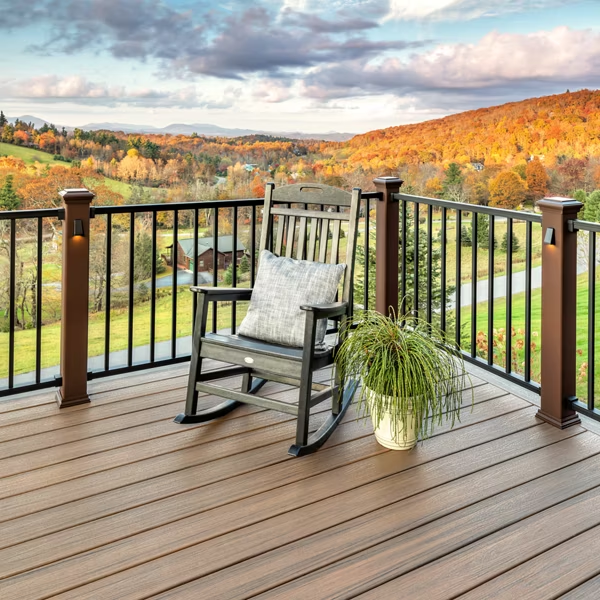
How Much Does Railing Add to a 12×12 Composite Deck?

Railing can become one of the largest costs on a 12×12 deck because guard systems are driven primarily by linear feet of protected edge, not by the deck’s 144 square feet of surface area.

A 12×12 rectangle has a full perimeter of:

12 + 12 + 12 + 12 = 48 linear feet

But that does not mean a 12×12 deck automatically needs 48 feet of railing.

For example, if one 12-foot side is attached to the house, the remaining three sides total:

12 + 12 + 12 = 36 linear feet

If the layout also has a roughly 4-foot stair opening, the illustrative level-guard quantity would fall to approximately 32 linear feet before accounting for the stair railing itself.

Do not automatically budget 48 feet of railing. Determine which edges actually require guards, subtract appropriate openings, and then account separately for stair guards, handrails, gates, and transitions.

Example: 32 Linear Feet of Level Railing

Using 32 linear feet only as an illustrative example shows how strongly railing selection can affect the cost of a small deck.

Railing Type BYS Planning Range 32-LF Example
Pressure-Treated Wood $30–$60 / LF $960–$1,920
Composite $60–$110 / LF $1,920–$3,520
Aluminum $60–$130 / LF $1,920–$4,160
Cable $120–$300 / LF $3,840–$9,600
Glass $150–$300+ / LF $4,800–$9,600+

These are planning bands for straightforward professionally installed level residential railing. Stair railing, gates, demolition, structural repair, custom fabrication, lighting, unusual geometry, and premium details can add cost.

The comparison also demonstrates why a premium railing system can push a 12×12 project beyond the broad $80-per-square-foot deck planning range. The deck is small, but the railing system is still a substantial project of its own.

Use the Deck Railing Cost Per Foot guide and Deck Railing Calculator to estimate the actual guarded perimeter.

How Deck Height and Stairs Change the Budget

Deck height can change the economics of a 12×12 project dramatically.

A low platform and a second-story deck can both contain exactly 144 square feet, but the elevated project may require a substantial stair system, guards, handrails, taller posts, different structural details, and considerably more labor.

Why Stair Cost Does Not Scale With Deck Area

Stair construction is driven primarily by the vertical distance between the deck and its destination—not by the size of the deck surface.

Stair scope can include:

  • stringers
  • treads
  • risers where used
  • top attachment
  • bottom support
  • landing construction
  • stair guards
  • handrails
  • additional posts and connections
  • composite stair boards and associated fasteners

Stairs Also Consume Space

This matters especially on a compact deck. The stair opening affects the usable deck edge and guard layout, while the stair run itself requires enough space in the yard.

More total rise generally means more risers and a longer horizontal stair run, so deck height should be established before assuming the stairs will fit neatly into the planned layout.

Budgeting rule: once a meaningful stair system is required, treat it as a separate project component rather than expecting its cost to be captured accurately by the deck’s 144 square feet.

Use the Deck Stairs Guide and Deck Stair Calculator to establish the actual geometry before pricing the stair package.

How Composite Decking Tier Changes a 12×12 Budget

“Composite decking” describes a material category, not one price.

Major manufacturers offer multiple collections ranging from value-oriented composite to premium composite and PVC. The difference between product tiers matters even on a 144-square-foot deck once borders, stairs, fascia, waste, and the required fastening system are included.

Product Position Typical Characteristics Budget Effect
Value Composite Simpler color and grain selections, lower entry price Best starting point for controlling surface-material cost
Mid-Range Composite Broader aesthetics and feature set Common balance of appearance and budget
Premium Composite More complex color variation, grain, and premium positioning Raises surface and accessory cost
PVC / Specialty Decking Wood-free or specialty construction with product-specific performance characteristics Often a premium material decision

Compare actual product collections rather than assuming an entire manufacturer is universally inexpensive or expensive.

The Best Composite Decking Brands guide compares major manufacturers by product family, while Decking Materials helps determine whether composite, PVC, wood, or another material class makes sense for the project.

Best budgeting sequence: choose the material class → shortlist the appropriate product tier → price the exact collection → add its required fasteners, fascia, borders, stairs, and waste.

How Picture Frames and Decking Patterns Affect Cost

A straightforward field of boards installed in one direction is generally simpler to plan and install than a decorative surface layout.

Picture-frame borders, breaker boards, diagonal decking, and multiple board colors can improve the finished appearance, but they can also change material quantities, framing, blocking, fasteners, cuts, waste, and labor.

Common Surface Upgrades

  • picture-frame borders
  • breaker boards
  • diagonal decking
  • multiple board colors
  • contrasting stair treads
  • decorative fascia

On a 12×12 deck, these upgrades deserve particular scrutiny because additional labor and material are being added to only 144 square feet of usable surface.

Picture framing also needs to be planned before the framing is complete because border boards often require additional support. Diagonal decking may require closer joist spacing under the selected manufacturer’s installation requirements.

A decorative decking pattern is not just an appearance decision. It can change the framing and material plan underneath the surface.

Review Deck Board Spacing and Deck Joist Spacing before finalizing the surface layout.

Replacing an Existing Deck? Add Demolition and Structural Discovery

Replacing an old 12×12 deck is not automatically the same project as building a new 12×12 deck on a clear site.

Demolition can add labor, disposal, equipment, and site-protection costs. Removing the old deck can also expose structural or moisture problems that were not visible when the project was initially estimated.

Possible Existing-Condition Costs

  • deck demolition
  • debris hauling and disposal
  • damaged ledger or house framing
  • inadequate flashing
  • rotted joists or beams
  • obsolete or inadequate connections
  • footings that cannot be reused
  • grading or drainage problems
  • unpermitted existing work

If the plan is to keep the existing framing and replace only the surface, the frame should be evaluated before purchasing new composite decking.

Resurfacing rule: the existing frame earns the right to be reused. New composite boards should not be used to conceal unresolved structural, moisture, connection, or permit problems.

Use the Deck Inspection Checklist before deciding whether resurfacing is appropriate.

Permit, Plan and Engineering Costs

Permit-related costs are local and should not be represented by one universal national fee.

Depending on the project and jurisdiction, the approval process can involve:

  • building permit fees
  • plan-review fees
  • zoning review
  • drawing preparation
  • survey information
  • engineering where required
  • electrical or other trade permits

A 12×12 deck contains only 144 square feet, but small size by itself does not establish whether the project is exempt from a building permit.

The 2024 IRC model code includes a permit exemption for certain decks no more than 200 square feet in area. But the provision also requires the deck to be no more than 30 inches above grade at any point, not attached to a dwelling or townhouse, and not serve the required exit door.

Local adoption and amendments control the actual project. Zoning, setback, or other local requirements may also apply independently of a building-permit exemption.

Do not assume “12×12 is small, so it does not need a permit.” Area is only one part of the model-code exemption, and the local authority having jurisdiction determines the requirements for the actual project.

Use the Deck Permit Checklist and Deck Permit Cost before finalizing the project budget.

DIY vs. Professional 12×12 Composite Deck Cost

A 12×12 footprint can make a deck more approachable for an experienced DIYer, but reducing the deck dimensions does not remove the structural or permit responsibilities.

DIY construction can reduce paid labor, but the DIY budget still needs to include the complete project.

DIY Costs Can Include

  • decking
  • framing lumber
  • concrete and footing materials
  • connectors and structural fasteners
  • hidden decking fasteners or screws
  • railing
  • stair materials
  • tool purchases or rentals
  • delivery
  • permit and plan costs
  • engineering where required
  • waste and replacement material
  • demolition and disposal where applicable

What Professional Labor Can Include

Depending on the contractor and project scope, professional pricing can include estimating, procurement, delivery coordination, excavation, structural layout, framing, decking installation, railing and stairs, permit administration, inspection coordination, cleanup, project management, and workmanship responsibility.

That does not mean every professional quote is automatically reasonable. It means the comparison needs to be based on equivalent scope.

Better DIY comparison: calculate the complete DIY material, equipment, permit, delivery, disposal, and contingency budget first. Then compare that number with a contractor proposal that clearly defines what is included.

12×12 vs. 12×16 vs. 16×20 Composite Deck Cost

Comparing common deck sizes shows both how surface area changes and why project cost does not necessarily increase at exactly the same rate.

Deck Size Area $40 / Sq. Ft. $60 / Sq. Ft. $80 / Sq. Ft.
12×12 144 sq. ft. $5,760 $8,640 $11,520
12×16 192 sq. ft. $7,680 $11,520 $15,360
16×20 320 sq. ft. $12,800 $19,200 $25,600

These figures apply the same broad $40–$80 planning band to each footprint. They are not quotes and do not account for differences in railing, stairs, height, demolition, site conditions, product tier, or other scope.

What You Gain by Moving From 12×12 to 12×16

A 12×16 deck contains 192 square feet, giving you 48 additional square feet compared with a 12×12 deck.

That is a 33% increase in usable surface area.

The additional four feet can make a meaningful difference in circulation and furniture placement, especially if the deck needs to support both a grill and a dining or seating area.

What You Gain by Moving to 16×20

A 16×20 deck contains 320 square feet, which is 176 square feet larger than a 12×12 deck.

That larger footprint is much better suited to distinct dining, cooking, and seating zones, but it also requires substantially more decking and structure.

Do not choose deck size from price alone. If 12×12 cannot comfortably support the intended furniture and circulation, the cheaper footprint may not be the better value.

Compare the dedicated 12×16 Composite Deck Cost and 16×20 Composite Deck Cost guides for larger layouts.

How to Compare Contractor Quotes for a 12×12 Deck

A lower quote and a higher quote are not meaningfully comparable until you know whether they describe the same deck.

Instead of focusing only on the total, normalize each proposal around the actual project scope.

Compare These Items Line by Line

Scope Item What to Verify
Deck dimensions Finished footprint and any landings or projections
Decking Exact manufacturer, collection, color, profile, and layout
Framing Member sizes, spacing, species/treatment, beam and post layout
Foundations Footing system, excavation, concrete, posts, bases
Fasteners Structural hardware and decking-fastener system
Railing System, linear feet, posts, gates, stair railing
Stairs Width, approximate rise, landing, rails, finish material
Demolition Removal, hauling, disposal, existing-condition allowances
Permits Who prepares, submits, pays, responds, and schedules inspections
Finish details Fascia, picture frame, skirting, lighting, trim
Cleanup Debris removal and site restoration
Warranty Manufacturer coverage and contractor workmanship terms

A lower quote can be the better value. A higher quote can also be the better value. The total price alone cannot tell you which proposal is more complete.

BYS quote rule: comparable scope matters more than an arbitrary number of bids. Make the proposals describe the same project before using price to choose between them.

Use the Deck Quote Comparison Tool and Deck Quote Scope Checklist to organize the comparison.

Is a $7,000, $10,000 or $14,000 Quote Reasonable?

For a 144-square-foot deck, those totals translate to very different effective project rates:

Total Quote Effective Cost / Sq. Ft. What to Ask
$7,000 About $49 / sq. ft. What decking, railing, stairs, permits, demolition, and finish work are included?
$10,000 About $69 / sq. ft. Which structural and finish features explain where the project sits within the broad planning range?
$14,000 About $97 / sq. ft. Does the scope include premium railing, substantial stairs, elevation, demolition, difficult access, premium decking, or other complexity?

None of these totals is automatically reasonable or unreasonable.

A simple low platform quoted at $14,000 deserves a different set of questions than a second-story 12×12 deck with premium railing, stairs, demolition, and difficult access quoted at the same amount.

Use cost per square foot diagnostically, not as a verdict. It can identify a quote that deserves closer investigation, but the actual scope determines whether the price makes sense.

How to Reduce the Cost of a 12×12 Composite Deck Without Cheapening the Structure

The safest places to control cost are usually design and finish decisions—not structural shortcuts.

High-Value Ways to Simplify

  • keep the footprint square and uncomplicated
  • use a value or mid-tier composite collection
  • choose a simple board layout
  • avoid unnecessary diagonal patterns
  • use premium railing only where it creates enough value to justify the cost
  • avoid oversized or unnecessarily complex stairs
  • choose stocked products when they meet the project requirements
  • plan the structure before ordering materials
  • define contractor scope before comparing prices

Do Not Save Money By

  • undersizing joists or beams
  • reducing required footing capacity
  • using incorrect structural fasteners
  • skipping required ledger flashing
  • stretching decking beyond manufacturer support requirements
  • weakening guard-post connections
  • ignoring permit requirements

Value engineering should simplify the project, not weaken the load path.

How to Build a Realistic 12×12 Composite Deck Budget

A useful 12×12 budget can be developed in a predictable order.

1. Start With the 144-Square-Foot Baseline

Use approximately $5,800–$11,500 as the broad initial planning band for a conventional professionally built composite project.

2. Define the Deck Height

Height helps establish whether guards, substantial stairs, taller posts, and other elevated-deck conditions will affect the scope.

3. Establish the Structural Layout

Determine the joist, beam, post, footing, and ledger or freestanding strategy before assigning structural material quantities.

4. Choose the Decking Tier

Compare actual composite or PVC collections rather than budgeting from the word “composite.”

5. Measure the Guarded Perimeter

Price the railing from the actual linear footage and selected system rather than the deck’s square footage.

6. Lay Out the Stairs

Establish total rise, stair width, landing requirements, guard conditions, and handrail requirements.

7. Add Existing-Condition Costs

Include demolition, disposal, repairs, drainage work, or other known site conditions.

8. Add Permit and Design Costs

Check the local permit process instead of using a generic national allowance.

9. Price the Complete Scope

Include fascia, borders, fasteners, connectors, delivery, cleanup, and other details that can disappear from an early square-foot estimate.

10. Compare the Result With Contractor Proposals

Use the budget as a framework for understanding contractor quotes—not as a predetermined price every contractor must match.

Frequently Asked Questions

How much does a 12×12 composite deck cost in 2026?

A 12×12 deck contains 144 square feet. Using a broad planning range of approximately $40–$80 per square foot for a complete professionally built composite deck gives an initial budget of about $5,800–$11,500. Premium railing, substantial stairs, elevation, demolition, difficult site conditions, premium materials, or other complexity can push the project higher.

How many square feet is a 12×12 deck?

A 12-foot-by-12-foot deck contains 144 square feet of nominal surface area.

Is 12×12 a good deck size?

A 12×12 deck can work well for one primary outdoor-living function, such as a compact dining setup or conversation area. It can become tight if the plan needs to accommodate a grill, large dining table, lounge seating, stairs, and generous circulation at the same time.

How much composite decking should I order for a 12×12 deck?

The nominal surface is 144 square feet. A preliminary 10% planning allowance would bring that to about 158 square feet, but the actual order should be calculated from board width, stock length, orientation, spacing, borders, breaker boards, stairs, fascia, and the cut plan.

How many composite boards are needed for a 12×12 deck?

There is no universal board count for a 12×12 deck. Board width, board length, direction, spacing, picture framing, breaker boards, stairs, and waste all affect the quantity. Calculate the actual layout instead of relying on a generic 20-to-25-board estimate.

How much railing does a 12×12 deck need?

The full rectangular perimeter is 48 linear feet, but the actual guard quantity depends on which edges require guards, whether one side is attached to the house, and where stairs or other openings occur. An attached 12×12 deck with one 12-foot side against the house has 36 linear feet along the other three sides before subtracting stair openings.

Does a 12×12 deck need a permit?

It depends on the local jurisdiction and project configuration. A 12×12 deck is 144 square feet, which is below the 200-square-foot threshold in the 2024 IRC model-code permit exemption for certain decks, but that exemption also includes height, attachment, and required-exit-door conditions. Local adoption and amendments control.

Is composite decking worth it on a 12×12 deck?

Composite can be a strong fit when lower routine maintenance, consistent appearance, and avoiding regular staining are priorities. Whether the added material cost makes sense depends on the selected product, ownership horizon, maintenance expectations, appearance preferences, and overall project budget.

Why is my 12×12 deck quote over $11,500?

The $5,800–$11,500 range is a broad planning band, not a ceiling. Premium railing, substantial stairs, greater elevation, demolition, difficult access, premium decking, complex surface layouts, engineering, site work, and local labor conditions can all push a 144-square-foot project higher.

Is $14,000 too much for a 12×12 composite deck?

Not necessarily. $14,000 equals roughly $97 per square foot for a 144-square-foot deck, which is above the broad conventional planning band and deserves a close look at scope. A simple low platform would be very different from an elevated project with premium railing, substantial stairs, demolition, difficult access, or other upgrades.

Is it cheaper to build a 12×12 deck yourself?

DIY construction can reduce paid labor, but the DIY budget still includes framing, foundations, decking, railing, stairs, connectors, fasteners, tools or rentals, delivery, permits, disposal, and other project costs. Structural and permit requirements do not disappear when the labor is DIY.

The Backyard Standard Final Budget

For a conventional professionally built 12×12 composite deck, $5,800–$11,500 is a useful first planning range based on 144 square feet at approximately $40–$80 per square foot.

But the small footprint makes project scope especially important.

A realistic budget comes from defining the actual deck:

  • 144-square-foot surface
  • structural framing and foundation
  • decking collection and layout
  • guarded perimeter
  • stair geometry
  • deck height
  • existing-condition work
  • permit and design requirements
  • site access and labor complexity

A simple low 12×12 deck may land toward the lower end of the range. A raised deck with railing and stairs can move substantially higher. A premium or complex 12×12 deck can exceed $11,500 even though the footprint remains only 144 square feet.

The Backyard Standard rule: use cost per square foot to establish the scale of the project. Use the actual scope to decide whether the final price makes sense.

Calculate Your 12×12 Deck Budget

Use the BYS planning tools to replace generic assumptions with project-specific inputs.

Sources & Methodology

Last reviewed: September 2026

This guide uses a broad planning model rather than presenting one national average as the correct price for every 12×12 deck. Actual costs vary by location, labor market, product selection, structural design, railing and stair scope, site conditions, permitting, and contractor scope.

The structural and installation guidance throughout this article should be verified against the locally adopted code, approved plans, applicable engineering, and the current installation instructions for the exact products being used.

For an actual project: local adopted requirements and approved plans control structural and permit decisions. Manufacturer instructions control product-specific installation requirements.

Related Deck Cost & Planning Guides

Composite Decking vs Wood (2026): Cost, Lifespan, Maintenance, and Which Deck Material Is Better?

Material Comparison

Composite Decking vs Wood: Cost, Lifespan, Maintenance & Long-Term Value

Choosing between composite decking and wood decking is one of the most important decisions in a deck project. Wood is familiar, widely available, and usually cheaper upfront. Composite decking costs more at the beginning, but it is designed to reduce maintenance, resist rot, and maintain a more consistent appearance over time.

The best choice depends on your budget, climate, maintenance tolerance, appearance preferences, and how long you plan to stay in the home.

For many homeowners, the real question is not simply whether composite decking is “better” than wood. It is whether the higher upfront cost of composite is justified by lower maintenance, longer service life, and fewer long-term repair concerns.

Composite decking is usually the better long-term choice for homeowners who want low maintenance and consistent appearance. Wood is usually the better fit when upfront cost, natural grain, or easy repairability matters most.

Quick Verdict: Composite Decking vs Wood

Choose Composite Decking
  • You want less staining, sealing, and sanding
  • You plan to own the home long-term
  • You want strong resistance to rot and insects
  • You prefer consistent color and fewer splinters
  • You are comfortable paying more upfront
Choose Wood Decking
  • You need the lowest upfront cost
  • You prefer real wood grain and natural aging
  • You are comfortable staining and sealing regularly
  • You want easier board repairs and modifications
  • You are building a shorter-term or budget-focused deck

Composite Decking vs Wood at a Glance

Category Composite Decking Wood Decking
Typical Lifespan 25–50 years depending on product tier 10–25 years for many softwood decks; longer for premium hardwoods
Upfront Cost Higher Lower for pressure-treated lumber
Maintenance Periodic cleaning Cleaning, staining, sealing, sanding, and repairs
Rot Resistance Strong Varies by species and maintenance
Insect Resistance Strong Varies by species and treatment
Splintering Very unlikely Common as boards age
Heat in Sun Can be hot, especially dark colors Usually less heat-retentive, but still warms in sun
Appearance Consistent, manufactured finish Natural grain and organic variation
Repairability Board replacement can be harder to match later Easier to cut, sand, stain, and replace
Best Fit Low-maintenance, long-term ownership Lower upfront cost and natural wood preference

The Main Difference: Upfront Cost vs Long-Term Maintenance

Wood decking usually wins on initial price. Pressure-treated lumber is one of the least expensive decking materials and is available at most lumberyards and home improvement stores.

Composite decking usually wins on long-term maintenance. It does not need regular staining or sealing, and modern capped composite boards are designed to resist rot, insects, splintering, and many forms of surface deterioration.

That trade-off is why composite decking often makes the most sense for homeowners who plan to keep the deck for many years, while wood may make more sense for homeowners trying to control the upfront project budget.

If you only compare the board price, wood looks much cheaper. If you compare 15–25 years of maintenance, repair, and replacement risk, composite becomes more competitive.

What Is Composite Decking?

Composite decking is an engineered deck board made from a blend of wood fibers and plastic polymers. Most modern composite decking is capped, meaning the board has a protective polymer shell designed to improve resistance to stains, fading, moisture, and surface wear.

Major composite decking brands include Trex, TimberTech, Fiberon, Deckorators, and MoistureShield. These brands usually offer multiple product tiers, from value-focused boards to premium collections with deeper textures, richer colors, and longer warranty coverage.

Composite decking is commonly chosen for:

  • lower maintenance
  • rot resistance
  • insect resistance
  • consistent appearance
  • longer expected service life
  • no regular staining or sealing

For a broader overview, see: Composite Decking Guide.

What Is Wood Decking?

Wood decking uses natural lumber boards installed over a structural deck frame. Wood remains popular because it is familiar, widely available, workable, and usually less expensive at the start of the project.

The phrase “wood decking” can mean several different materials. Pressure-treated pine, cedar, redwood, and tropical hardwoods perform very differently, so homeowners should avoid treating all wood decks as the same.

Common wood decking options include:

  • pressure-treated lumber: lowest upfront cost and widely available
  • cedar: natural appearance with moderate rot resistance
  • redwood: attractive softwood with regional availability limits
  • tropical hardwoods: dense, durable, expensive, and harder to install

Types of Wood Decking Compared to Composite

Wood Type Strengths Weaknesses How It Compares to Composite
Pressure-treated lumber Lowest upfront cost, widely available, easy to source Requires staining/sealing; can crack, warp, splinter, or rot Cheaper upfront but higher maintenance
Cedar Natural appearance, lighter weight, moderate decay resistance Needs maintenance; softer surface; can weather unevenly More natural look but less maintenance-friendly
Redwood Attractive color, natural resistance, stable appearance Regional availability and higher cost More natural but less predictable in cost and sourcing
Tropical hardwood Very dense, long-lasting, premium natural material Expensive, difficult to cut, requires specialized fasteners Can rival or exceed composite cost, with a different maintenance profile

Most homeowner comparisons are really “pressure-treated wood vs composite.” Premium hardwoods belong in a different category because they can cost as much as, or more than, many composite boards.

Composite Decking vs Wood Cost

Wood decking usually has the lower starting cost, especially when the comparison is pressure-treated lumber versus composite. Composite decking usually costs more for the boards and fasteners, but it may reduce long-term maintenance expenses.

Installed deck costs vary widely based on deck size, height, stairs, railings, framing condition, labor rates, permits, demolition, and material tier.

Material Typical Material Cost Position Installed Cost Position Best Fit
Pressure-treated wood Lowest Lowest Budget-focused decks
Cedar or redwood Moderate to high Moderate to high Natural appearance projects
Composite decking Moderate to high Moderate to high Low-maintenance long-term decks
Premium hardwood High High Premium natural material projects

The deck boards are only one part of the project cost. Railings, stairs, framing repairs, hidden fasteners, permits, demolition, and labor can change the final price more than the board material alone.

For deeper budgeting, see: Composite Decking Cost, Composite Deck Cost Per Square Foot, and Deck Cost Calculator.

25-Year Ownership Cost: Composite vs Wood

The biggest mistake homeowners make is comparing only the initial quote. A wood deck may cost less on day one, but maintenance can add up over time.

Wood decks often require periodic staining, sealing, cleaning, sanding, fastener repairs, and occasional board replacement. Composite decks still need cleaning, but they do not require the same staining and sealing cycle.

Cost Category Pressure-Treated Wood Composite Decking
Initial project cost Lower Higher
Routine cleaning Yes Yes
Staining/sealing Recurring expense Not typically required
Sanding/splinter repairs Likely over time Unlikely
Board replacement More likely Less likely if properly installed
Long-term ownership effort Higher Lower

Composite decking does not always “pay for itself” in a strict financial sense. Its value often comes from lower maintenance, fewer repairs, better long-term appearance, and less time spent preserving the deck.

Maintenance Comparison

Wood Maintenance
  • cleaning
  • staining
  • sealing
  • sanding rough spots
  • replacing cracked or rotted boards
  • checking fasteners
  • monitoring for rot and insects
Composite Maintenance
  • periodic washing
  • removing leaves and debris
  • cleaning spills quickly
  • keeping gaps clear
  • checking fasteners and framing
  • avoiding harsh cleaners not approved by the manufacturer

Composite decking is lower-maintenance than wood, but it is not maintenance-free. Pollen, leaves, grease, algae, and dirt can still accumulate on the surface.

For homeowners who dislike staining and sealing, composite is usually much easier to live with.

Related: Composite Decking Maintenance and Composite Decking Pros and Cons.

Durability and Lifespan

Composite decking generally lasts longer than pressure-treated wood because it resists rot, insects, splintering, and moisture-related surface deterioration better than traditional lumber.

Wood lifespan depends heavily on species, maintenance, climate, ventilation, and installation quality. A well-maintained cedar or hardwood deck can last a long time, while a neglected pressure-treated deck in a wet climate can deteriorate much sooner.

Material Typical Lifespan Main Lifespan Factors
Pressure-treated wood 10–20+ years maintenance, drainage, rot exposure, fasteners
Cedar / redwood 15–25 years maintenance, climate, sun exposure, board quality
Tropical hardwood 25–50 years depending on species and care species, installation, oiling preference, fastener system
Composite decking 25–50 years depending on product line cap quality, installation, ventilation, framing, cleaning

For a deeper breakdown, see: Composite Decking Lifespan.

Appearance: Natural Wood vs Consistent Composite

Appearance is one of the most personal parts of the composite vs wood decision.

Wood has real grain, natural variation, and an organic look that manufactured boards cannot perfectly duplicate. Composite decking offers a more consistent appearance, with colors and textures designed to stay more uniform over time.

Wood appearance strengths

  • real grain
  • natural variation
  • can be stained different colors
  • can be sanded or refinished
  • traditional deck appearance

Composite appearance strengths

  • consistent color
  • multi-tonal premium finishes
  • less uneven weathering
  • no gray weathering unless designed into the color
  • fewer cracks, checks, and splinters

Wood often looks most natural when new or freshly maintained. Composite often looks more consistent after several years of exposure.

For color planning, see: Best Composite Decking Colors.

How Wood and Composite Decks Age

After Years of Use Wood Decking Composite Decking
Color Can gray, fade, or weather unevenly Usually more consistent, though some fading can occur
Surface feel May splinter, check, or roughen Generally smoother and splinter-free
Moisture damage Can rot if water is trapped Highly resistant to rot
Fasteners Can loosen as boards move Hidden systems can maintain cleaner appearance
Repairs Easier to sand, stain, or replace boards Board replacement may be harder if colors are discontinued

Composite Decking Problems vs Wood Deck Problems

Neither material is problem-free. Composite decking and wood decking simply have different weaknesses.

Composite Problems
  • higher upfront cost
  • heat retention in dark colors
  • surface scratching
  • thermal expansion and contraction
  • harder color matching for future board replacement
  • less natural feel than real wood
Wood Problems
  • rot and decay
  • insect damage
  • splintering
  • cracking and checking
  • warping or cupping
  • recurring staining and sealing

For a deeper look at composite-specific issues, see: Composite Decking Problems.

Heat: Does Composite Decking Get Hotter Than Wood?

Composite decking can get hotter than wood in direct sun, especially when darker board colors are used. However, color often matters more than material.

A dark composite board, dark PVC board, or dark stained wood board will usually feel hotter than a lighter tan, gray, or weathered-brown board.

Choose lighter colors if:

  • the deck receives full afternoon sun
  • barefoot comfort matters
  • the deck is near a pool
  • you live in a hot climate
  • pets or children will use the deck often

Related: How Hot Does Composite Decking Get?.

Rot, Insects, and Moisture Resistance

Composite decking has a major advantage over wood when it comes to rot and insect resistance. Because modern composite boards use synthetic polymers and protective cap layers, they are much less vulnerable to the moisture-driven decay that affects wood decking.

Wood can perform well when maintained properly, but it remains an organic material. If water is trapped around boards, fasteners, joists, stairs, or ledger areas, wood can deteriorate over time.

Deck safety depends on more than the surface boards. The framing, ledger, joists, beams, posts, footings, flashing, and fasteners matter regardless of whether the surface is wood or composite.

Related structural guides: Deck Framing Layout, Deck Flashing, and Deck Joist Spacing.

Installation Differences

Wood is generally more forgiving to cut, modify, sand, and repair. Composite decking requires more attention to manufacturer instructions, especially for expansion gaps, joist spacing, fastener compatibility, and ventilation.

Wood installation advantages

  • easy to cut and shape
  • familiar to most contractors
  • simple board replacement
  • can be sanded or modified later

Composite installation requirements

  • manufacturer-approved fasteners
  • correct expansion gaps
  • proper joist spacing
  • adequate ventilation
  • careful handling to prevent surface damage

Composite decking should not be installed exactly like wood. The board may look similar, but the movement, fastener requirements, and spacing rules are different.

Related: Hidden Deck Fasteners, Deck Board Spacing Guide, and Grooved vs Square Edge Decking.

Resale Value: Composite vs Wood

Both wood and composite decks can improve outdoor living appeal. Resale value depends on project quality, design, local market expectations, and whether the deck feels safe, attractive, and usable.

Wood may appeal to buyers who like natural materials, but an older wood deck with visible rot, splintering, or overdue maintenance can become a negative. Composite decking may appeal to buyers who want lower upkeep, especially when the deck still looks clean and well maintained.

A well-built, well-maintained deck usually matters more than the material label alone.

Which Material Is Better by Homeowner Type?

Homeowner Type Better Starting Point Why
Lowest upfront budget Pressure-treated wood Usually the cheapest material to install
Low-maintenance homeowner Composite decking No recurring staining or sealing cycle
Long-term homeowner Composite decking Longer lifespan and more consistent appearance
Natural-material preference Wood decking Real grain and traditional appearance
Premium natural deck Tropical hardwood Durable natural material, but expensive
Hot full-sun deck Light-colored wood or light-colored composite Color selection matters heavily for heat
Rental or short-term property Depends on budget Wood may control cost; composite may reduce maintenance calls

Choose Composite Decking If

  • you want the deck to require less annual maintenance
  • you dislike staining, sealing, or sanding
  • you plan to stay in the home long enough to benefit from lower upkeep
  • you want strong resistance to rot and insects
  • you want fewer splinters and cracks
  • you prefer consistent color over natural weathering
  • you are comfortable with the higher upfront price

Choose Wood Decking If

  • you need to keep the initial project cost as low as possible
  • you prefer the look and feel of real wood
  • you are comfortable maintaining the deck regularly
  • you want a material that can be sanded, stained, or refinished
  • you want easier board modification or replacement
  • you are building a smaller or shorter-term deck project

What Most Homeowners Regret

  • Choosing wood only for the low upfront price, then underestimating maintenance
  • Choosing composite without testing color samples in direct sun
  • Ignoring railing, stair, fastener, and framing costs
  • Installing composite over old framing that should have been repaired
  • Assuming composite means no cleaning at all
  • Assuming wood will stay attractive without regular care
  • Comparing premium composite against budget wood without considering lifespan

The best material is the one that matches how you actually want to own the deck, not just how you want it to look on installation day.

Frequently Asked Questions

Is composite decking better than wood?

Composite decking is usually better for low maintenance, rot resistance, insect resistance, and long-term appearance consistency. Wood is usually better for lower upfront cost, natural grain, and easier refinishing.

Is wood decking cheaper than composite?

Yes. Pressure-treated wood is typically cheaper upfront than composite decking. However, staining, sealing, sanding, and board replacement can increase the long-term ownership cost of wood.

Does composite decking last longer than wood?

Composite decking generally lasts longer than pressure-treated wood. Many composite products are designed for 25–50 years of service depending on product tier, installation, and maintenance.

Does composite decking get hotter than wood?

Composite decking can get hotter than wood in direct sun, especially in dark colors. Color, shade, airflow, and climate usually matter more than brand alone.

Is composite decking worth the extra cost?

Composite decking is often worth the extra cost for homeowners who want less maintenance, longer lifespan, and better long-term appearance consistency. It may not be worth it for homeowners focused only on the lowest upfront price.

What is the biggest disadvantage of composite decking?

The biggest disadvantage is higher upfront cost. Other drawbacks can include heat retention, surface scratching, and more specific installation requirements.

What is the biggest disadvantage of wood decking?

The biggest disadvantage of wood decking is recurring maintenance. Wood must be cleaned, stained, sealed, and monitored for rot, insects, cracks, splinters, and fastener issues.

Can you replace wood deck boards with composite?

Sometimes, but the existing frame must be inspected first. Composite boards require correct joist spacing, ventilation, and structural support. Old, uneven, or damaged framing should be repaired before installing composite decking.

Final Verdict

Composite decking is usually the stronger long-term choice for homeowners who want a lower-maintenance deck with better resistance to rot, insects, splintering, and weather-related surface deterioration.

Wood decking is still a smart choice when upfront cost, natural appearance, repairability, and traditional materials matter more than maintenance reduction.

Choose composite if you want easier ownership. Choose wood if you want the lowest starting cost or the authentic look and workability of real lumber.

Sources & Technical References

Related Decking Guides

Start Here

Composite Decking Guide

Learn how composite decking works, what it costs, how long it lasts, and how to choose the right product.

Decision Guide

Composite Decking Pros and Cons

Compare the major advantages and drawbacks before choosing composite decking.

Cost Guide

Composite Decking Cost

Understand board pricing, labor, railings, stairs, framing repairs, and installed project cost.

Cost Guide

Composite Deck Cost Per Square Foot

Translate material and labor costs into realistic square-foot project estimates.

Calculator

Deck Cost Calculator

Estimate your deck cost based on size, material, railings, stairs, labor, and project complexity.

Brand Rankings

Best Composite Decking Brands

Compare Trex, TimberTech, Fiberon, Deckorators, MoistureShield, and other leading brands.

Value Guide

Best Composite Decking for the Money

Find the strongest balance of price, durability, appearance, and long-term value.

Durability

Composite Decking Lifespan

Learn what determines whether composite decking lasts 25 years, 30 years, or longer.

Problem Guide

Composite Decking Problems

Understand heat, scratches, fading, mold, expansion, slipperiness, and other common concerns.

Material Comparison

PVC vs Composite Decking

Compare moisture resistance, cost, movement, heat, and long-term performance.

Material Comparison

Composite Decking vs Aluminum Decking

Compare composite against aluminum for durability, fire resistance, cost, heat, and appearance.

Framing

Deck Framing Layout

Understand how joists, beams, posts, footings, ledgers, and decking work together structurally.

Composite Decking Problems (2026): 11 Issues Homeowners Should Know (and How to Avoid Them)

Composite Decking Problems

Composite Decking Problems: What Homeowners Should Know Before Buying

Composite decking solves many of the problems that make wood decks difficult to own, including rot, splintering, frequent staining, and insect damage. But composite decking is not perfect. It can get hot, scratch, expand, fade slightly, grow surface mold, or feel flexible if it is installed over poor framing.

The key is understanding which problems are real, which are mostly caused by poor installation, and which are overstated because of older early-generation composite boards.

Modern capped composite decking performs much better than the early composite products from the 1990s and early 2000s, but homeowners still need to choose the right board, color, fastener system, and framing layout for their climate and budget.

Most composite decking problems are manageable. The biggest mistakes are choosing the wrong color for full sun, installing boards over weak framing, ignoring manufacturer spacing requirements, and assuming all composite boards perform the same.

Quick Verdict: Are Composite Decking Problems Serious?

Usually Minor
  • heat retention
  • surface scratching
  • minor fading
  • mold on surface debris
  • static electricity
  • occasional deck noise
More Serious
  • poor joist spacing
  • incorrect expansion gaps
  • trapped moisture under the deck
  • weak framing beneath premium boards
  • dark boards in very hot climates
  • wrong product tier for the project

Composite decking usually fails homeowners because expectations, installation, or product selection were wrong — not because composite decking is automatically a bad material.

Composite Decking Problems at a Glance

Problem Typical Cause Severity Best Prevention
Heat retention Dark colors and direct sun Moderate in hot climates Choose lighter colors and add shade
Scratching Dragging furniture or grills Moderate Use furniture pads and capped boards
Expansion and contraction Temperature movement Low if installed correctly Follow manufacturer gapping rules
Mold or mildew Organic debris and trapped moisture Low to moderate Clean regularly and maintain drainage
Color fading UV exposure Low with capped boards Choose quality capped composite
Board flex Wide joist spacing or weak framing Moderate Use correct joist spacing
Staining Grease, oil, sunscreen, food spills Low to moderate Clean spills quickly
Slipperiness Algae, mold, pollen, wet debris Moderate if neglected Keep surface clean
Fire concerns Combustible materials and debris Context-dependent Clear debris and compare fire-rated options

The Biggest Misunderstanding About Composite Decking Problems

Many homeowners read online complaints about composite decking without realizing that not all composite decking is the same.

Early composite boards were often uncapped. That means the composite core was more exposed to moisture, staining, fading, and surface contamination. Modern capped composite decking uses a protective polymer shell around the board surface, which helps improve resistance to moisture absorption, staining, fading, and everyday wear.

That does not make modern composite maintenance-free or damage-proof, but it does mean older complaints do not always reflect how better capped boards perform today.

For a deeper explanation of board construction, see: Capped vs Uncapped Composite Decking.

1. Composite Decking Can Get Hot in Direct Sun

Heat is one of the most common composite decking complaints. Composite boards can become uncomfortable in direct summer sun, especially when the deck uses dark brown, charcoal, or black-toned boards.

This does not mean every composite deck is too hot to use. Surface temperature depends heavily on color, sunlight, airflow, climate, and shade.

What makes composite decking hotter?

  • Dark board colors: darker colors absorb more solar energy.
  • Full sun exposure: unshaded south- or west-facing decks often feel hotter.
  • Poor airflow: low decks with limited ventilation may hold more heat.
  • Dense surrounding hardscape: concrete, stone, and walls can reflect heat back onto the deck.
  • Regional climate: heat matters more in the Southeast, Southwest, and other hot-summer regions.

Color usually matters more than brand. A dark premium board can feel hotter than a lighter mid-tier board from another manufacturer.

How to reduce composite deck heat

  • choose light gray, tan, driftwood, or medium brown boards
  • avoid very dark colors on pool decks and barefoot areas
  • add a pergola, umbrella, roof extension, or shade sail
  • maintain airflow beneath the deck
  • test full-size samples outside before buying

For a deeper temperature breakdown, see: How Hot Does Composite Decking Get? and Best Composite Decking Colors.

2. Composite Decking Can Scratch

Composite decking is durable, but it is not scratch-proof. Scratches usually happen from dragging furniture, moving grills, sliding planters, pet claws, or using sharp snow-removal tools.

Premium capped boards generally resist scratches better than entry-level boards because they often have stronger cap layers, better surface textures, and more durable finishes. However, even premium boards can show damage if heavy metal furniture is dragged across the surface.

Common scratch sources

  • metal patio furniture legs
  • grill wheels
  • large ceramic planters
  • dog claws in high-traffic areas
  • snow shovels with metal edges
  • construction debris during installation

How to prevent scratches

  • use furniture pads under tables and chairs
  • lift furniture instead of dragging it
  • place grill mats under grills and prep areas
  • use plastic snow shovels instead of metal-edged tools
  • choose premium capped boards for high-traffic decks

Scratch resistance is a product-tier issue more than a brand-name issue. Premium lines from Trex, TimberTech, Fiberon, Deckorators, and MoistureShield usually perform better than budget lines.

To compare brands and product tiers, see: Best Composite Decking Brands and Best Composite Decking for the Money.

3. Composite Decking Expands and Contracts

Composite decking contains plastic polymers, so it expands and contracts as temperatures change. This is normal. The problem happens when boards are installed without the correct spacing.

If gaps are too tight, boards may press against each other, push against posts or walls, or develop uneven-looking joints. If gaps are too wide, the deck may look poorly finished.

Expansion problems can cause:

  • tight board joints
  • board buckling
  • uneven butt joints
  • pressure against fixed structures
  • fastener stress
  • noisy movement during temperature swings

Manufacturer installation guides are very specific about spacing, fasteners, and framing requirements. TimberTech publishes installation resources that include spacing guidance, and Fiberon provides official installation instructions for its decking systems.

Expansion is not usually a product defect. It is a design and installation detail that needs to be planned before the boards are installed.

Related installation guides: Deck Board Spacing Guide, Hidden Deck Fasteners, and Grooved vs Square Edge Decking.

4. Composite Decking Can Grow Surface Mold or Mildew

Composite decking resists rot better than wood, but mold and mildew can still grow on organic material sitting on top of the deck surface.

Mold usually grows on pollen, leaves, dirt, food residue, and damp debris — not because the capped composite board itself is rotting like wood.

Mold is more likely when:

  • leaves collect between boards
  • the deck is shaded most of the day
  • airflow beneath the deck is poor
  • gutters drain onto the deck
  • pollen and dirt are allowed to build up
  • furniture mats trap moisture against the surface

How to prevent mold and mildew

  • sweep leaves and debris regularly
  • rinse pollen during heavy pollen seasons
  • clean food and grease spills quickly
  • keep gaps between boards clear
  • avoid trapping wet outdoor rugs against the deck for long periods
  • maintain drainage around the deck structure

A dirty composite deck can become slippery even if the board itself is in good condition. Cleaning is still part of ownership.

For long-term ownership guidance, see: Composite Decking Maintenance.

5. Composite Decking Can Fade, Especially Lower-Tier Boards

Modern capped composite decking is much more fade-resistant than early composite boards, but no outdoor decking material is completely immune to UV exposure.

Fading is usually most noticeable on lower-tier boards, very dark colors, heavily exposed decks, or older products without strong cap protection.

What affects fading?

  • board color
  • cap quality
  • UV exposure
  • product tier
  • cleaning habits
  • regional sun intensity

Premium capped boards usually hold their color better because the protective shell is engineered to resist UV damage, staining, and surface wear.

“Fade-resistant” does not mean “will look brand new forever.” It means the board is designed to limit excessive fading compared with older or lower-quality materials.

For durability and warranty context, see: Composite Decking Lifespan and Composite Decking Warranty Comparison.

6. Composite Boards Can Feel Flexible Over Weak Framing

Composite decking does not always feel as stiff as traditional wood, especially when installed over wide joist spacing or uneven framing.

Many homeowners describe this as a “bouncy” or “soft” deck. In many cases, the issue is not the board itself — it is the framing beneath it.

Board flex is affected by:

  • joist spacing
  • board thickness
  • solid vs scalloped board profile
  • deck height
  • blocking
  • picture-frame borders
  • stair framing
  • overall frame stiffness

Some composite boards are approved for 16-inch on-center joist spacing in standard installations, but 12-inch spacing is often used for a firmer feel, diagonal board layouts, stairs, or heavier-use decks.

A premium composite board installed over weak framing can still feel disappointing. The deck frame is the foundation of the entire walking surface.

Related framing guides: Deck Joist Spacing, Deck Board Thickness, and Deck Framing Layout.

7. Composite Decking Can Stain From Grease, Oil, and Spills

Composite decking is stain-resistant, not stain-proof. Premium capped boards are better protected than older uncapped products, but oils, grease, sunscreen, wine, food spills, and grill residue should still be cleaned quickly.

Common stain sources

  • grill grease
  • sunscreen and body oils
  • bird droppings
  • food spills
  • wine or colored drinks
  • rust from metal furniture
  • leaf tannins

How to reduce staining

  • clean spills as soon as possible
  • use a grill mat approved for composite decking
  • avoid rubber-backed mats that trap moisture or discolor surfaces
  • rinse leaves and tannin stains before they sit too long
  • follow the manufacturer’s cleaning instructions

The longer grease or oil sits on the surface, the harder it may be to remove. Composite is easier to maintain than wood, but it still needs basic care.

8. Composite Decking Can Become Slippery When Dirty

Composite decking is not automatically slippery, but it can become slick when algae, mildew, pollen, leaves, or mud build up on the surface.

Texture helps, but texture does not replace cleaning. A textured board covered in algae can still be slippery.

Slipperiness is more likely on:

  • shaded decks
  • north-facing decks
  • pool decks
  • decks near trees
  • decks with poor drainage
  • stairs and landings

How to improve traction

  • keep the deck clean
  • remove algae and mildew buildup
  • avoid allowing leaves to decompose on the surface
  • use manufacturer-approved cleaners
  • choose textured boards for stairs and wet areas
  • add lighting and handrails where needed

Deck safety is broader than the board surface. Railings, stairs, fasteners, ledger connections, and framing condition all matter.

9. Composite Decking Can Create Static Electricity

Static electricity is an occasional complaint with composite decking, especially in dry climates. Because composite boards contain plastic, they can sometimes build up electrical charge.

For most homeowners, static is a minor annoyance rather than a major performance issue.

Static is more likely when:

  • the climate is very dry
  • humidity is low
  • synthetic outdoor rugs are used
  • certain shoes create friction on the surface

How to reduce static

  • keep the deck clean
  • avoid problematic synthetic rugs
  • maintain normal humidity where practical
  • follow manufacturer recommendations if static becomes persistent

10. Composite Decking Can Make Noise

Some composite decks make popping, creaking, or ticking sounds as boards expand, contract, or move slightly against fasteners.

This is more likely when boards are installed too tightly, fasteners are incorrect, joists are uneven, or the deck experiences major temperature swings.

Common causes of deck noise

  • incorrect fastener spacing
  • boards installed too tightly
  • uneven joists
  • thermal expansion
  • improper hidden fastener installation
  • loose framing connections

Hidden fastener systems can create cleaner spacing and appearance when used correctly, but they still need to match the board profile and manufacturer requirements.

Related: Hidden Deck Fasteners.

11. Fire Resistance Can Be a Concern in Wildfire Areas

Composite decking is not the most fire-resistant deck material. It contains combustible materials and may not be the best choice for every wildfire-prone location.

That does not mean composite decking is unsafe everywhere. It means homeowners in wildfire zones should compare product fire ratings, local code requirements, defensible space rules, and alternative materials before buying.

Fire risk is affected by:

  • decking material
  • dry leaves beneath the deck
  • open gaps where embers can collect
  • combustible storage under the deck
  • nearby vegetation
  • local wildfire exposure

Ways to reduce risk

  • clear debris from beneath the deck
  • avoid storing firewood under the deck
  • maintain defensible space around the structure
  • compare fire-rated decking options
  • check local building requirements

In high-risk wildfire areas, aluminum decking or specialized fire-rated decking may be worth comparing against composite.

Related material comparison: Composite Decking vs Aluminum Decking.

Problems Caused by Installation vs Product Quality

Problem Usually Installation-Related? Usually Product-Related? What to Check
Board buckling Yes Sometimes Gaps, fasteners, temperature spacing
Bouncy feel Yes Sometimes Joist spacing, blocking, board profile
Excessive fading Sometimes Yes Product tier, cap quality, warranty terms
Surface scratches Sometimes Sometimes Cap quality, usage, furniture protection
Mold buildup Often maintenance-related Rarely Drainage, shade, debris, cleaning
Noise Yes Sometimes Fasteners, spacing, joist flatness
Heat No Partly Color, sun exposure, ventilation

Problems That Modern Composite Decking Has Mostly Improved

Some composite decking complaints are based on older products that do not represent the better capped boards available today.

Modern boards have improved:

  • fading resistance through improved cap layers and UV stabilizers
  • stain resistance through protective polymer shells
  • moisture resistance through better board construction
  • surface texture through deeper embossing and wood-grain patterns
  • color realism through multi-tonal finishes
  • warranty coverage through clearer product-line protections

The improvement is especially noticeable when comparing modern capped composite decking against early uncapped boards.

Problems That Still Matter Today

Even with modern capped boards, some issues still matter because they are tied to physics, climate, installation, or homeowner behavior.

Still important:

  • dark boards get hotter than light boards
  • composite expands and contracts with temperature
  • cheap boards generally do not perform like premium boards
  • weak framing makes any deck feel worse
  • mold can grow on dirt and debris
  • scratches can still happen
  • fire performance matters in wildfire-prone regions

Composite decking is lower-maintenance than wood, not zero-maintenance.

Composite Decking Problems by Climate

Climate Main Concerns Best Planning Moves
Hot sunny climates Heat retention, fading, barefoot comfort Choose lighter colors, add shade, test samples outside
Wet climates Mold, algae, drainage, slipperiness Improve airflow, clean regularly, avoid debris buildup
Cold climates Expansion cycles, snow removal, freeze-thaw moisture Use correct gaps and plastic snow tools
Coastal climates Moisture, salt exposure, fastener corrosion Compare PVC, use compatible corrosion-resistant fasteners
Wildfire-prone climates Combustibility and ember exposure Compare fire-rated products and aluminum decking

Are Composite Decking Problems Worse Than Wood Deck Problems?

Composite decking has problems, but wood decking has a different set of problems.

Wood decks commonly require regular staining, sealing, sanding, board replacement, fastener repairs, and rot prevention. Wood can splinter, cup, crack, check, warp, attract insects, and decay if water is trapped.

Composite decking removes many of those wood-specific issues, but it introduces other considerations like heat retention, expansion gaps, product-tier differences, and surface scratching.

Issue Composite Decking Wood Decking
Rot Very resistant Common if unprotected
Splinters Very unlikely Common over time
Heat Can be significant with dark colors Usually less intense, but still gets warm
Maintenance Cleaning Cleaning, staining, sealing, sanding
Upfront cost Higher Lower
Long-term appearance More consistent Depends heavily on maintenance
Scratching Possible Can dent, gouge, splinter, and weather

For a full material comparison, see: Composite Decking vs Wood.

When Composite Decking May Not Be the Best Choice

Composite decking is a strong choice for many homeowners, but it is not automatically the best material for every deck.

Composite may not be ideal if:

  • the deck is in full desert sun and barefoot comfort is the top priority
  • you live in a high-risk wildfire zone and need better fire performance
  • you want the lowest possible upfront cost
  • you expect the deck to be completely scratch-proof
  • you are unwilling to clean the surface periodically
  • your existing frame is weak, uneven, or poorly ventilated

Consider PVC decking if:

  • moisture resistance is a major priority
  • the deck is near a pool, dock, or coastal area
  • you want a synthetic board with no wood fiber in the core

Related: PVC vs Composite Decking.

Consider aluminum decking if:

  • fire resistance is a major priority
  • maximum structural stiffness matters
  • you are comfortable with a more industrial appearance
  • you want very low maintenance and high durability

Related: Composite Decking vs Aluminum Decking.

How Premium Composite Boards Reduce Common Problems

Premium composite decking does not eliminate every problem, but it can reduce several of the most common complaints.

Higher-end boards often provide:

  • better fade resistance
  • stronger stain resistance
  • more realistic color variation
  • deeper surface texture
  • better scratch resistance
  • longer warranty coverage
  • more stable long-term appearance

Budget boards can still be good choices, but they should be matched to the right project. A small rental deck, secondary platform, or budget-conscious replacement project may not need the most premium board. A highly visible forever-home deck may justify the upgrade.

Related buying guides: Best Composite Decking Brands and Best Composite Decking for the Money.

Composite Decking Brands That Address Many Common Problems

Major manufacturers approach composite decking problems differently. Some emphasize premium aesthetics. Others emphasize value, moisture resistance, surface durability, or broad retail availability.

Trex

Trex is one of the most widely recognized composite decking brands and offers several product tiers. It is often compared for mainstream availability, contractor familiarity, and broad homeowner recognition.

TimberTech

TimberTech offers both composite and AZEK Advanced PVC decking. It is often considered by homeowners who want premium finishes, strong aesthetics, and PVC options for moisture-heavy environments.

Fiberon

Fiberon offers composite and PVC decking lines across multiple price points. It is often a strong value-oriented option for homeowners comparing mid-tier performance.

Deckorators

Deckorators is known for mineral-based composite options in some product lines, which may appeal to homeowners comparing newer material technologies.

MoistureShield

MoistureShield is often considered for moisture-exposed applications and boards designed for challenging environments.

Compare these options here: Best Composite Decking Brands, Trex vs TimberTech, TimberTech vs Fiberon, and Fiberon vs Trex.

What Homeowners Notice After 5 Years

Composite decking problems often look different after years of ownership than they do during the buying process.

1. Color choice matters more than expected

Homeowners who choose very dark boards for full-sun decks may notice heat, dust, pollen, and water spots more than expected.

2. Scratches appear in predictable areas

Wear usually shows first near grill zones, furniture areas, stairs, gates, and high-traffic walking paths.

3. Framing quality becomes obvious

If the frame is uneven, undersized, or too widely spaced, the deck may feel less solid even if the boards are high quality.

4. Cleaning still matters

Composite decks do not need staining like wood, but pollen, leaves, food spills, and algae still need to be removed.

5. Replacement matching can be difficult

If a board is damaged years later, exact color matching may be difficult because product lines, colors, and production runs can change.

What Most Composite Decking Buyers Regret

  • Choosing a dark color without testing it outside
  • Assuming all composite boards perform the same
  • Spending on premium boards but ignoring weak framing
  • Forgetting to budget for railings, stairs, fasteners, and framing repairs
  • Using the wrong fasteners or spacing
  • Assuming composite decking requires no cleaning
  • Comparing warranties without reading exclusions
  • Choosing based only on online photos instead of real samples

The best composite deck projects start with realistic expectations: lower maintenance than wood, better long-term consistency, but still dependent on color choice, installation, and product tier.

How to Avoid Most Composite Decking Problems

1. Choose the right product tier

Entry-level boards can work well for budget projects, but high-traffic decks, full-sun decks, and long-term homes often justify a stronger capped board.

2. Test board samples outside

View samples in direct sun, shade, morning light, and late afternoon light. This helps you evaluate color, heat, texture, and dirt visibility.

3. Follow manufacturer installation instructions

Composite decking must be installed with correct spacing, fasteners, joist layout, and ventilation. Do not treat it exactly like wood.

4. Upgrade framing where needed

If the existing frame is old, uneven, undersized, or poorly ventilated, replacing the surface boards alone may not solve the problem.

5. Choose color based on climate

Dark boards can look beautiful, but lighter boards usually perform better for barefoot comfort in hot climates.

6. Maintain the deck surface

Sweep debris, clean spills, rinse pollen, and keep gaps clear so drainage and airflow continue working.

Frequently Asked Questions

What is the biggest problem with composite decking?

The most common complaint is heat retention, especially with dark boards in direct sunlight. However, many serious problems come from poor installation, weak framing, or choosing the wrong product tier.

Does composite decking warp?

Composite decking can expand and contract with temperature changes. Proper spacing and fastener installation help prevent buckling, warping, and joint problems.

Does composite decking scratch easily?

Composite decking can scratch if furniture, grills, or heavy objects are dragged across it. Premium capped boards usually resist scratches better than entry-level boards.

Does composite decking fade?

Modern capped composite decking is much more fade-resistant than older uncapped boards, but some color change can still occur over years of UV exposure.

Is composite decking slippery when wet?

Composite decking can become slippery if algae, mold, pollen, or wet debris builds up on the surface. Regular cleaning helps maintain traction.

Does composite decking get mold?

Mold can grow on organic debris sitting on the surface of composite decking. The board itself is generally resistant to rot, but dirt, pollen, and leaves can support mold growth if not cleaned.

Does composite decking crack?

Quality composite decking is not expected to crack under normal use when properly installed. Cracking is more likely when boards are damaged, improperly fastened, unsupported, or exposed to unusual stress.

Is composite decking better than wood?

Composite decking is usually better for homeowners who want lower maintenance, no splinters, and better resistance to rot. Wood may still be better for homeowners who want the lowest upfront cost or a natural material that can be sanded and refinished.

How long does composite decking last?

Many modern composite decking products can last 25 to 50 years depending on product tier, installation quality, climate, framing condition, and maintenance.

Final Verdict

Composite decking has real limitations, but most problems are manageable with the right planning. Heat, scratches, fading, mold, expansion, and board flex are usually controlled through better color selection, capped board construction, correct spacing, stronger framing, and routine cleaning.

Composite decking is not the best choice for every homeowner, but it remains one of the strongest options for people who want a durable, lower-maintenance deck surface without the recurring staining, splintering, and rot concerns of wood.

The best composite deck is not just the best board. It is the right board, color, fastener system, frame, drainage plan, and maintenance expectation for your specific home.

Sources & Technical References

Related Decking Guides

Start Here

Composite Decking Guide

Learn how composite decking works, what it costs, how long it lasts, and how to choose the right board.

Decision Guide

Composite Decking Pros and Cons

Compare the major advantages and trade-offs before choosing composite over wood, PVC, or aluminum.

Brand Rankings

Best Composite Decking Brands

Compare Trex, TimberTech, Fiberon, Deckorators, MoistureShield, and other leading decking brands.

Value Guide

Best Composite Decking for the Money

Find the best balance of price, durability, appearance, and long-term value.

Durability

Composite Decking Lifespan

Understand what determines whether a composite deck lasts 25 years, 30 years, or longer.

Cost Guide

Composite Decking Cost

See what affects board pricing, labor, railings, stairs, framing repairs, and total installed cost.

Color Guide

Best Composite Decking Colors

Compare color families, heat retention, fading, dirt visibility, and design fit.

Heat Guide

How Hot Does Composite Decking Get?

Learn why composite boards heat up and how color, sunlight, and airflow affect barefoot comfort.

Material Comparison

PVC vs Composite Decking

Compare moisture resistance, cost, movement, heat, and long-term performance.

Material Comparison

Composite Decking vs Aluminum Decking

Compare composite against aluminum for heat, fire resistance, durability, appearance, and cost.

Framing

Deck Joist Spacing

Learn how joist spacing affects board flex, deck feel, installation quality, and long-term performance.

Installation

Hidden Deck Fasteners

Understand how hidden fasteners affect board spacing, appearance, repair access, and warranty compatibility.

TimberTech vs Fiberon Decking (2026): Cost, Durability, and Which Brand Is Better?

Timbertech vs Fiberon
Brand Comparison

Which Composite Decking Brand Is Better? TimberTech vs Fiberon (2026):

Choosing the right composite decking brand can significantly influence how your deck looks, feels, performs, and ages over time. Two of the most frequently compared manufacturers are TimberTech and Fiberon, both of which produce engineered decking designed to outperform traditional wood materials.

Both brands make capped composite decking, and both also offer PVC decking lines for homeowners who want stronger moisture resistance than traditional wood-plastic composite boards can provide.

The right choice usually comes down to product tier, budget, desired appearance, moisture exposure, installation quality, and how long you plan to own the deck.

TimberTech generally leans more premium, especially through its AZEK PVC line and higher-end composite collections. Fiberon often delivers strong mid-tier value with several practical composite options for homeowners who want durability without automatically moving into the highest price tier.

Quick Verdict: TimberTech vs Fiberon

Choose TimberTech
  • You want premium aesthetics and richer wood-look finishes
  • You are considering PVC decking for moisture-heavy environments
  • You want strong premium-tier fade and stain coverage
  • You are building a long-term or “forever home” deck
  • You are comfortable paying more upfront for higher-end finishes
Choose Fiberon
  • You want strong mid-tier value
  • You are budget-conscious but still want capped composite decking
  • You want several product tiers to compare
  • Your contractor regularly installs Fiberon products
  • You prefer practical durability without paying for the most premium aesthetic tier

TimberTech vs Fiberon at a Glance

Category TimberTech Fiberon
Material Types Composite and PVC Composite and PVC
Typical Lifespan 25–50 years depending on product line 25–50 years depending on product line
Price Position Mid to premium Entry to premium
Best Known For Premium aesthetics and AZEK PVC Value-focused composite options
Scratch Resistance Strong in premium lines Moderate to strong depending on tier
Moisture Resistance Strong; excellent in AZEK PVC Strong; excellent in PVC lines
Best Fit Premium outdoor living projects Value-conscious composite deck projects

The smartest comparison is not simply “TimberTech vs Fiberon.” It is comparing specific product lines within similar price tiers.

The Big Difference: Premium Positioning vs Value Flexibility

TimberTech and Fiberon both manufacture high-quality decking, but their market positioning is different.

TimberTech generally emphasizes premium outdoor living aesthetics, broader use of high-end visual finishes, and its AZEK PVC decking line. Fiberon provides strong composite decking value across a wider middle range of price points.

For many homeowners, the decision is less about whether one brand is universally “better” and more about whether the project justifies premium pricing.

TimberTech tends to make more sense when:

  • The deck is a major visual feature of the home
  • Premium wood-look texture matters
  • The home is long-term or high-value
  • Moisture resistance is a major concern
  • You are considering PVC decking

Fiberon tends to make more sense when:

  • You want strong performance without luxury pricing
  • You are comparing mid-tier capped composite boards
  • You want broad product choices across budgets
  • Your installer has strong Fiberon experience

Brand Overview

TimberTech

TimberTech is part of The AZEK Company and offers both composite and PVC decking. TimberTech’s product structure is important because not all TimberTech boards are built the same.

TimberTech products generally fall into two major categories:

  • TimberTech Composite: capped composite boards made from wood fibers and plastic polymers
  • TimberTech AZEK: PVC decking boards with no wood fiber in the core

TimberTech often emphasizes:

  • premium wood-grain aesthetics
  • multi-tone color patterns
  • matte finishes
  • deep embossing
  • premium PVC options

TimberTech’s installation and technical resources are available through the company’s official installation guide library. :contentReference[oaicite:0]{index=0}

Fiberon

Fiberon produces a broad range of composite and PVC decking products designed to balance durability, affordability, and appearance.

Fiberon’s major decking lines include:

  • Good Life: entry-level composite
  • Sanctuary: mid-range composite
  • Concordia: premium composite
  • Promenade / Paramount: PVC decking lines depending on availability and product category

Fiberon provides installation instructions, warranty resources, maintenance guidance, and product documentation through its official resource center. :contentReference[oaicite:1]{index=1}

Product Line Comparison

Category TimberTech Fiberon Best Fit
Entry Composite Prime / entry composite options Good Life Budget-conscious projects
Mid-Tier Composite Premier / mid-tier composite options Sanctuary Balanced cost and durability
Premium Composite Legacy and premium composite collections Concordia Appearance-focused projects
PVC Decking AZEK Promenade / Paramount Moisture-heavy environments

Product line names and availability may vary by region and retailer. Always compare the exact board collection, not just the brand.

What Actually Makes TimberTech More Expensive?

TimberTech often costs more because its higher-end lines emphasize premium aesthetics, advanced cap systems, and PVC options.

1. Premium Surface Realism

TimberTech’s premium lines often feature deeper embossing, stronger color variation, and more realistic hardwood-inspired finishes.

2. AZEK PVC Options

AZEK PVC decking contains no wood fiber. That makes it attractive for homeowners prioritizing moisture resistance, pool decks, coastal homes, and shaded areas where boards may stay damp longer.

3. Premium Brand Positioning

TimberTech is often positioned as an upscale outdoor living brand, especially in projects where the deck is part of a larger premium backyard design.

4. Cap and Finish Quality

Higher-end TimberTech boards often emphasize surface durability, fade resistance, and premium texture depth.

TimberTech is not automatically the better value for every project. It becomes more compelling when appearance, moisture resistance, and long-term ownership expectations justify the premium.

Where Fiberon Delivers Strong Value

Fiberon’s biggest strength is that it gives homeowners several ways to balance price and performance.

A homeowner who does not need the most premium finish may still get strong long-term performance from a mid-tier Fiberon collection.

Fiberon often works well for:

  • budget-conscious composite deck projects
  • mid-size suburban decks
  • homeowners who want capped composite without top-tier pricing
  • projects where the deck is functional rather than luxury-focused
  • contractors who regularly source Fiberon locally

This does not mean Fiberon is “cheap.” It means Fiberon often gives homeowners more flexibility when matching product tier to project budget.

Composite vs PVC: Why This Matters in TimberTech vs Fiberon

Both TimberTech and Fiberon sell composite decking and PVC decking. This distinction matters because composite and PVC behave differently.

Composite Decking

  • Contains wood fiber and plastic
  • Usually feels denser underfoot
  • Often costs less than PVC
  • Performs well when properly ventilated and installed

PVC Decking

  • Contains no wood fiber
  • Offers excellent moisture resistance
  • Can expand and contract more with temperature changes
  • Usually costs more than composite

TimberTech’s AZEK line is one of the strongest reasons some homeowners choose TimberTech over Fiberon.

For a deeper material comparison, see: PVC vs Composite Decking

How Construction Affects Durability

Composite decking durability depends heavily on board construction and cap-layer design.

Most modern boards are capped composite decking, meaning the core material is surrounded by a protective polymer shell.

This outer cap helps protect the decking surface from:

  • moisture intrusion
  • UV exposure
  • staining
  • mold growth
  • surface wear

Both TimberTech and Fiberon manufacture capped composite boards, but cap thickness, cap chemistry, texture depth, and core density vary by collection.

Premium boards usually age better cosmetically because they tend to have better cap systems, deeper textures, and stronger fade resistance.

For more on this construction method, see: Capped vs Uncapped Composite Decking

TimberTech vs Fiberon Cost Comparison

Product Type Typical Material Price Position General Notes
Fiberon entry composite $ Strong budget-friendly starting point
Fiberon mid-tier composite $$ Good balance of cost and performance
TimberTech composite $$–$$$ Often more premium visual positioning
TimberTech AZEK PVC $$$ Premium moisture-resistant category
Fiberon PVC $$$ Premium moisture-resistant category

Installed composite decks often cost far more than board pricing suggests because total project cost includes:

  • deck boards
  • framing lumber
  • railings
  • stairs
  • hidden fasteners
  • labor
  • permits
  • demolition or framing repairs

For many projects, the difference between TimberTech and Fiberon deck boards may be smaller than the difference caused by railings, stairs, framing repairs, or labor complexity.

For deeper budgeting, see: Composite Decking Cost, Composite Deck Cost Per Square Foot, Deck Cost Calculator

Long-Term Cost: Does TimberTech Pay Off?

TimberTech may cost more initially, but the long-term value depends on why you are paying more.

TimberTech premium boards may be worth the upgrade if:

  • the deck is highly visible from inside or outside the home
  • you are building a premium outdoor living space
  • you want more realistic board texture and color variation
  • the deck is exposed to heavy moisture
  • you are choosing AZEK PVC for long-term moisture confidence

Fiberon may be the smarter long-term value if:

  • you want durable capped composite at a lower price point
  • premium aesthetics are not the main priority
  • you are building a practical family deck
  • your contractor can source Fiberon efficiently

Which Brand Lasts Longer?

Premium composite or PVC boards from either manufacturer can last decades when properly installed.

Actual lifespan depends on:

  • product tier
  • climate conditions
  • ventilation beneath the deck
  • drainage
  • installation quality
  • framing condition
  • maintenance habits

TimberTech Durability

TimberTech premium boards emphasize strong cap protection, surface texture, fade resistance, and premium finish quality. AZEK PVC products further reduce moisture-related concerns because they contain no wood fiber.

Fiberon Durability

Fiberon’s higher-end composite and PVC products can also deliver strong multi-decade performance. Lower-tier Fiberon lines may show cosmetic wear earlier than premium collections, but they can still be practical choices for budget-sensitive projects.

Brand alone does not determine lifespan. A well-installed mid-tier board can outperform a premium board installed over poor framing or inadequate drainage.

For a deeper durability breakdown, see: Composite Decking Lifespan

Warranty Comparison

TimberTech and Fiberon both offer warranty coverage that varies by collection. Warranty headlines can be useful, but homeowners should review the actual documents before buying.

Typical Warranty Categories

  • Structural coverage: addresses physical integrity or manufacturing defects
  • Fade coverage: addresses excessive color fading beyond stated limits
  • Stain coverage: addresses certain permanent stains under warranty conditions
  • Transferability: determines whether warranty coverage can move to a later homeowner
  • Labor coverage: often limited or excluded unless special contractor programs apply

TimberTech publishes warranty and product support resources, including contractor-related warranty information. :contentReference[oaicite:2]{index=2} Fiberon publishes detailed warranty periods by product line, including different coverage periods for PVC, Concordia, Sanctuary, and Good Life collections. :contentReference[oaicite:3]{index=3}

A longer warranty does not automatically mean the board will look new for the entire warranty period. Cosmetic aging, cleaning habits, sun exposure, and installation details still matter.

Which Brand Looks More Realistic?

Appearance is one of the biggest reasons homeowners compare TimberTech and Fiberon.

TimberTech Appearance Strengths

  • premium wood-look color blending
  • rich multi-tonal boards
  • deep embossing in higher-end collections
  • strong luxury outdoor living feel

Fiberon Appearance Strengths

  • wide range of practical color options
  • strong mid-tier aesthetics
  • premium options with deeper color variation
  • good value for homeowners who do not need the most upscale finish

TimberTech often has the edge for premium realism, especially in higher-end collections. Fiberon is often strong enough visually for homeowners who want an attractive deck without paying for the most premium finish.

Always view full-size board samples outside in natural light. Composite colors can look very different indoors, online, and in direct sunlight.

For color strategy, see: Best Composite Decking Colors

Heat Performance: Which Brand Gets Hotter?

Both TimberTech and Fiberon decking can become hot in direct sunlight.

Surface temperature depends primarily on:

  • board color
  • sun exposure
  • deck orientation
  • airflow beneath the deck
  • regional climate

Dark boards from either brand may feel uncomfortable barefoot during peak summer heat.

In Hot Climates

Homeowners often do better with:

  • lighter browns
  • weathered grays
  • medium-tone variegated boards
  • shade structures or partial coverage

Color usually matters more than manufacturer when it comes to heat.

For more detail, see: How Hot Does Composite Decking Get?

Scratch Resistance and Wear

Composite decking can scratch. Neither TimberTech nor Fiberon is immune to surface wear.

Common causes include:

  • dragging furniture
  • grill movement
  • pet claws
  • metal planters
  • snow shovels or sharp tools

TimberTech Scratch Resistance

TimberTech’s premium boards often emphasize stronger surface durability and higher-end cap performance.

Fiberon Scratch Resistance

Fiberon scratch resistance depends strongly on collection tier. Premium Fiberon boards generally perform better than entry-level collections.

Product tier usually matters more than brand name. Premium lines from either brand generally resist wear better than entry-level boards.

Underfoot Feel, Rigidity, and Board Flex

Homeowners often focus on appearance, but the way decking feels underfoot matters just as much.

Underfoot feel is influenced by:

  • board density
  • board profile
  • joist spacing
  • deck height
  • fastener system
  • framing stiffness

TimberTech premium products may feel more substantial in some collections, while Fiberon can feel very solid when installed over proper framing.

Joist spacing often affects deck feel more than brand selection. A premium board over wide or weak framing can still feel soft.

Related: Deck Joist Spacing, Deck Board Thickness

Installation Considerations

TimberTech and Fiberon decks require similar installation discipline.

Typical requirements include:

  • proper joist spacing
  • correct expansion gaps
  • manufacturer-approved fasteners
  • adequate ventilation
  • proper drainage
  • correct board orientation

TimberTech provides official installation guide resources for its decking products. :contentReference[oaicite:4]{index=4} Fiberon also provides installation instruction resources for decking and railing products. :contentReference[oaicite:5]{index=5}

Joist Spacing

Many composite decking installations use 16-inch on-center joist spacing, though diagonal layouts, stairs, and some product types may require closer spacing.

For installation planning, see: Deck Joist Spacing, Deck Board Spacing Guide

Hidden Fastener Systems

Most premium composite decking installations use hidden fasteners rather than face screws.

Hidden fasteners provide:

  • cleaner deck appearance
  • consistent board spacing
  • reduced visible fastener holes
  • better compatibility with grooved boards

Common systems include manufacturer-specific fasteners such as TimberTech CONCEALoc and Fiberon Phantom fasteners.

Fastener systems are not always interchangeable. Using manufacturer-approved fasteners helps preserve spacing, performance, and warranty coverage.

Related: Hidden Deck Fasteners, Grooved vs Square Edge Decking

Common Problems That Affect Both Brands

Most composite decking problems are not caused by brand failure alone.

Common issues include:

  • incorrect joist spacing
  • poor drainage beneath the deck
  • insufficient ventilation
  • improper fastener use
  • using the wrong board profile
  • choosing dark colors in full sun
  • installing premium boards over weak framing

These issues can affect both TimberTech and Fiberon if the deck is not designed and installed correctly.

For broader problem analysis, see: Composite Decking Problems

What Homeowners Notice After 5 Years

The real differences between decking products often become clearer after several years of use.

Appearance Aging

Premium boards usually maintain richer color and texture longer than entry-level boards.

Scratch Visibility

High-traffic areas, furniture zones, and stairs tend to show wear first.

Dirt and Pollen Visibility

Very dark colors often show dust, pollen, and water spots more noticeably than medium tones.

Board Feel

Decks installed with proper joist spacing usually feel more solid regardless of brand.

Replacement Matching

If a board is damaged years later, discontinued colors or changed production runs can make exact matching difficult.

This is why availability, product continuity, and contractor familiarity matter more than many buyers realize.

Environmental Sustainability

Both TimberTech and Fiberon incorporate recycled materials in many decking products.

Composite decking can reduce demand for newly harvested lumber and may reduce replacement frequency compared with shorter-lived wood decking.

Sustainability should still be evaluated carefully, because synthetic decking products vary in recycled content, manufacturing process, transportation impact, and end-of-life recyclability.

Availability and Retail Distribution

Both TimberTech and Fiberon are widely available, but local supply varies.

TimberTech is often sourced through specialty lumber yards, decking dealers, and contractor channels.

Fiberon is commonly available through lumber dealers and major retail channels, depending on region and collection.

Your contractor’s local supply network can affect price, lead time, warranty support, and replacement board availability.

TimberTech vs Fiberon vs Trex

Homeowners often compare TimberTech and Fiberon alongside Trex.

In broad terms:

  • Trex often wins on mainstream availability and contractor familiarity
  • TimberTech often wins on premium aesthetics and AZEK PVC options
  • Fiberon often wins on mid-tier value and product flexibility

For deeper comparisons, see: Trex vs TimberTech, Fiberon vs Trex, Best Composite Decking Brands

Best Brand by Homeowner Type

Homeowner Type Better Starting Point Why
Budget-conscious homeowner Fiberon More value-focused composite options
Premium outdoor living project TimberTech Stronger luxury aesthetic positioning
Wet or coastal environment TimberTech AZEK or Fiberon PVC PVC avoids wood fiber in the board core
Mid-range family deck Fiberon Good cost-to-performance balance
Forever home deck TimberTech premium Premium finish quality may justify higher cost
Rental or resale-focused project Fiberon mid-tier Practical durability without premium overspend

Choose TimberTech If

  • you want premium deck aesthetics
  • you are considering AZEK PVC decking
  • you want strong scratch and fade resistance in premium lines
  • the deck is part of a high-end outdoor living space
  • you are willing to pay more upfront for visual quality
  • moisture exposure is a major concern

Choose Fiberon If

  • cost is a major factor
  • you want strong mid-tier composite value
  • you do not need the most premium aesthetic finish
  • your contractor regularly installs Fiberon
  • you want reliable composite durability without luxury pricing
  • you are comparing several budget and mid-tier collections

What Most Homeowners Regret

  • Comparing brand names instead of specific product lines
  • Choosing dark boards in full sun without testing samples outdoors
  • Underestimating railing and stair costs
  • Assuming a 50-year warranty means the deck will look new for 50 years
  • Ignoring contractor familiarity and local availability
  • Installing premium boards over weak or poorly ventilated framing

Most long-term dissatisfaction comes from mismatched expectations, poor installation, or choosing the wrong product tier—not from TimberTech or Fiberon being universally bad brands.

Frequently Asked Questions

Is TimberTech better than Fiberon?

TimberTech is often better for premium aesthetics, PVC decking, and higher-end outdoor living projects. Fiberon is often better for value-focused homeowners who want reliable capped composite performance without paying for the most premium finish.

Which brand lasts longer?

Premium products from either brand can last decades when properly installed. Product tier, ventilation, drainage, and installation quality usually matter more than brand name alone.

Is TimberTech more expensive than Fiberon?

TimberTech is often more expensive in premium lines, especially AZEK PVC. Fiberon generally offers more value-focused mid-tier options.

Does TimberTech or Fiberon get hotter?

Color matters more than brand. Dark boards from either manufacturer can get hot in direct sunlight.

Which brand has better warranty coverage?

Both brands offer strong warranty coverage by product line. Homeowners should review the exact warranty for the specific collection being purchased.

Which brand do contractors prefer?

Contractor preferences vary by region, supplier access, installation system, and product familiarity.

Final Verdict

TimberTech and Fiberon both produce durable composite and PVC decking products capable of long-term performance when installed correctly.

TimberTech is usually the better fit for homeowners prioritizing premium aesthetics, AZEK PVC construction, and high-end outdoor living design.

Fiberon is usually the better fit for homeowners who want strong composite decking value, practical durability, and broader mid-tier pricing flexibility.

The best decision is not TimberTech vs Fiberon broadly. It is choosing the specific collection that matches your budget, climate, installation conditions, and long-term ownership expectations.

Sources & Technical References

Related Decking Guides

Composite Decking Pros and Cons (2026): Cost, Durability, and Real-World Performance

Composite Decking Pros and Cons

Composite Decking Pros and Cons: Is It Worth It? (2026)

Composite decking has become one of the most popular alternatives to traditional wood decking, largely because it offers the appearance of wood without the same routine staining, sealing, and refinishing requirements.

But composite decking is not automatically the best choice for every deck.

It typically costs more upfront than pressure-treated lumber, can become hot in direct sunlight, can scratch, and cannot usually be sanded and refinished the way traditional wood can.

The real question is not whether composite decking is “better” than wood. It is whether the advantages of lower maintenance, long-term durability, consistent appearance, and manufacturer warranty coverage are worth the higher initial cost and different performance tradeoffs for your deck.

Quick verdict: Composite decking is often worth the additional upfront cost for homeowners who prioritize low maintenance, resistance to decay, and long-term appearance. Wood may still be the better choice when initial cost, repairability, natural appearance, or the ability to refinish the surface matters more.

Composite Decking Pros and Cons at a Glance

Advantages Disadvantages
Much less routine maintenance than wood Higher upfront material cost
Strong resistance to rot, decay, and insects Can become hot in direct sunlight
No traditional wood splinters Can scratch or develop surface damage
Long residential warranty options Cannot usually be sanded and refinished like wood
Consistent manufactured appearance Installation requirements vary by product
Compatible with hidden fastener systems Still requires periodic cleaning
Wide selection of colors and finishes Matching replacement boards years later can be difficult
No routine staining or sealing for modern capped products The wood framing underneath can still deteriorate

Composite decking solves many of the maintenance problems associated with wood, but it introduces a different set of considerations involving heat, scratches, thermal movement, installation requirements, and repairability.

What Is Composite Decking?

Composite decking is a manufactured decking material designed as an alternative to traditional wood deck boards.

Traditional wood-plastic composite decking generally combines wood-derived material with polymers and other additives. Many modern products are also capped, meaning the structural composite core is protected by an exterior polymer shell designed to improve resistance to staining, moisture, fading, and everyday exposure.

Product construction varies significantly between manufacturers and collections, so “composite decking” should not be treated as one identical material.

It is also important to distinguish traditional wood-plastic composite decking from PVC decking, which uses a different material construction and can perform differently.

For a complete breakdown, see our Composite Decking Guide and PVC vs Composite Decking.

Advantages of Composite Decking

The strongest arguments for composite decking are not simply appearance or popularity. Its biggest advantages are reduced routine maintenance and resistance to several common forms of deterioration that affect exposed wood.

1. Composite Decking Requires Much Less Routine Maintenance

Lower maintenance is arguably the biggest reason homeowners choose composite decking.

A traditional wood deck may require periodic cleaning, staining, sealing, or refinishing depending on the wood species, finish, exposure, and desired appearance.

Modern capped composite decking generally does not require routine staining or sealing.

Typical composite maintenance includes:

  • removing leaves and organic debris
  • periodic washing
  • cleaning spills before they become difficult to remove
  • keeping board gaps and drainage areas clear
  • following manufacturer-specific care instructions

Low maintenance does not mean no maintenance. Composite decking still needs cleaning, but it generally eliminates the recurring staining and sealing cycle associated with many wood decks.

2. Composite Decking Resists Rot, Decay, and Insect Damage

Traditional wood decking is an organic material. If moisture remains trapped long enough, wood can eventually experience decay.

Composite deck boards are designed to resist the traditional biological decay and insect problems associated with exposed wood decking.

That can be particularly valuable in locations exposed to:

  • frequent rain
  • high humidity
  • heavy shade
  • leaf debris
  • seasonal freeze-thaw conditions

However, this advantage applies to the decking boards themselves.

Most residential composite decks still use pressure-treated wood joists, beams, posts, and other framing underneath. That structure still requires proper flashing, drainage, ventilation, and moisture management.

3. Composite Decking Does Not Produce Traditional Wood Splinters

Weathered wood decking can develop raised grain, checking, cracks, and splinters over time.

Composite decking does not weather in the same way as natural lumber and does not produce traditional wood splinters.

That can make composite especially attractive for:

  • barefoot deck use
  • pool decks
  • families with children
  • high-use outdoor living spaces

Surface damage is still possible, however. Scratches, gouges, manufacturing defects, heat damage, or damaged board edges are different issues and should not be confused with traditional wood splintering.

4. Composite Decking Can Offer Long Warranty Coverage

Long manufacturer warranties are another major advantage of modern composite decking.

Depending on the manufacturer and collection, residential decking warranties can extend for decades and may include separate structural, fade, and stain provisions.

But the headline warranty length should never be the only comparison.

Also compare:

  • fade and stain coverage
  • proration
  • labor coverage
  • transferability
  • installation requirements
  • care requirements
  • exclusions

See our Composite Decking Warranty Comparison for a deeper comparison.

5. Composite Decking Has a More Consistent Appearance

Natural lumber varies from board to board. Grain, knots, color, moisture content, and weathering patterns can all differ.

Composite decking is manufactured to create a more controlled appearance.

Depending on the collection, manufacturers may offer:

  • wood-grain embossing
  • multi-tonal color variation
  • variegated finishes
  • different board widths
  • coordinating fascia
  • grooved and square-edge profiles

Premium collections can produce a convincing wood-inspired appearance, although homeowners who strongly prefer the irregular grain and natural aging of real lumber may still prefer wood.

6. Composite Decking Works Well With Hidden Fasteners

Many composite decking systems use grooved boards with manufacturer-approved hidden fastener clips.

Hidden fasteners can provide:

  • a cleaner walking surface
  • fewer visible screw heads
  • consistent board spacing
  • a more finished appearance

Picture-frame borders and perimeter boards may still require specialized fastening methods or plugs depending on the decking system.

Related: Hidden Deck Fasteners and Grooved vs Square Edge Decking.

7. There Are More Composite Decking Choices Than Ever

Composite decking is no longer limited to a small selection of uniform gray or brown boards.

Major manufacturers now offer collections spanning:

  • budget-oriented boards
  • midrange collections
  • premium wood-look products
  • light and dark colors
  • cooler-looking coastal palettes
  • strongly variegated finishes
  • different grain patterns and surface textures

This gives homeowners considerably more control over the finished appearance of the deck.

Before choosing from a computer screen, however, obtain physical samples and view them outdoors in both direct sun and shade.

8. Composite Eliminates Routine Sanding, Staining, and Sealing

This deserves to be separated from ordinary cleaning because it changes the long-term ownership experience.

Modern capped composite decking is designed to retain its finished surface without the recurring stain-and-seal cycle associated with traditional wood-deck maintenance.

For a large deck, eliminating those recurring projects can save significant time and maintenance effort over years of ownership.

The tradeoff is that composite cannot usually be refinished in the same way if you later want to dramatically change the color or remove deeper surface damage.

Disadvantages of Composite Decking

Composite decking has improved substantially, but the disadvantages are real. Understanding them before purchasing is much better than discovering them after thousands of dollars of decking has been installed.

1. Composite Decking Costs More Upfront

Initial cost remains one of the largest disadvantages of composite decking.

Pressure-treated lumber is generally the lower-cost entry point for a deck surface, while composite products span a wide range from value-oriented collections to premium boards.

The material cost is only part of the comparison.

A complete project budget may include:

  • decking boards
  • hidden fasteners or screws
  • fascia
  • picture-frame boards
  • additional blocking
  • stairs
  • railings
  • framing
  • labor

Composite may reduce future maintenance expense, but that does not automatically mean every composite deck will cost less over a particular ownership period.

Whether the premium is financially worthwhile depends on the deck size, board collection, installation cost, wood alternative, future maintenance costs, and how long you expect to own the deck.

See: Composite Decking Cost and Composite Deck Cost Per Square Foot.

2. Composite Decking Can Get Hot

Heat is one of the most important practical considerations for composite decking, especially on uncovered decks receiving intense direct sunlight.

Surface temperature varies based on several factors, including:

  • decking product
  • board color
  • direct solar exposure
  • ambient temperature
  • air movement
  • surrounding surfaces

Darker surfaces generally absorb more solar energy, which makes color selection especially important for decks with prolonged sun exposure.

Best buying strategy: Get physical samples of your finalist colors and leave them outside in direct afternoon sun before ordering the entire deck.

This is particularly important for:

  • pool decks
  • south- or west-facing decks
  • decks with little shade
  • households that frequently use the deck barefoot

See our How Hot Does Composite Decking Get? guide for a deeper look at heat and color.

3. Composite Decking Can Scratch

Composite decking is durable, but it is not scratch-proof.

Common causes of scratches include:

  • dragging patio furniture
  • metal furniture feet
  • grills and outdoor appliances
  • construction debris
  • rocks trapped under furniture or planters
  • pet activity

Scratch resistance varies by manufacturer and product line. It should not be assumed that a board is highly scratch-resistant simply because it is expensive, dense, or marketed as premium.

If scratch resistance is especially important, compare product-specific manufacturer information and physically test samples before purchasing.

4. Composite Cannot Usually Be Sanded and Refinished Like Wood

This is one of the most important differences between composite and wood—and one that homeowners sometimes overlook.

When a wood deck develops surface wear, certain types of damage can sometimes be improved through sanding and refinishing.

Capped composite decking has a manufactured surface. Sanding that surface can permanently alter its texture, color, protective cap, and appearance and may conflict with manufacturer care instructions.

Do not sand composite decking unless the manufacturer of your exact product specifically allows it.

Significant damage may require replacing the affected board rather than refinishing it.

5. Composite Installation Is More Product-Specific Than Many Homeowners Expect

Composite decking is often marketed as straightforward to install, but proper installation requires attention to manufacturer-specific requirements.

Depending on the product, installation instructions may specify:

  • maximum joist spacing
  • different spacing for diagonal decking
  • approved fasteners
  • side-to-side board gaps
  • temperature-dependent end gaps
  • minimum clearances from fixed objects
  • stair support requirements
  • picture-frame blocking

Improper installation can create visible movement, poor drainage, buckling, fastener problems, or warranty issues.

Related: Deck Board Spacing Guide and Deck Joist Spacing.

6. Composite Decking Still Needs Cleaning

“Low maintenance” is sometimes interpreted as “maintenance free.” That is not accurate.

Composite decking can still collect:

  • dirt
  • pollen
  • leaves
  • food residue
  • grease
  • organic debris
  • mold or mildew growing on surface contamination

Cleaning requirements vary by manufacturer and product generation.

Follow the manufacturer’s instructions for approved cleaners, brushes, pressure-washing limits, and stain-removal procedures rather than assuming one cleaning method is appropriate for every composite board.

7. Replacement Boards Can Be Difficult to Match Years Later

Composite manufacturers periodically change collections, colors, textures, board profiles, and product lines.

If a board is damaged many years after installation, finding an exact replacement may be more difficult than expected.

Even if the original color is still sold, an unused replacement board may initially look different beside decking that has been exposed outdoors for years.

Smart planning move: If practical, keep one or two extra full-length boards from the original project for future repairs. Record the manufacturer, collection, color, profile, and purchase date as well.

8. Composite Decking Does Not Protect the Framing Underneath

This may be the most overlooked disadvantage of all.

A deck can have excellent composite boards on top and deteriorating wood framing underneath.

Composite decking does not eliminate the need for proper:

  • ledger flashing
  • joist protection
  • drainage
  • ventilation
  • structural connections
  • footings
  • beam and post design

Premium decking does not upgrade poor framing. The finished deck is only as reliable as the structural system supporting it.

Composite Decking vs Wood: Quick Comparison

Factor Composite Decking Wood Decking
Upfront Cost Usually higher Pressure-treated lumber usually lower
Routine Maintenance Cleaning; generally no routine staining or sealing Cleaning plus periodic refinishing may be required
Rot Resistance Strong board-level resistance Varies by species, treatment, exposure, and maintenance
Insect Resistance Strong resistance to traditional wood-boring insect damage Varies by species and treatment
Splinters No traditional wood splintering Possible as boards weather
Surface Repair Limited; replacement may be necessary Some damage can potentially be sanded or refinished
Appearance Controlled and consistent Natural grain and variation
Color Change Difficult to substantially change later Can often be restained or refinished
Installation Product-specific gapping and fastening rules Moisture content and lumber movement require attention
Long-Term Ownership Lower routine refinishing burden Greater maintenance flexibility but more recurring work

Is Composite Decking Worth It?

Composite decking is most likely to be worth the additional cost when the homeowner values time and maintenance reduction as much as initial material price.

Composite Advantage

Composite Is Usually Worth Considering If:

  • you dislike staining and sealing decks
  • you expect to own the home for many years
  • you want a consistent finished appearance
  • your deck receives substantial weather exposure
  • you want hidden fasteners
  • you value long manufacturer warranty options
  • you are comfortable paying more upfront
Wood Advantage

Wood May Be Better If:

  • lowest upfront cost is the priority
  • you strongly prefer natural wood
  • you are comfortable with recurring maintenance
  • you want the ability to sand or refinish the surface
  • you may want to change stain color later
  • you are building a budget-conscious deck

What Do Homeowners Regret About Composite Decking?

Many composite-deck disappointments are not caused by composite decking being inherently bad. They happen because the homeowner selected the wrong product, color, framing system, or installation approach for the project.

Common sources of buyer regret include:

  • choosing a dark board without considering heat
  • selecting from online photos instead of physical samples
  • expecting the material to be completely maintenance free
  • assuming all composite products perform the same
  • installing expensive decking over aging framing
  • using improper joist spacing
  • ignoring expansion and gapping requirements
  • dragging furniture across the finished surface
  • not keeping spare boards for future repairs

Most of these problems are preventable during planning.

See our Composite Decking Problems guide for a deeper breakdown of potential issues.

Does Composite Decking Get Too Hot?

Composite decking can become uncomfortable under bare feet when exposed to intense direct sunlight, but there is no single temperature that applies to every composite deck.

Board temperature depends heavily on:

  • color
  • product construction
  • solar exposure
  • air temperature
  • time of day
  • shade

For a heavily exposed deck, heat should be part of the buying decision—not an afterthought.

If barefoot comfort matters, test actual samples outdoors under the same sun conditions your future deck will experience.

Does Composite Decking Scratch Easily?

Composite decking can scratch, but scratch resistance varies considerably by product.

Instead of assuming one entire brand or material category is “scratch resistant,” compare the exact collections you are considering.

To reduce surface damage:

  • use protective pads beneath furniture
  • lift rather than drag heavy objects
  • keep grit and stones from accumulating under furniture
  • follow manufacturer cleaning instructions
  • test samples if pets or heavy furniture are a concern

Does Composite Decking Get Mold or Mildew?

Composite decking is designed to resist the decay mechanisms associated with natural wood, but that does not mean its surface can never develop mold or mildew.

Organic material can accumulate on almost any outdoor surface.

Leaves, pollen, dirt, food residue, and other debris can hold moisture and create conditions where biological growth develops on the contamination or surface.

Good prevention practices include:

  • remove leaf buildup
  • keep board gaps open
  • maintain drainage
  • clean shaded or damp areas as needed
  • follow manufacturer-approved cleaning methods

Is Composite Decking Slippery?

Composite decking should not be treated as universally slippery or universally slip-resistant.

Traction varies by product surface, texture, wear, contaminants, and environmental conditions.

Any outdoor deck can become more slippery when covered with:

  • water
  • ice
  • algae
  • leaves
  • pollen
  • grease or food residue

If traction is particularly important—such as around a pool, stairs, or an uncovered wet-weather deck—compare the specific products being considered rather than relying on broad claims about composite decking as a category.

Composite Decking Expansion, Contraction & Board Gapping

Composite decking changes dimension as temperatures change.

Manufacturers account for this movement through installation requirements governing:

  • side-to-side board spacing
  • end-to-end spacing
  • clearance from walls
  • clearance around posts
  • butt joints
  • breaker boards
  • picture-frame borders

Some requirements change based on the temperature at the time of installation.

Do not use a generic gap measurement when the manufacturer provides a product-specific installation table. Follow the current installation instructions for the exact collection being installed.

See our Deck Board Spacing Guide.

Why Composite Decking Is So Dependent on Good Framing

Composite decking can be an expensive finish installed over a comparatively inexpensive structural frame.

That makes the quality of the framing underneath extremely important.

The decking does not compensate for:

  • joists spaced too far apart
  • excessive joist span
  • sagging or crowned framing
  • poor blocking
  • weak beam layouts
  • improper ledger attachment
  • failed flashing
  • deteriorated posts or footings

In fact, a premium composite surface can make framing imperfections more frustrating because replacing or correcting the structure later may require removing expensive finished decking.

The Backyard Standard rule: Build the framing for the life of the deck—not simply to hold the decking on installation day.

Related: Deck Framing Layout, Deck Joist Spacing, and Deck Joist Span Chart.

Can You Put Composite Decking on an Existing Wood Deck Frame?

Sometimes—but the existing frame should be evaluated before new composite boards are installed.

Reusing framing simply because it is still standing can be a costly mistake.

Inspect the existing structure for:

  • joist rot
  • ledger deterioration
  • missing or failed flashing
  • corroded connectors
  • beam deterioration
  • post condition
  • footing movement
  • joist spacing
  • joist flatness
  • adequate blocking

Also verify that the existing joist spacing meets the requirements of the new decking product.

Installing long-life decking over framing that may need replacement in a few years undermines one of the biggest reasons for buying composite in the first place.

Use our Deck Inspection Checklist before deciding whether an existing structure should be resurfaced.

Composite Decking Warranty: What the Big Number Doesn’t Tell You

A 25-, 30-, 40-, or 50-year headline warranty can sound like a simple measure of product quality.

It is not.

Warranty structures vary by manufacturer and product line, and different portions of the warranty may cover different issues.

Before buying, check:

  • what physical defects are covered
  • how fade is defined
  • how stain coverage works
  • whether coverage becomes prorated
  • whether labor is included
  • whether the warranty transfers to a future owner
  • which installation mistakes can void coverage
  • which maintenance practices are required

Warranty length is useful, but warranty quality matters more than the largest number printed on the brochure.

Compare the details in our Composite Decking Warranty Comparison.

How Long Does Composite Decking Last?

There is no responsible single lifespan number that applies to every composite deck.

Service life depends on:

  • product construction
  • installation quality
  • framing condition
  • environmental exposure
  • maintenance
  • drainage
  • physical damage

Long manufacturer warranty periods demonstrate that modern composite decking is intended as a long-term exterior product, but warranty length and actual service life are not identical concepts.

See our dedicated Composite Decking Lifespan guide for the complete analysis.

Does Composite Decking Fade?

Modern capped composite decking is designed for improved color retention, but homeowners should not interpret that as meaning the appearance can never change.

Fade performance varies by manufacturer and collection, and warranty documents typically define what level of color change qualifies for coverage.

This is another reason to compare the actual fade-and-stain warranty rather than relying only on marketing language.

Also remember that a brand-new replacement board installed years later may not visually match the surrounding weathered deck immediately, even when it is nominally the same color.

Can Composite Decking Be Repaired?

Minor marks may sometimes be addressed using manufacturer-approved methods, but significant surface damage is often less repairable than damage to traditional wood.

Because capped composite has a manufactured exterior surface, aggressive sanding or refinishing is generally not an appropriate universal repair method.

Severe damage may require replacing an individual board.

This makes three planning decisions especially valuable:

  • use a fastening system that allows reasonable future access
  • document the exact decking manufacturer, collection, and color
  • save spare boards when practical

How Much More Does Composite Decking Cost?

Composite generally costs more upfront than pressure-treated wood, but a useful comparison should consider the entire project rather than board price alone.

Compare:

  • decking cost
  • fasteners
  • fascia
  • picture framing
  • framing upgrades
  • installation labor
  • future cleaning
  • wood staining and sealing costs
  • expected ownership period

Avoid lifecycle-cost comparisons that assume every wood deck requires the same maintenance schedule or every composite deck costs the same amount.

Instead, calculate both options for your actual deck.

Start with: Composite Decking Cost, Composite Deck Cost Per Square Foot, and our Deck Cost Calculator.

Cheap vs Premium Composite Decking: Is the Upgrade Worth It?

More expensive composite decking is not automatically the best value for every homeowner.

Moving into a higher-priced collection may change:

  • color selection
  • grain pattern
  • variegation
  • surface texture
  • board profile
  • warranty terms
  • product-specific performance characteristics

But those differences are collection-specific.

Do not assume a premium price automatically means cooler decking, greater scratch resistance, a stronger board, or a better warranty in every category. Compare the specifications of the exact products.

If the visual differences between a midrange and premium collection do not matter to you, the less expensive product may be the better value.

See: Best Composite Decking for the Money.

Composite vs PVC Decking: Another Option Worth Considering

Homeowners comparing premium composite products should also consider PVC decking before making a final decision.

PVC decking does not use the same wood-plastic composite construction and therefore represents a distinct decking category.

Depending on the product and project, PVC may offer different performance characteristics involving weight, moisture exposure, heat-management technology, appearance, and cost.

Neither material is universally better.

Compare them directly in our PVC vs Composite Decking guide.

Which Composite Decking Brand Is Best?

There is no single composite decking brand that is best for every homeowner.

Major manufacturers offer multiple collections at different price and performance levels, so comparing brand names alone can be misleading.

Compare the actual product collections based on:

  • installed price
  • appearance
  • available colors
  • surface texture
  • warranty terms
  • fastener system
  • local availability
  • product-specific installation requirements

Our Composite Decking Comparison Chart is the best place to compare options side by side.

You can also compare: Trex vs TimberTech, Fiberon vs Trex, and TimberTech vs Fiberon.

When Composite Decking Is the Better Choice

Composite decking becomes especially compelling when several of its advantages align with the way you actually plan to use and maintain the deck.

Composite is a strong candidate when:

  • you want to minimize recurring maintenance
  • you do not want to stain or seal the deck periodically
  • you expect to remain in the home long term
  • you want a highly consistent finished appearance
  • you want hidden fasteners
  • your budget can absorb the higher upfront material cost
  • you value long manufacturer warranty options
  • you are willing to follow product-specific installation requirements

When Wood Decking May Be the Better Choice

Wood remains a legitimate decking choice and should not be treated simply as the “cheap” alternative.

Wood may make more sense when:

  • initial budget is the primary constraint
  • you strongly prefer authentic wood grain
  • you enjoy or accept periodic maintenance
  • you want the option to sand or refinish the surface
  • you want to change stain color in the future
  • you have easy access to quality lumber
  • the deck has a shorter expected service horizon

The best choice depends on what you value—not simply which material has the longest list of advantages.

Composite Decking Decision Checklist

Before ordering composite decking, answer these questions:

  1. What is my total installed budget?
  2. How much direct sunlight will the deck receive?
  3. Have I tested physical samples outdoors?
  4. How important is barefoot heat?
  5. How important is scratch resistance?
  6. Do I want hidden fasteners?
  7. Does my framing meet the product’s joist-spacing requirements?
  8. If resurfacing, has the existing framing been inspected?
  9. Have I read the actual warranty—not just the headline number?
  10. Have I reviewed the installation guide?
  11. Can I store spare boards for future repairs?
  12. Have I compared composite with both wood and PVC?

If you can answer those questions before purchasing, you are much less likely to discover an expensive surprise after installation.

Frequently Asked Questions

What are the main disadvantages of composite decking?

The main disadvantages are higher upfront cost, heat in direct sunlight, susceptibility to scratches, limited refinishing options, product-specific installation requirements, and potential difficulty matching replacement boards years later.

What are the biggest advantages of composite decking?

The biggest advantages are reduced routine maintenance, strong resistance to rot and insects, no traditional wood splinters, consistent appearance, hidden-fastener compatibility, and long manufacturer warranty options.

Is composite decking worth the extra cost?

It can be. Composite is particularly attractive for homeowners who value reduced staining and sealing, long-term durability, and consistent appearance enough to justify the higher upfront cost.

Is composite decking better than wood?

Neither material is universally better. Composite generally offers lower routine maintenance and stronger resistance to decay, while wood generally offers lower initial cost, natural appearance, and greater ability to sand, stain, or refinish the surface.

Does composite decking get hot?

Yes, composite decking can become hot in direct sunlight. Surface temperature varies by product, color, weather, solar exposure, and surrounding conditions. Testing physical samples outdoors is one of the best ways to evaluate heat before purchasing.

Does composite decking scratch?

Yes. Composite decking can scratch, although resistance varies by product. Furniture pads, careful handling of heavy objects, and product-specific care practices can reduce surface damage.

Can composite decking be sanded?

Do not assume composite decking can be sanded like wood. Sanding can alter a capped composite surface and may conflict with manufacturer care or warranty requirements. Follow the instructions for the exact product.

Does composite decking rot?

Composite deck boards are designed to resist traditional wood decay, but the wood framing beneath a composite deck can still deteriorate if moisture management, flashing, drainage, or ventilation is poor.

Does composite decking get mold?

Mold or mildew can grow on organic contamination that accumulates on an outdoor composite surface. Keeping the deck clean, maintaining drainage, and removing leaves and debris helps reduce the conditions that encourage growth.

Is composite decking slippery?

Traction varies by product and conditions. Water, ice, algae, leaves, grease, and other contaminants can make outdoor surfaces more slippery, so homeowners with pools, stairs, or frequently wet decks should compare specific products.

Does composite decking need maintenance?

Yes, but typically much less than traditional wood. Composite generally needs periodic cleaning and debris removal rather than routine staining, sealing, or refinishing.

Can composite decking go over an old deck frame?

It can when the existing structure is sound and meets the new decking manufacturer’s requirements. The ledger, joists, beams, posts, footings, flashing, connectors, joist spacing, and overall condition should be evaluated before resurfacing.

How long does composite decking last?

There is no universal lifespan for every composite deck. Product construction, installation quality, environmental exposure, framing condition, maintenance, and physical damage all influence service life.

Should I buy extra composite deck boards?

Keeping one or two spare full-length boards can be useful if storage is available. Manufacturers may discontinue colors or collections, making an exact replacement more difficult to find years later.

Final Verdict: Are the Pros of Composite Decking Worth the Cons?

For many homeowners, yes.

Modern composite decking solves several of the most frustrating problems associated with traditional wood decking: recurring staining and sealing, traditional wood splinters, decay concerns at the deck-board level, and inconsistent weathering.

But those benefits come with legitimate tradeoffs.

Composite generally costs more upfront. It can become hot in direct sunlight. It can scratch. It cannot usually be sanded and refinished like wood, and proper installation depends heavily on following the requirements for the exact product.

Most importantly, expensive decking cannot compensate for poor structural framing underneath.

The Backyard Standard verdict: Choose composite because its specific advantages fit the way you want to own and maintain your deck—not simply because it is marketed as an upgrade from wood.

If low maintenance and long-term appearance are priorities, composite deserves serious consideration. If initial cost, natural wood character, and refinishing flexibility matter more, wood remains a strong alternative.

Before choosing a product, compare actual samples, warranties, installation requirements, total project cost, and the condition of the framing that will support it.

Sources & Technical References

Last reviewed: August 2026

Manufacturer product specifications, warranties, installation requirements, and care instructions can change. Always verify the current documentation for the exact decking collection before purchasing or installing it.

Related Composite Decking Guides

Start Here

Composite Decking Guide

Learn how composite decking works, what it costs, how long it lasts, and how to choose the right product.

Compare

Composite Decking Comparison Chart

Compare major composite decking options, product tiers, warranties, and buying considerations.

Problems

Composite Decking Problems

Understand heat, scratches, expansion, mold, fading, installation problems, and other real-world concerns.

Durability

Composite Decking Lifespan

See what affects composite deck longevity and what can shorten the useful life of a deck.

Warranty

Composite Decking Warranty Comparison

Compare warranty length, fade and stain protection, exclusions, and other important coverage details.

Value

Best Composite Decking for the Money

Learn where spending more matters and where a midrange composite board may offer better value.

Materials

PVC vs Composite Decking

Compare two major low-maintenance decking categories before choosing your material.

Cost

Composite Decking Cost

Understand board prices, installation costs, framing, fasteners, railings, and other project expenses.

Installation

Deck Board Spacing Guide

Learn how board gaps affect drainage, expansion, hidden fasteners, and long-term deck performance.

Framing

Deck Joist Spacing

Understand how joist spacing affects composite board support, stiffness, and installation.

Existing Decks

Deck Inspection Checklist

Evaluate existing framing, ledgers, beams, posts, footings, and connections before resurfacing a deck.

Heat

How Hot Does Composite Decking Get?

Understand how color, sunlight, product selection, and deck location affect surface heat.